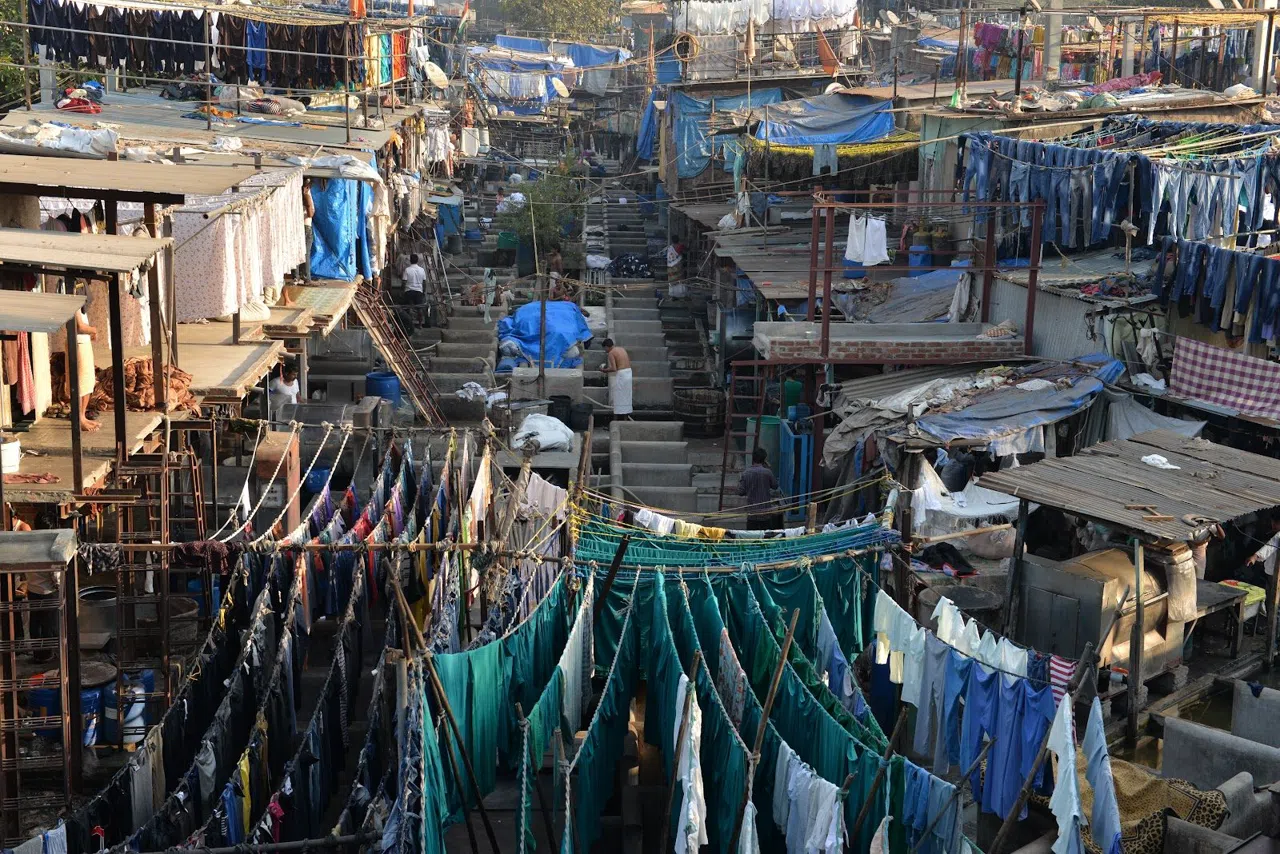
By seven in the morning, the concrete washing pens below the Mahalaxmi rail bridge are already loud with slapping cloth and running water. Steam rises off boiling vats, lines of freshly wrung sheets snap taut in the first breeze off the harbour, and men who learned this trade from their fathers work through stacks of hotel linen and hospital sheets that arrived overnight. It is not a performance staged for visitors — it is Mumbai's laundry running at full capacity, and dawn is simply when the pens are fullest.
The Ghat at First Light
Mahalaxmi Dhobi Ghat, just west of Mahalaxmi railway station, is the reason to set an early alarm. It has no formal entry gate, no ticket counter and no booking system — it is a public right-of-way, viewed from the road bridge above, from the Mahalaxmi flyover, or from a stairwell platform built specifically so people can look down into the pens without walking into them. The rows of open troughs, some dating to the late nineteenth century, are worked by dhobi families who have washed the city's linen here for generations, sorting it into a system of coloured thread tags that has never needed a computer to keep hotel sheets from ending up at the wrong hospital.
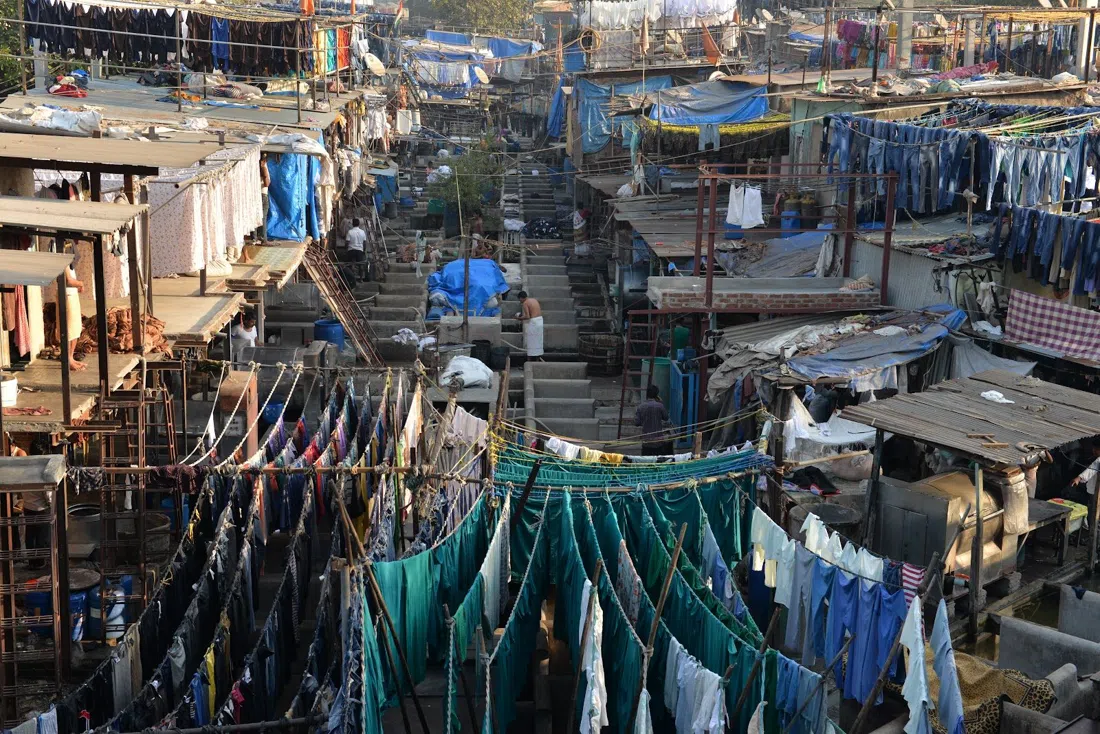
The practical detail that actually matters is timing. Go between 7 and 9am. This is when hotel and hospital pickups from the previous night are being processed, so every pen is occupied, lines are full, and the choreography — one man beating cloth against a stone slab, another feeding a coal-fired boiler, a third hanging sheets four storeys up on bamboo poles — is continuous. By midday the pace slackens and the heat off the concrete becomes unpleasant for standing and watching from an open platform. If you are travelling with more than three or four people, use the dedicated viewing deck rather than crowding the stairwell platform or the narrow lane at pen level — the dhobis are working, not posing, and the lanes between troughs are not wide enough for a tour group to pass through without disrupting someone's morning. For a wider sense of what else the city offers around this kind of dawn outing, the Mumbai guide is worth a look before you plan the rest of the day.
Booking a Guided Look
Going independently costs nothing and works fine for a couple or a solo traveller who is comfortable navigating Mumbai's morning traffic and reading a viewing platform without commentary. If you want context — how the coloured-thread sorting system works, which pens belong to which family lines, how the trade has adapted as hotels increasingly send linen to industrial laundries — a guided visit is worth the fee, and three operators cover it at different price points and group sizes.
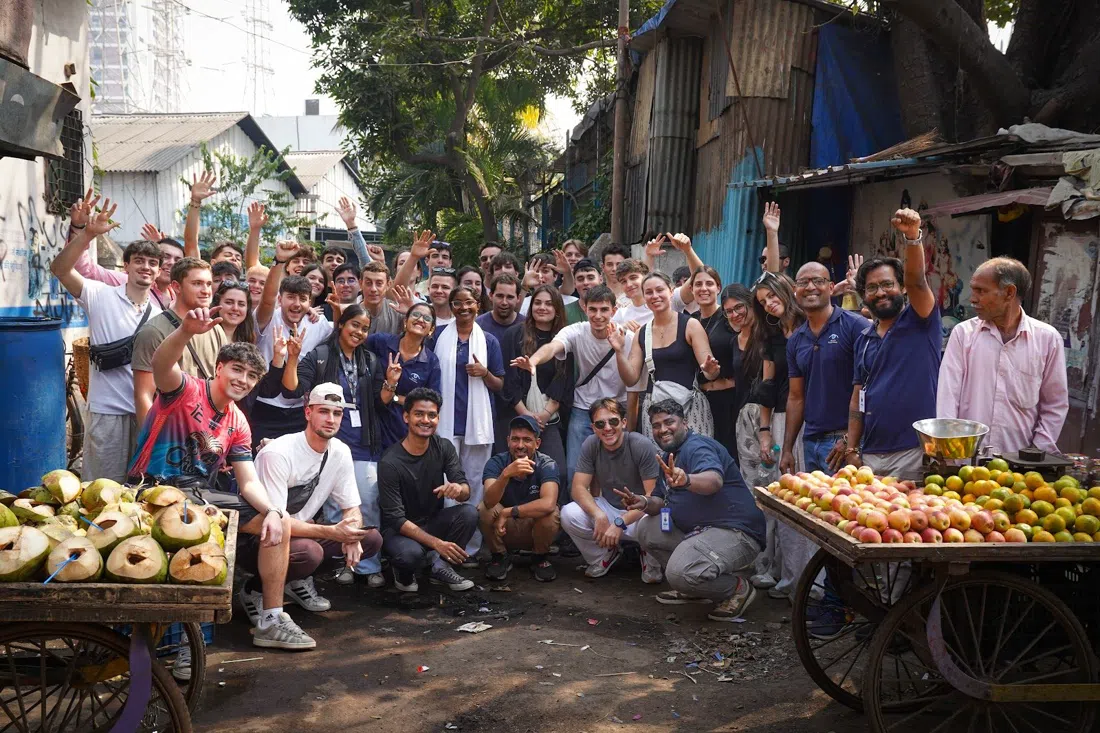
Reality Tours & Travel, Mumbai's best-known ethical-tourism operator (4.5 stars, 260-plus reviews), runs Dhobi Ghat as a stop on its Dharavi & City Sightseeing Tour rather than as a standalone product. It is built for small groups, offered shared or private, and runs ₹1,450–6,400 per person depending on which option you pick. The appeal here isn't Dhobi Ghat alone — it's the credibility of the operator: 80% of post-tax profit funds the company's Reality Gives NGO, and inside Dharavi itself (also on this route) they enforce a strict no-photography-of-residents policy that says something about how seriously they take the ethics of bringing tourists into working neighbourhoods. Book this one if the ghat is part of a bigger morning you're planning around Dharavi.
Cityscape Mumbai Tours runs a Dhobi Ghat product specifically, not as an add-on to something else, and it's explicit about scale: groups run from 1 to 99 guests, but the operator deliberately keeps clusters small on the ground "so visitors feel welcome, not like a tourist in a big group." Pricing is ₹1,500 for an adult, ₹900 for a child aged 6–12, and free under six. There are three daily departures, and the operator itself flags the 9:30am slot as the one to book — its own literature says the wash pens are "at their busiest" at that hour, which lines up with what you'd see going independently at that time anyway. This is the pick if you want a guide's context without folding the ghat into a longer Dharavi itinerary.
Mumbai Dream Tours is the budget option and the most narrowly focused: a Dhobi Ghat tour that can run as a group of up to ten or be added privately onto their Dharavi and local-train tour. Group rate is ₹600 per person, private is ₹1,200 per person, and it's the only one of the three offering a fixed 9am slot as a standalone line item rather than bundling the ghat into a longer package. If budget is the deciding factor and you don't need the wider ethical-tourism framing that Reality Tours offers, this is the cheapest way to get a guide on the ground.
None of the three require photography restrictions at Dhobi Ghat itself the way Dharavi does — the ghat is a public viewpoint, and the dhobis are used to being watched from the platforms — but common sense applies: shoot the pens and the lines, not close-ups of individual workers' faces without asking.
The Other Great Human Choreography
If the appeal of Dhobi Ghat is watching an analogue system run at industrial scale in full public view, Mumbai has exactly one other spectacle built on the same logic, and it happens close enough in time to combine with an early ghat visit. The Dabbawala Exchange at Churchgate Station is where the city's lunchbox delivery network — thousands of home-cooked meals collected from suburban kitchens, sorted, and delivered to office desks across South Mumbai without a single item of software — hands off its cargo in a matter of minutes on an open station platform. It's free to watch, no booking required, though several operators run three-hour guided add-ons, typically Monday to Saturday around 11am, that combine the exchange with a Dhobi Ghat stop for ₹1,200–2,000. The catch is the clock: dabbawalas exchange crates around midday ahead of the lunch rush, hours after the dhobi pens have peaked, so seeing both in one outing means either an early Dhobi Ghat visit followed by a late morning at Churchgate, or picking one of the combo tours built to manage that gap for you.
More Open-Air Industry, Same Morning
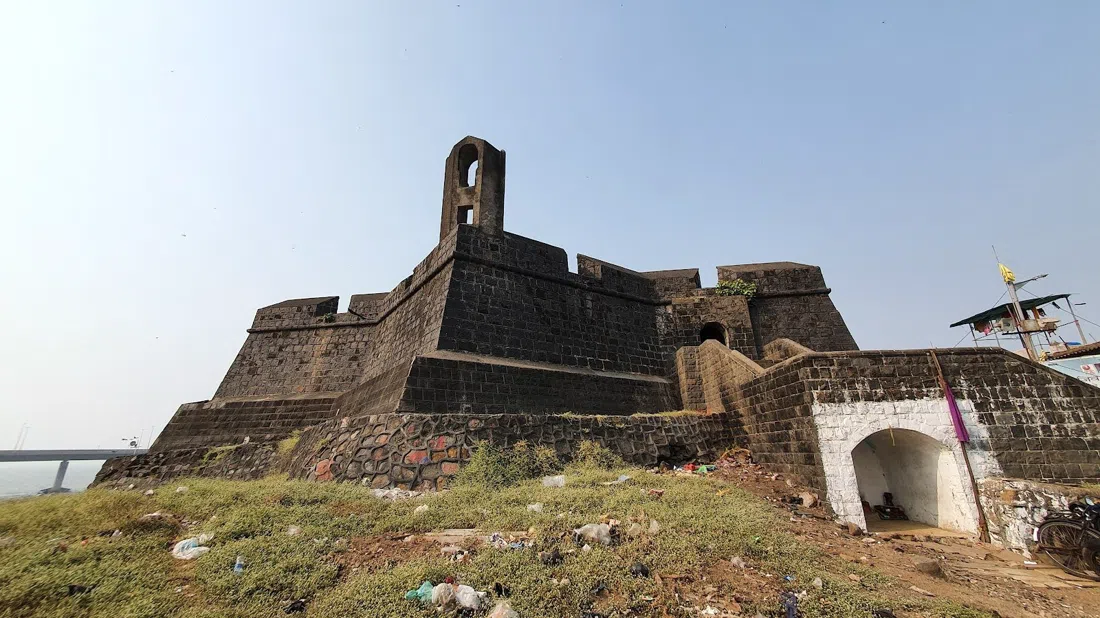
Two more stops round out the theme of hereditary trades practised communally, in daylight, for anyone willing to look. The Worli Koliwada Fishing Village Walk, run by Mumbai Magic in the Worli fishing village, is the closest genuine comparison to the ghat in this network — a centuries-old Koli fishing community still working its boats and nets daily, freshly photogenic after a 2026 repaint of the village's waterfront homes. It runs in small groups of two to six, with solo pricing available, and needs advance booking by WhatsApp or email; expect ₹850–4,000 per person depending on group size. It suits couples and small groups far better than a coach party — the lanes through the koliwada are residential and narrow.
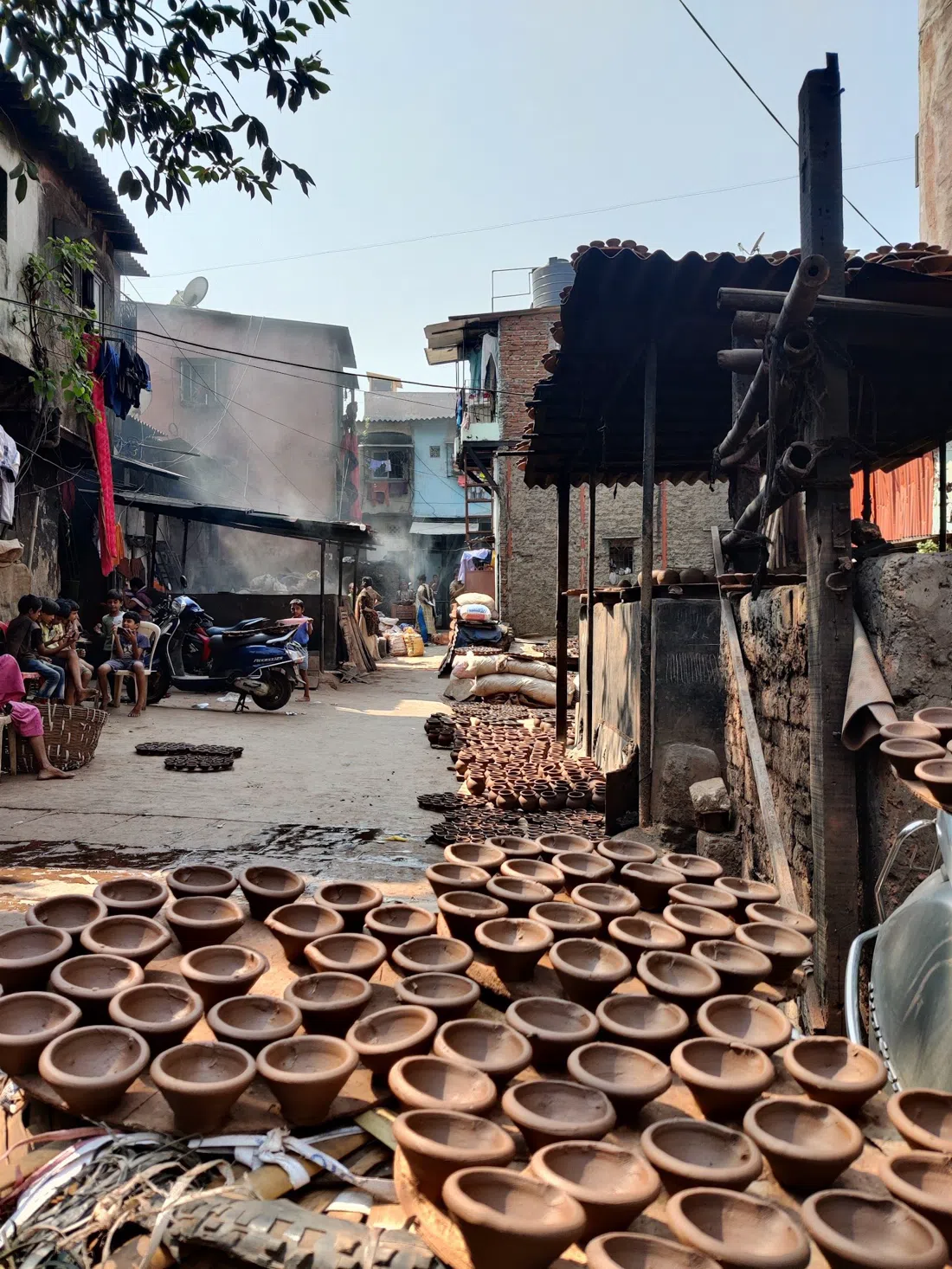
Kumbharwada Potters' Colony, inside Dharavi, offers the same editorial logic from a craft angle rather than a trade one: a hereditary potting community working in full view, with some packages including a hands-on wheel session. Reality Tours includes it from around ₹1,450 per person as part of its Dharavi coverage, while budget operators offer stripped-down versions from as little as ₹188 per person. If Dhobi Ghat is the piece that hooked you, Kumbharwada is the natural next stop on the same trip — another open-air industry that has run the same way for generations and still does.
Rounding Out the Morning
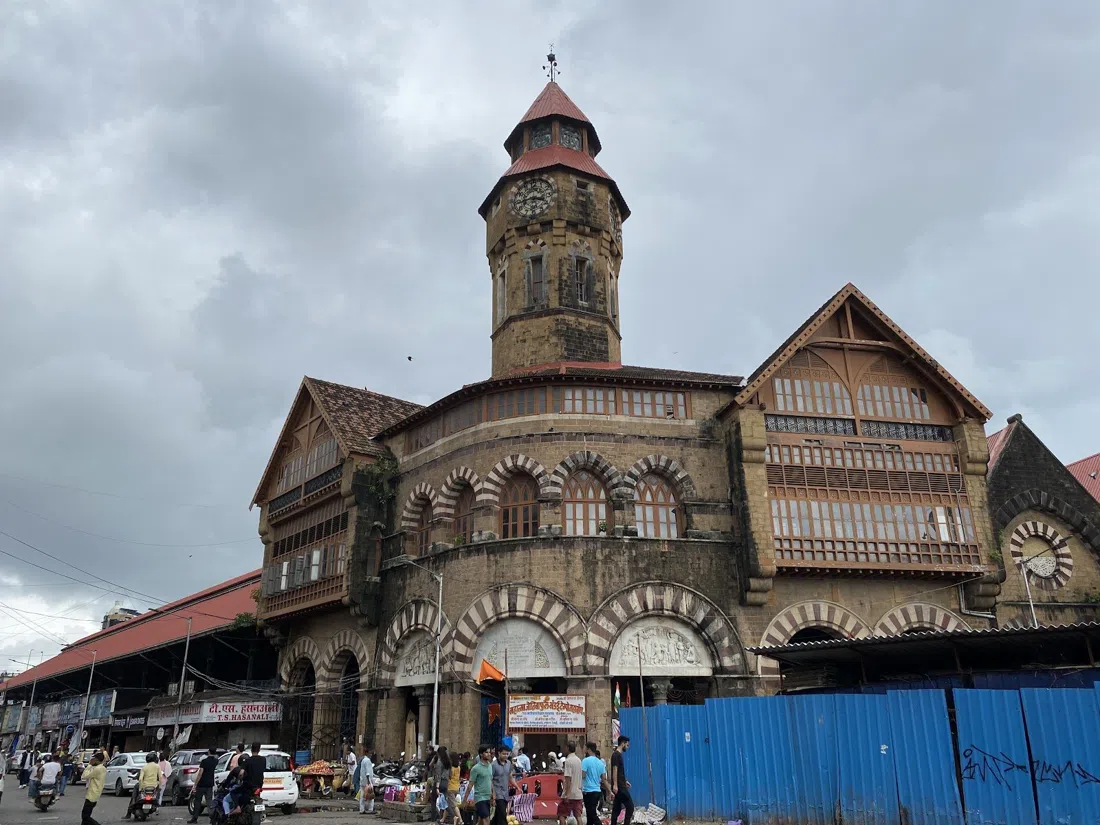
A few stops make sense as bookends to an early Dhobi Ghat visit rather than as destinations in their own right. Crawford Market, formally Mahatma Jyotiba Phule Mandai, in South Mumbai's Fort area, needs no booking and handles foot traffic — including tour groups — without difficulty; it's free to enter, though obviously you pay for whatever you buy. Reality Tours routes through it on the same itinerary as Dhobi Ghat, and it gives the morning a second, contrasting set piece: covered market stalls and colonial-era architecture rather than open pens and steam, with strong light for photography in the first couple of hours after opening.
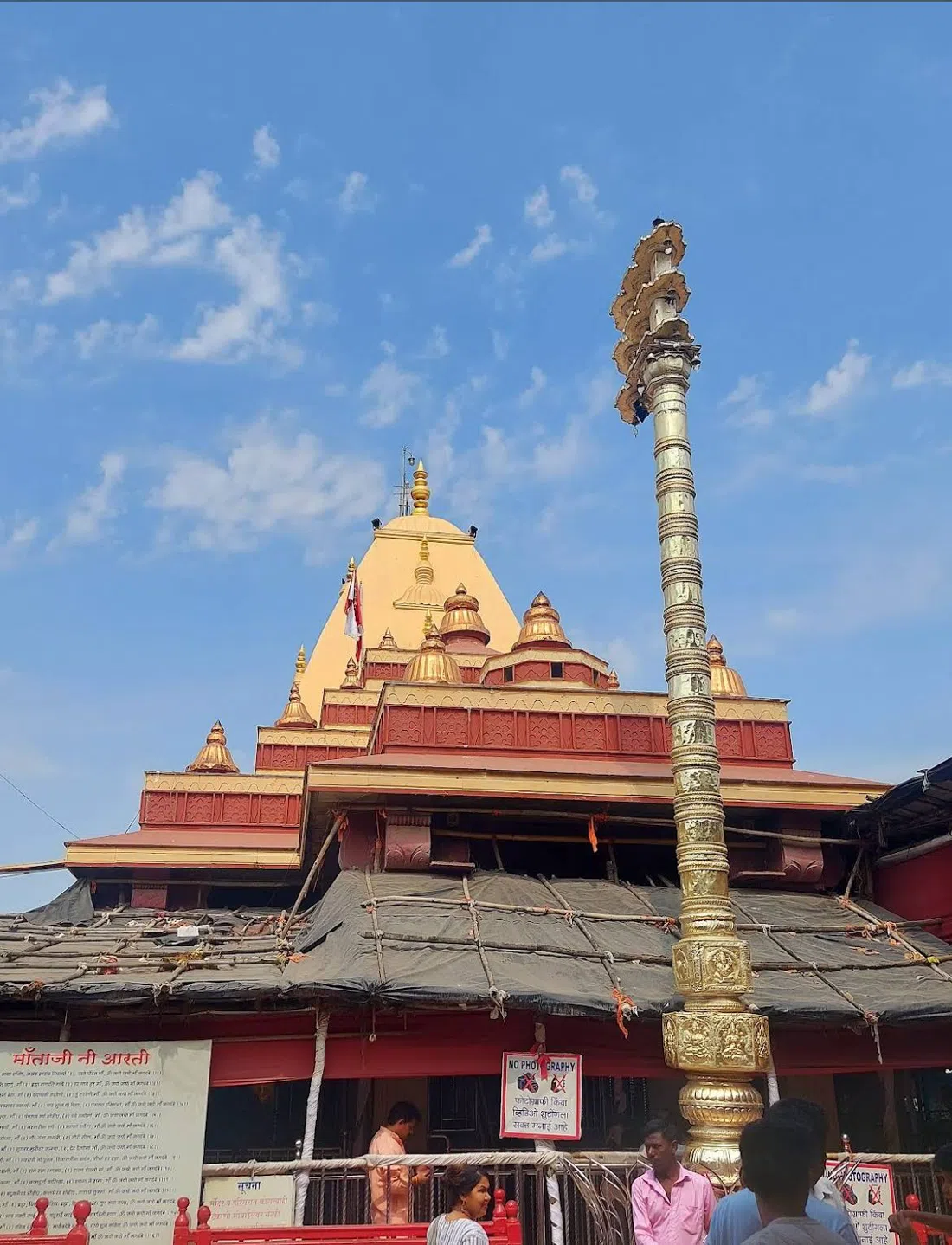
Mahalaxmi Temple, a short walk from the ghat itself, is open for free public darshan and handles crowds comfortably outside its Tuesday peak. It's the obvious "while you're there" stop for anyone who has already made the trip out to Mahalaxmi for the laundry.
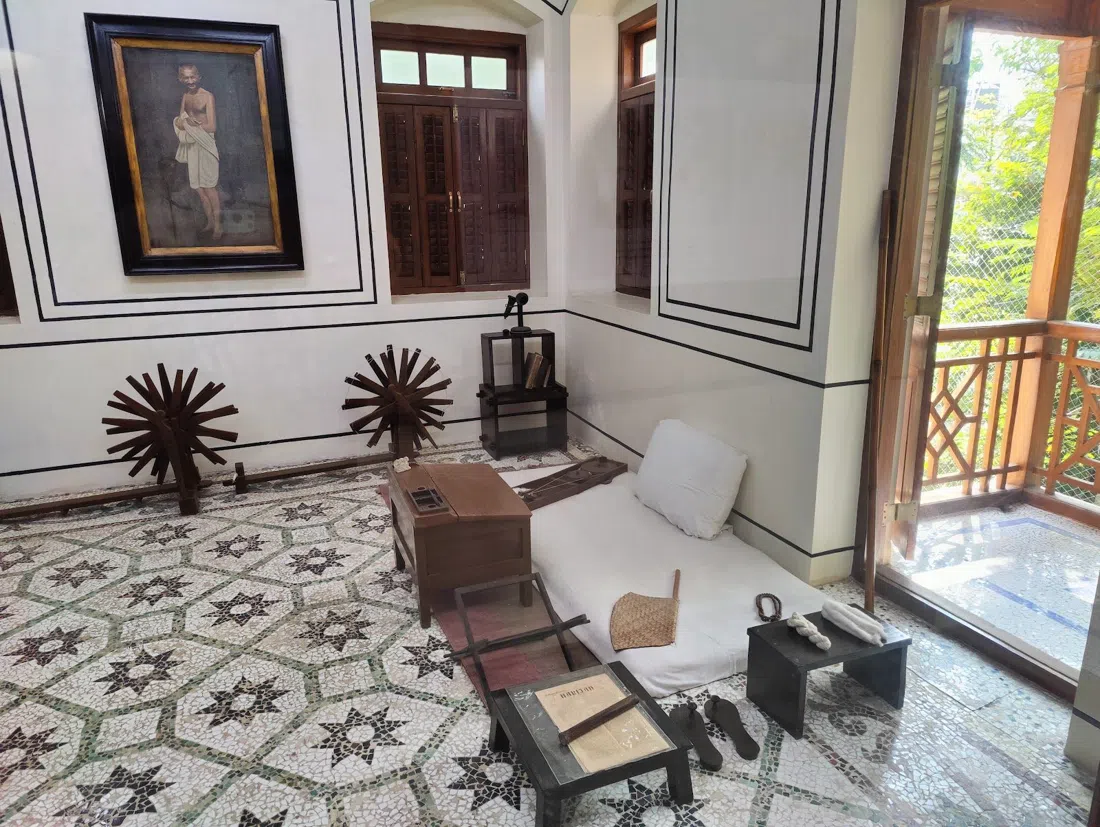
For a quieter close to the morning, Mani Bhavan Gandhi Sangrahalaya is open daily from 9:30am to 6pm, needs no advance booking, and is comfortable for small groups. It's not thematically tied to the ghat, but geographically and by pace, it works well as the last stop on a historic-Mumbai-industry morning that started at first light among the wash pens — a quieter, indoor counterpoint after several hours on your feet in the heat.
Getting There, Cash, Timing, Budget
Mahalaxmi Dhobi Ghat sits right by Mahalaxmi railway station on the Western Line, making it one of the easier landmark visits to reach by local train from South Mumbai or the northern suburbs; a taxi or auto-rickshaw from Colaba or Bandra also works well before the morning traffic builds. Aim to arrive by 7am and plan to leave the viewing platform by 9–9:30am if you're moving on to Crawford Market or a late-morning Dabbawala Exchange visit — the gap between the two spectacles is real and worth planning around rather than trying to force into a single hour.
Carry cash. None of the guided tours or nearby stops assume card payment on the ground, and small vendors near Crawford Market and Mahalaxmi Temple are cash-only. A realistic budget for the morning, if you take one of the mid-range guided tours (Cityscape at ₹1,500, or Reality Tours' bundled Dharavi rate from ₹1,450) and add a Dabbawala combo add-on later, runs somewhere between ₹1,500 and ₹4,000 per person depending on which operator and package you choose; going fully independent to view the ghat itself costs nothing beyond transport. Wear closed shoes — the platforms and lanes near the pens are wet — and if you're basing the trip around this itinerary, it's worth sorting accommodation early; a Mumbai hotel search for something on or near the Western Line keeps the whole morning circuit — ghat, market, temple, museum — within a short and predictable commute.