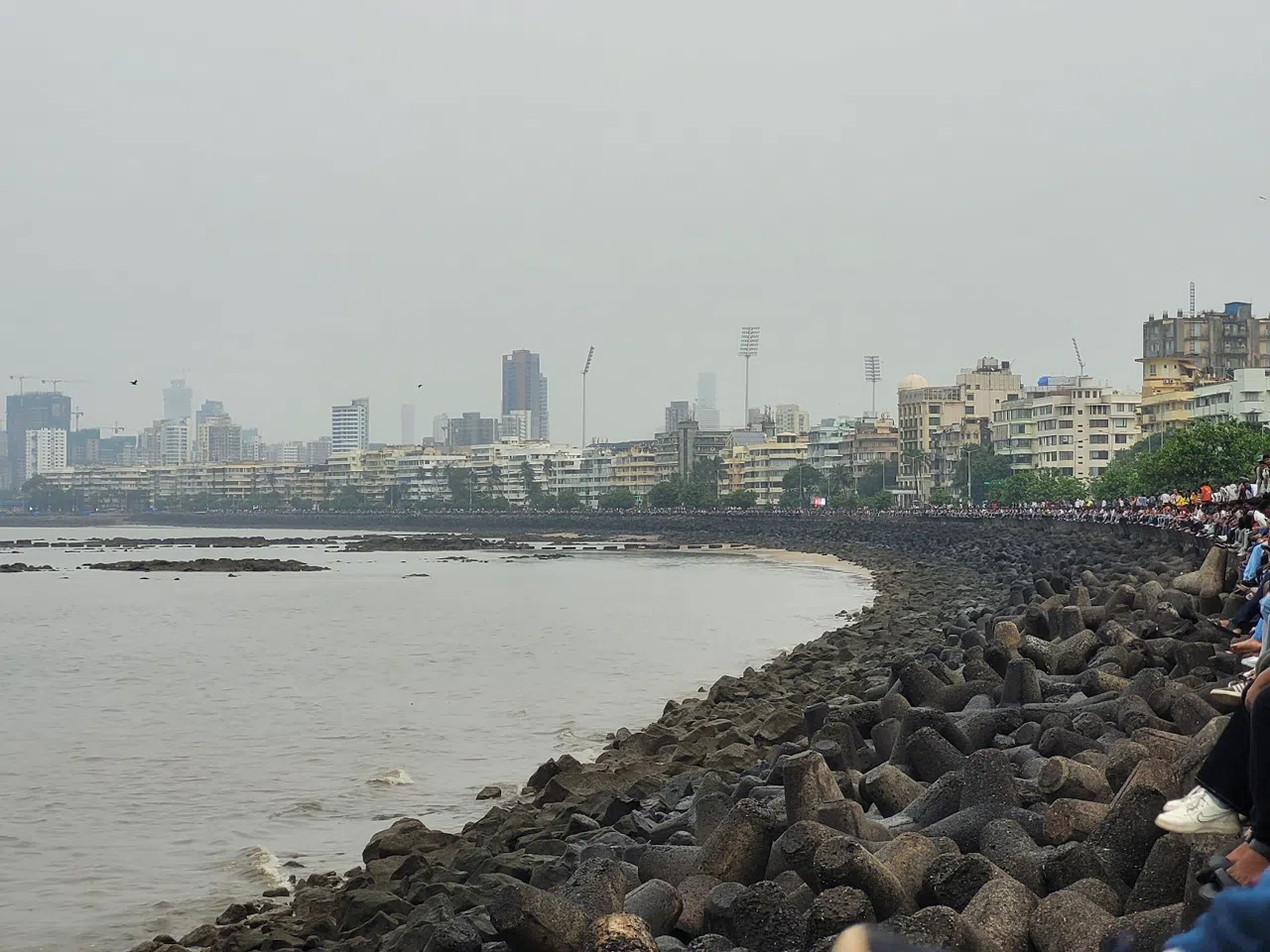

The tide arrives loud at Nariman Point, and by six in the evening the pavement carries the same mix it has carried for eighty years: couples angled towards the water, students with notebooks on their knees, families working through paper cones of hot chana, a man with a flask of chai walking the parapet line. Marine Drive runs about 3.6 kilometres in a long shallow C from the office towers at the southern tip to the sand at Girgaum, and the curve of streetlights along it after dark is why Mumbai has called the thing the Queen's Necklace since the sodium lamps went up. Walked slowly, with the two detours this page argues for, it is a full evening rather than a stroll.
What you are actually walking on
None of this land existed a century ago. The arc was reclaimed from the bay through the 1920s and 1930s, and the apartment blocks that face the sea went up in the decade after, which is why the buildings on your right are not colonial Gothic but art deco, with curved balconies, ship's-rail detailing and names in chrome lettering above the doors. In 2018 this district was inscribed by UNESCO as an ensemble precisely because of that collision: Victorian Gothic on one side of the open ground inland, deco on the other. The road's official name is Netaji Subhash Chandra Bose Road. Nobody uses it.
The Marine Drive Promenade (Queen's Necklace) (Nariman Point to Girgaum) is a free public pavement, with no gate, no ticket, no closing time and no limit on numbers. There is one caveat to set before you build an evening around it. The Coastal Road project consumed roughly a kilometre of the original promenade, and in those stretches the old habit of scrambling out onto the tetrapods for a photograph is finished. There is a sea safety wall now, backed by 13,000 new M40-grade tetrapods that are not designed to be climbed and cannot be, so the view survives without the clambering. The walkway also narrows towards the Churchgate end, so a group of eight should walk two abreast rather than spread across it at sunset, when the whole city is trying to get past.
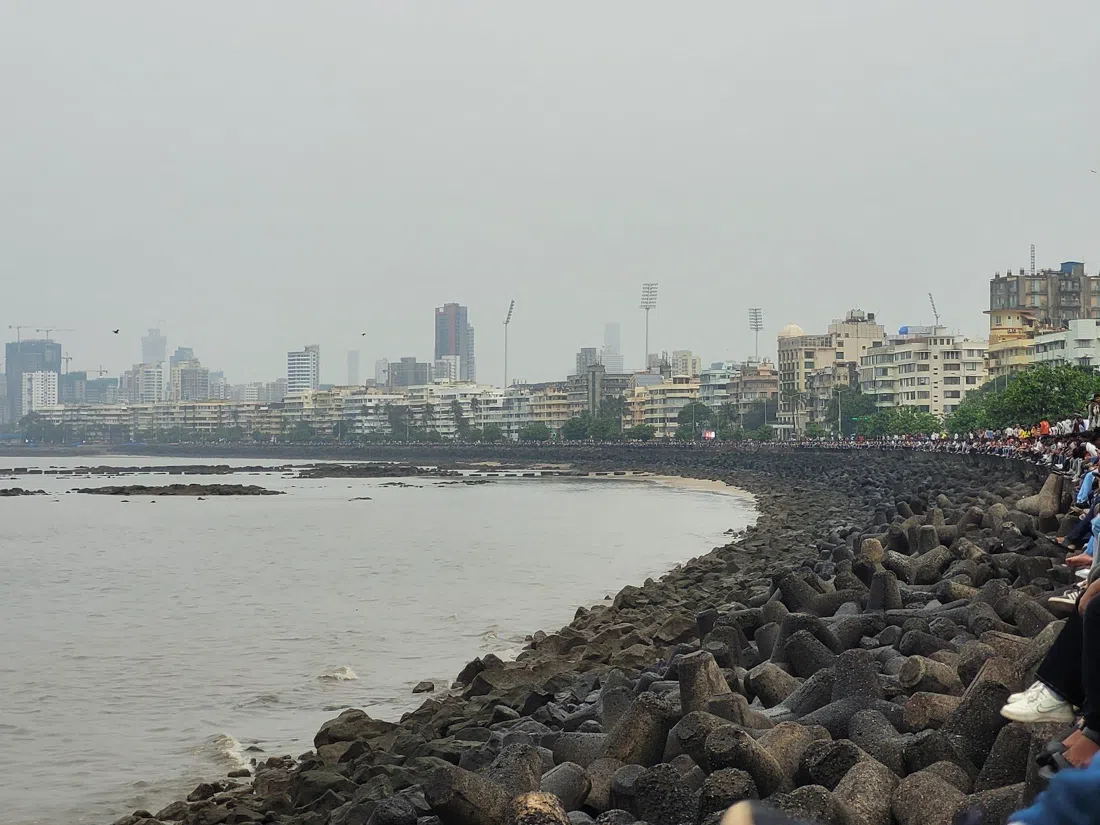
End to end, at the pace the place encourages, is 50 to 60 minutes with no stops. Add a drink, a detour uphill and dinner at the far end and you are looking at three to four hours.
Which direction to walk, and where to start
Walk south to north: begin at Nariman Point, finish at the sand. Two reasons. The sea stays on your left with the sun going down into it, so the light is in front of you rather than behind, and you end at food instead of at office blocks.
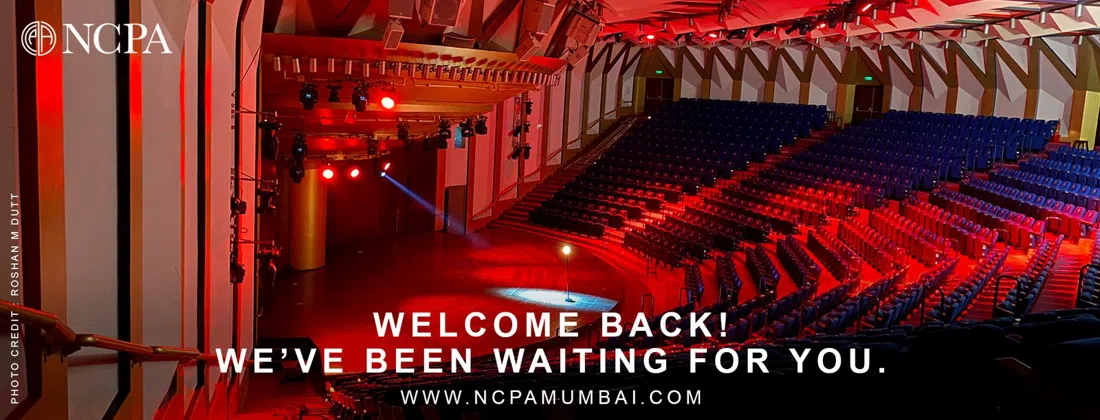
Start at the southern tip, where the National Centre for the Performing Arts (NCPA) (Nariman Point) anchors the point. It runs over 700 events a year, so there is usually something on that evening, and for a visitor with no Hindi or Marathi the International Jazz Festival and the Indian classical dance programmes are the easiest way in. There is no general wandering inside. The halls open to ticket-holders for that night's performance only, tickets run roughly ₹300 to ₹3,000-plus depending on the show, and group bookings go through the box office on +91-22-66223724 rather than online.
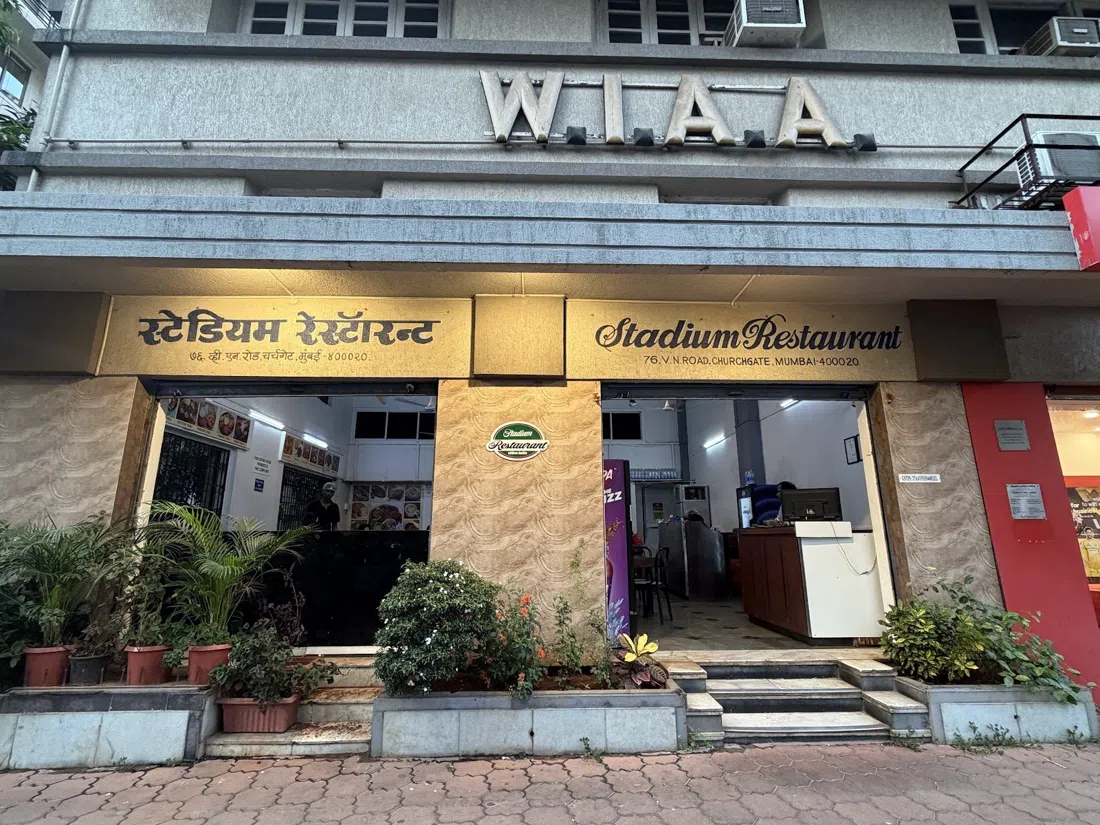
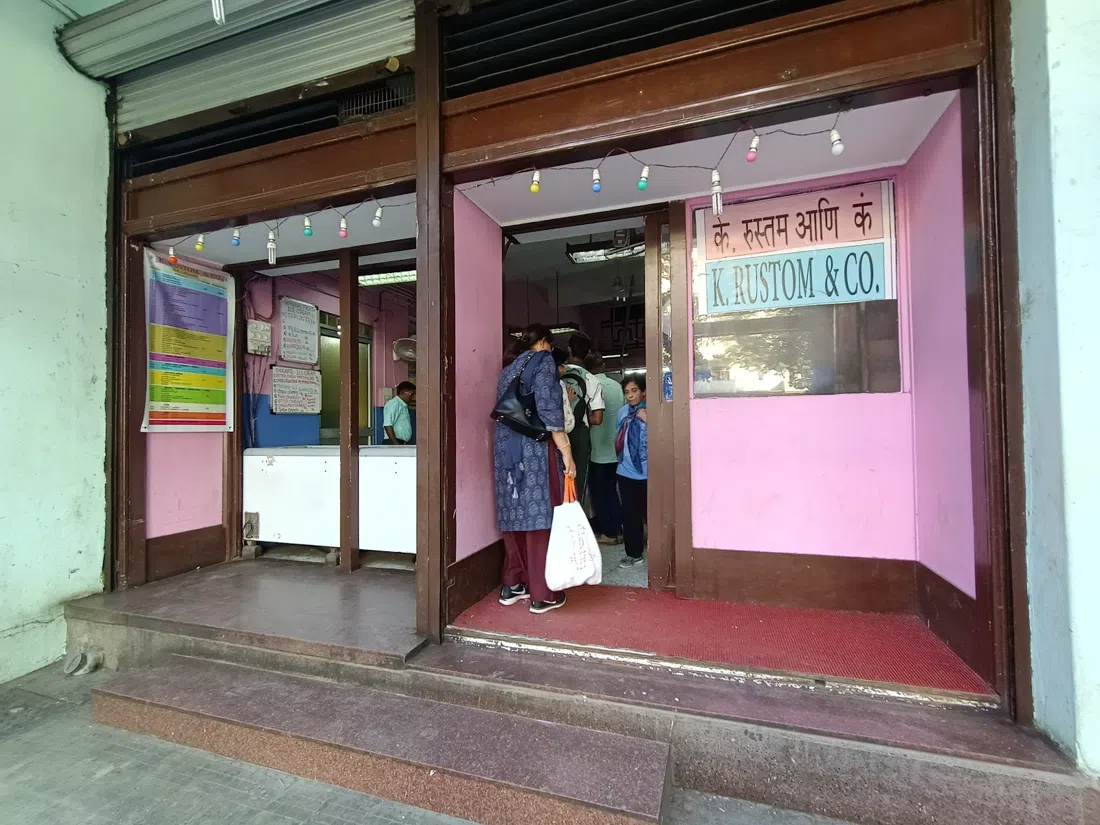
For a morning version, reverse the walk and start inland with breakfast. Stadium Restaurant (Churchgate) is the cheapest authentic thing anywhere near the promenade: an Irani café doing chai, bun maska and mawa cake for roughly ₹50 to ₹300 a head, which is what a bottle of water costs in a hotel lobby a kilometre away. It is small, takes no reservations, turns tables fast and closes in the early evening, so four or more people will usually wait a few minutes at peak. On the way out to the water, stop at K. Rustom Ice Cream (Churchgate), open since 1953 and two minutes from the station. It is a counter with nowhere to sit, which makes it ideal for a group buying ice-cream sandwiches at about ₹60 to ₹120 each and eating them walking. It is cash only, and that catches out almost every first-time visitor.
The deco you are walking past
There are 35 sea-facing deco blocks along the arc, and without someone pointing at them most people register only a wall of weathered cream render. Art Deco Mumbai guided walks (Marine Drive and the Oval) are run by the specialist trust that catalogued these buildings, and they are built for small numbers rather than coach parties: the Marine Drive seafront walk runs 90 to 100 minutes for six to ten people, the Oval walk 60 to 70 minutes for four to eight, with private tours on request. Prices are not published and are quoted on enquiry. Email before you plan a date around it, because their page has shown tours paused through the monsoon, with dates confirmed case by case.
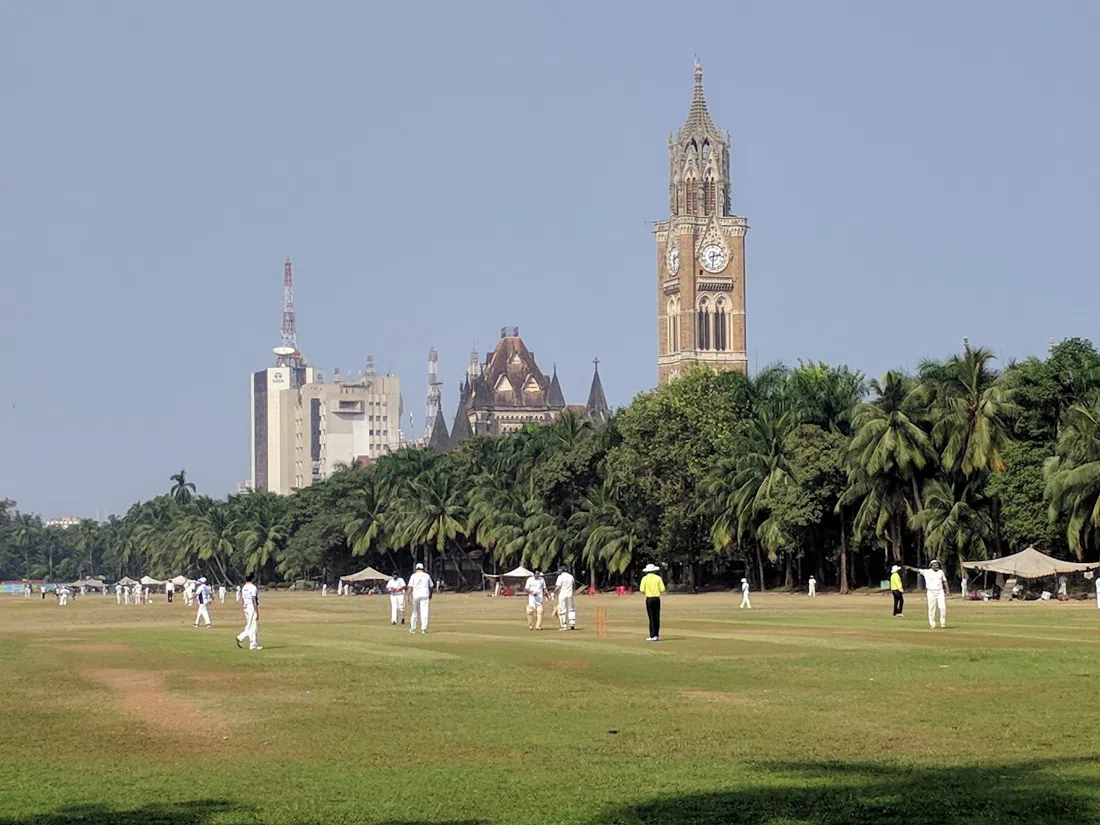
Five minutes inland, Oval Maidan (Churchgate) is the clearest single lesson in why the district is listed at all. It is free, ungated and open at all hours, with Gothic along one edge and deco along the other, facing each other across open ground used by several simultaneous cricket matches. Keep a group on the perimeter path; walking between live games is both rude and genuinely risky.
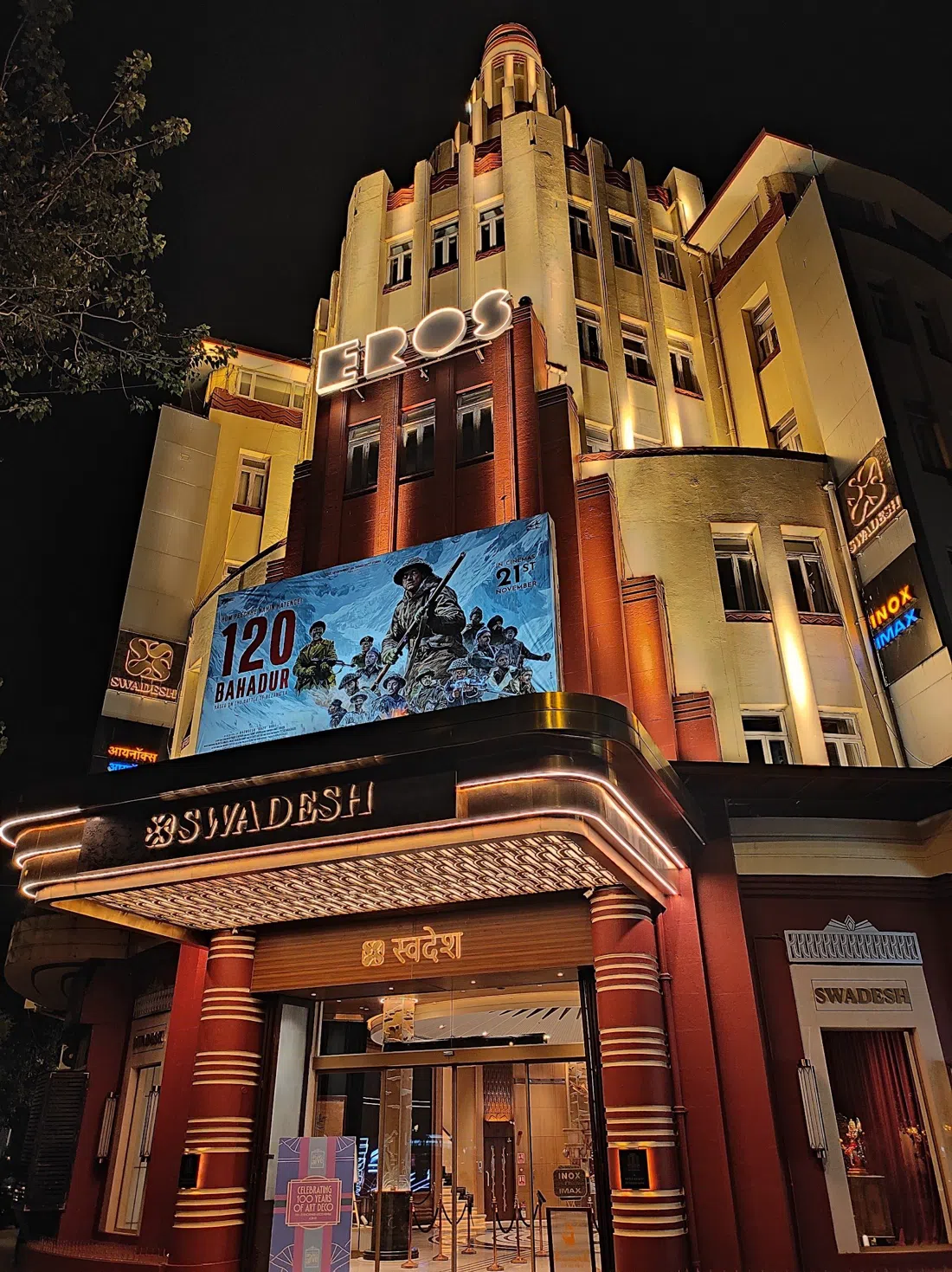
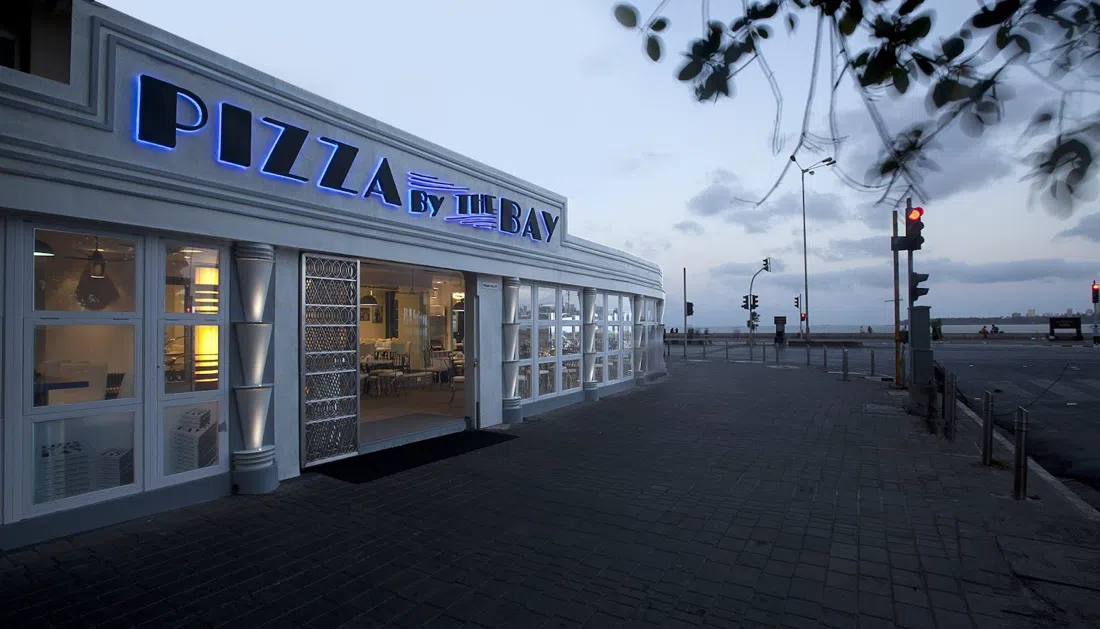
Two buildings on this stretch earn a ticket rather than a glance. Eros INOX IMAX (Churchgate) closed in 2017 and reopened in February 2024 after a conservation-led restoration, now with a 1,300-seat hall and a separate 300-seat IMAX screen; standard tickets run roughly ₹200 to ₹800 and more for IMAX, group bookings are straightforward, and the foyer alone justifies the price. And Pizza By The Bay (Marine Drive) occupies the ground floor of one of the strip's best deco blocks, open from 7am to past midnight, with mains around ₹600 to ₹1,200 and about ₹2,500 for two. Order for the position rather than the pizza, ask for a window table when you call, and call ahead for eight or more because the windows are first-come.
Seeing the necklace as a necklace
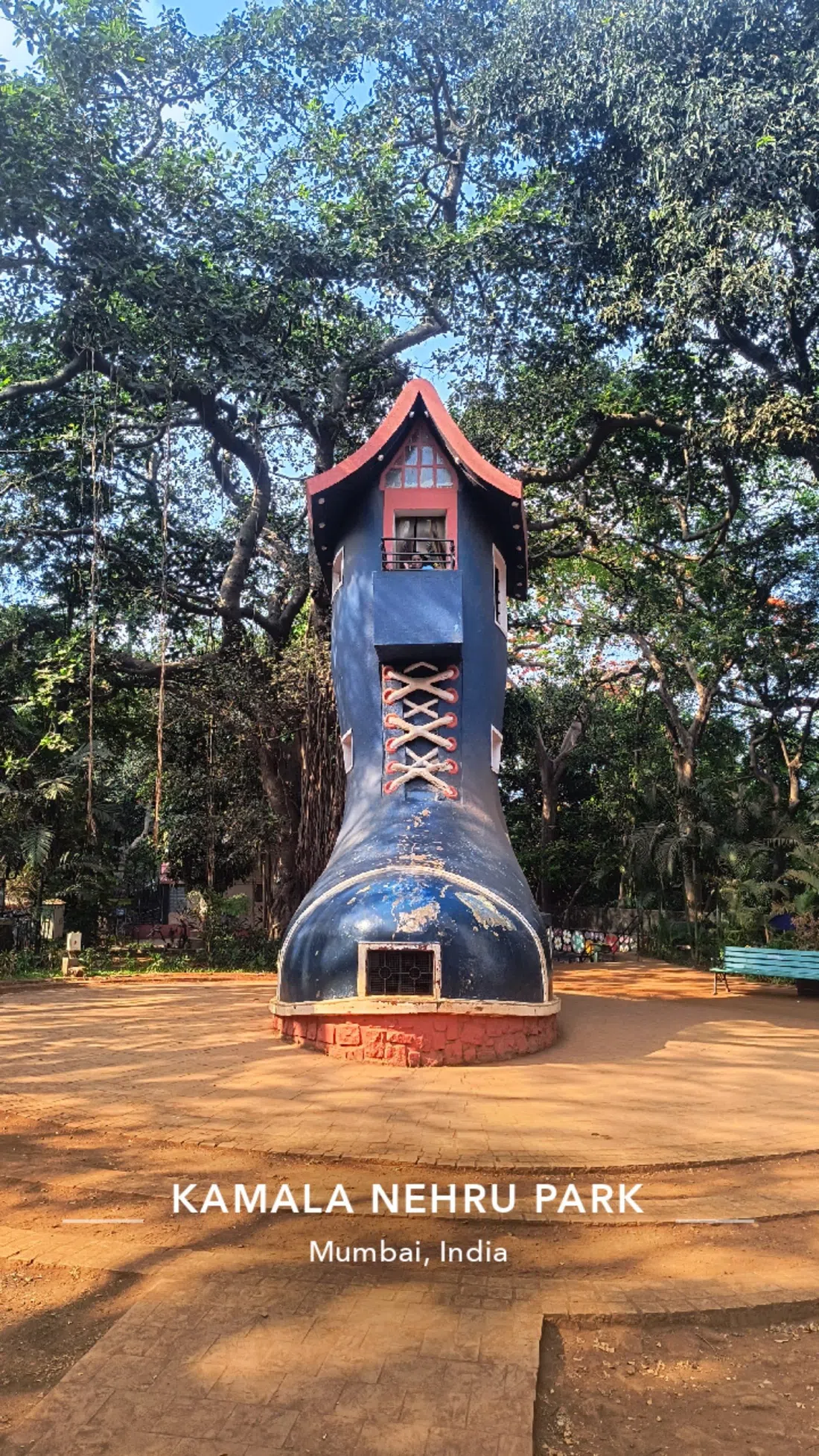
From the promenade you are inside the curve rather than above it, so the necklace never resolves in a photograph. For that you need height, and the height is Kamala Nehru Park (Malabar Hill), a free municipal park at the top of the hill above the northern end, where the whole arc lies out below you with its lights coming on in sequence. A 20-minute detour up from the Chowpatty end at dusk is what makes the picture work. Gates close at 9pm, so time a group visit for 6 to 8pm; the park is used to large school parties and absorbs numbers easily. A taxi up takes about ten minutes in traffic, and walking it is steep but perfectly doable.
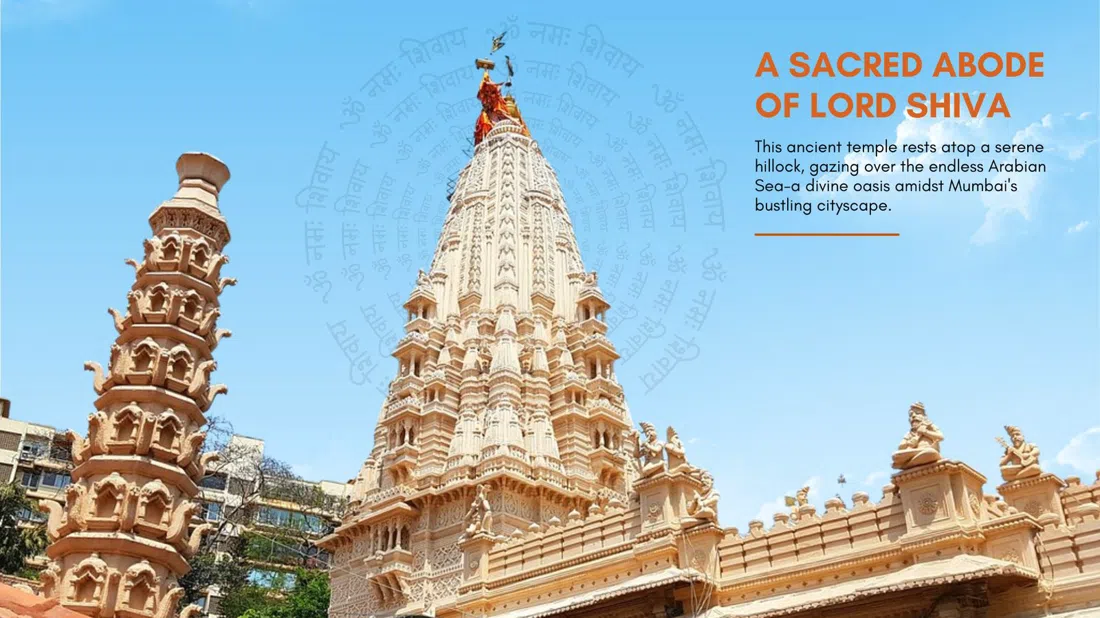
At the foot of the same hill, Babulnath Temple (Girgaum) is the quietest thing on this page: about a ten-minute climb from the beach, open 6am to 9pm daily and 10pm on Mondays, free, with a ₹1 lift if you would rather not take the 80 to 110 steps. Shoes come off and shoulders and knees stay covered; non-Hindus are welcome. Evening aarti falls around 5:30 to 6:30pm if you want to see it in use rather than as a monument. Do not bring a group on a Monday evening or at Mahashivratri, when it is packed solid.
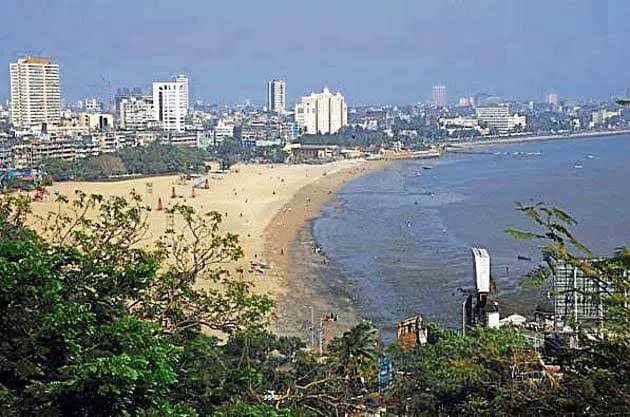
The Chowpatty end, which is where the walk earns itself
Girgaum Chowpatty Beach (Girgaum) is the human end of the strip and the best cheap eating on it. Between 5pm and 9pm it turns into a fairground: pav bhaji, bhelpuri, kulfi, ice gola, the smell of frying everything, children on inflatable toys, and a crowd that is overwhelmingly local. Entry is free and snacks run roughly ₹30 to ₹150 a plate. The stalls at the southern end are stand-up counters, which is practically useful: ten people can order across two or three carts rather than queue as one block. Treat the sea itself as scenery only. Nobody sensible swims here.
The sit-down version of the view
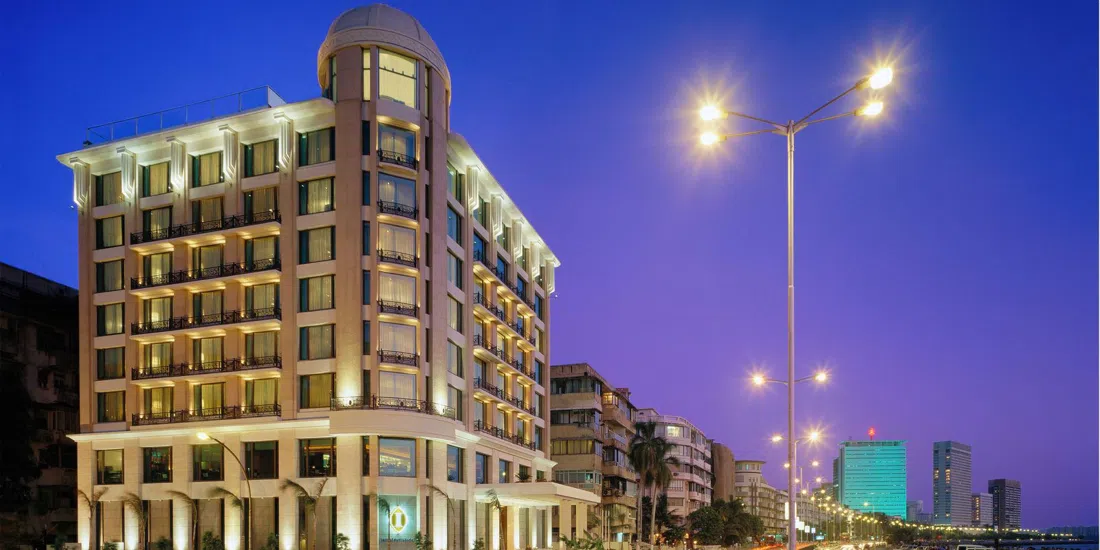
If you want the same sunset without standing, Dome, InterContinental Marine Drive (Marine Drive) is the one splurge on the strip worth making. It opens at 5pm, so arriving around 6pm gets you the sun going down and the lights coming on from the same seat. It launched a new food and cocktail menu in January 2026. Cocktails are roughly ₹1,000 to ₹1,500 and two people with drinks and snacks start around ₹4,000. It is smart-casual with limited seating: phone ahead for six or more, and expect to be refused on a clear Friday or Saturday evening if you have not reserved. This is a couples-and-fours venue, not a group one.
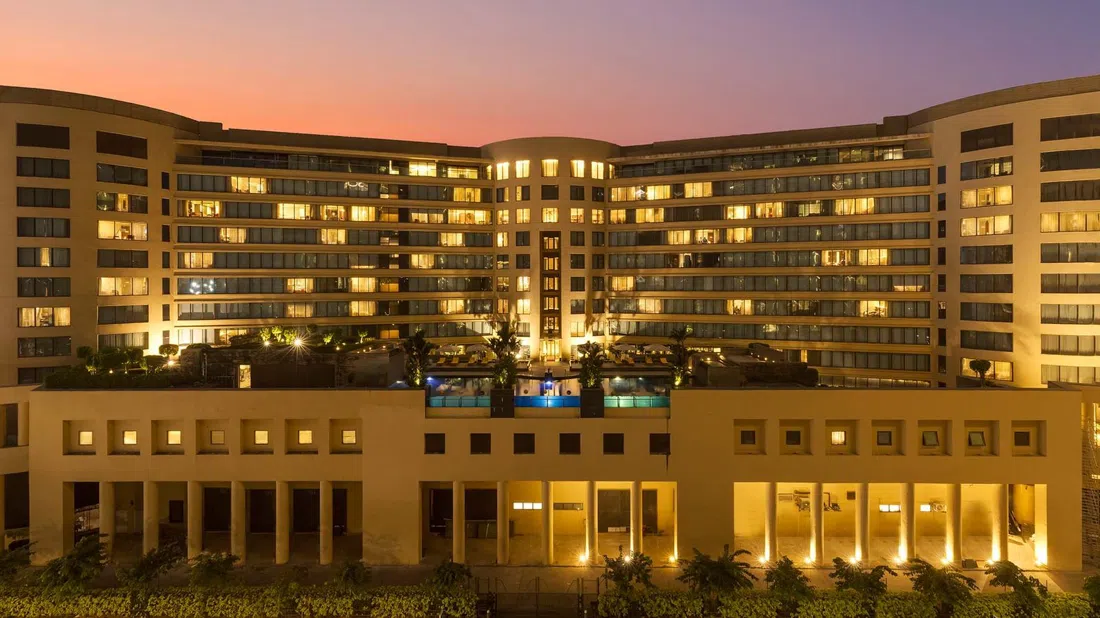
For sleeping on the water, Trident Nariman Point (Nariman Point) is the practical choice at the southern end: 588 rooms, so it takes groups without drama, with rooms from roughly $133 a night. Book an ocean-view room explicitly. The city-facing side of the same building loses the entire reason for being there, and the sea-view rooms and pool deck go first in the dry season. Compare rates and the rest of the district's options through the Mumbai hotel search.
Rain, midday heat and the indoor hours
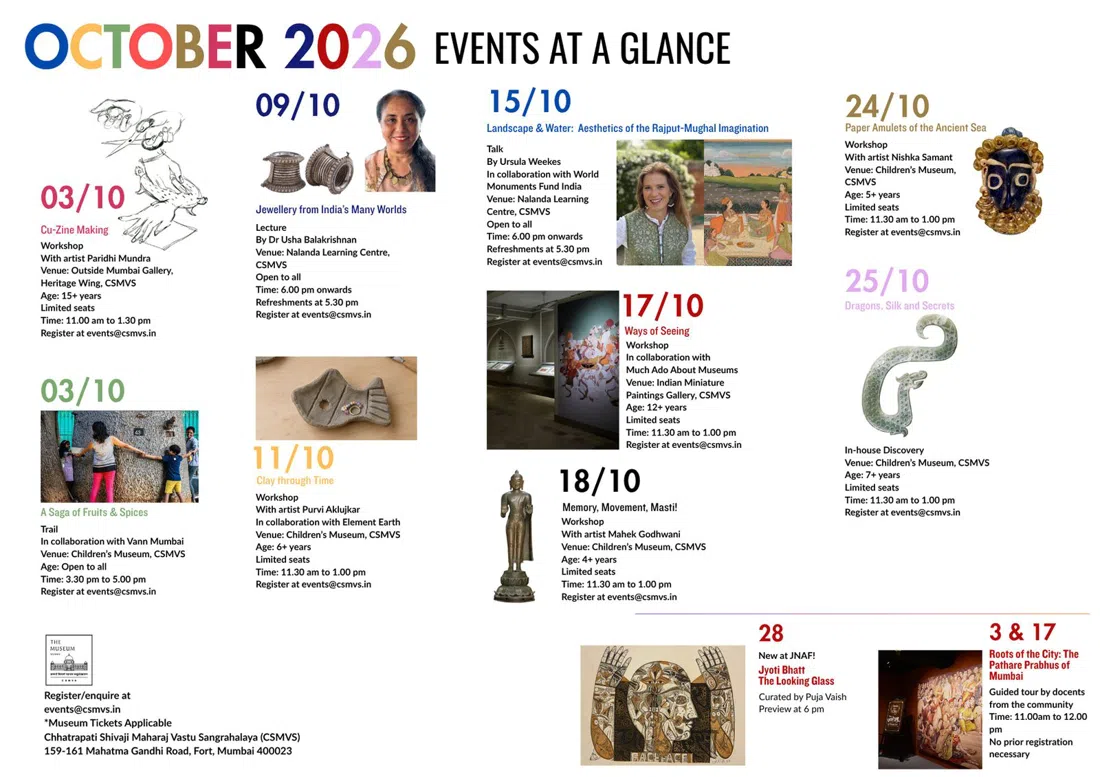
The promenade is unshaded and the middle of the day is punishing from March onwards, so the walk works best bracketed around indoor hours. About 20 minutes' walk inland from the Churchgate end, the Chhatrapati Shivaji Maharaj Vastu Sangrahalaya (CSMVS) (Kala Ghoda) is the serious museum of the district, with more than 70,000 objects across Indian sculpture, miniature painting and textiles. It opens daily 10:15am to 6:00pm with the ticket counter shutting at 5:45pm, and closes on only four fixed dates a year (Republic Day, Maharashtra Day, Independence Day and Gandhi Jayanti), which makes it unusually easy to plan a group around. Foreign adult admission is ₹700 and foreign child ₹200, with the audio guide included free for foreign visitors. Budget two to three hours.
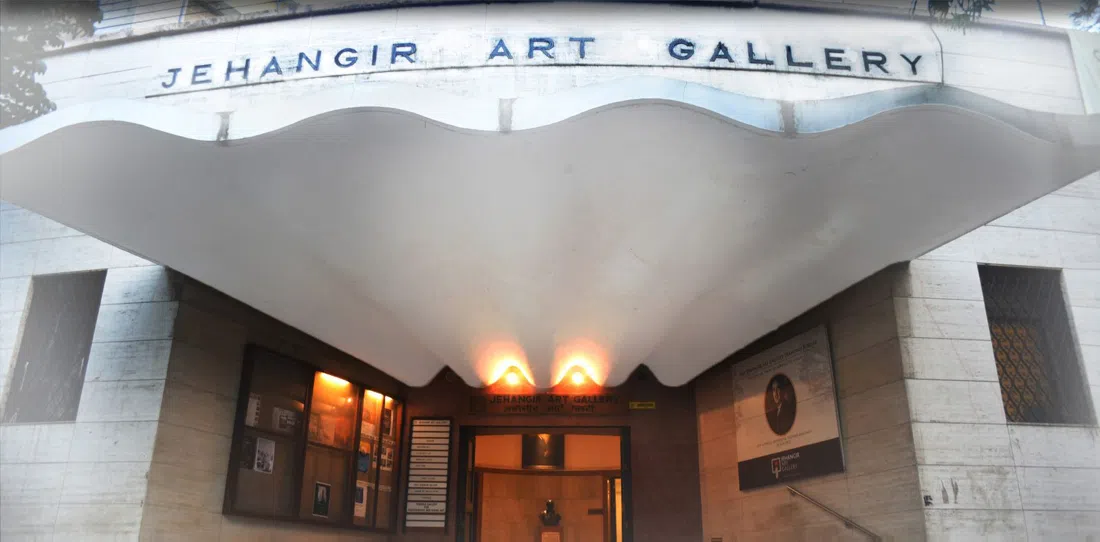
Next door, Jehangir Art Gallery (Kala Ghoda) is free and open 11am to 7pm every day, with shows rotating every week or two, the quickest read on what Mumbai artists are making right now. The rooms are small, so split a large group across the four galleries rather than moving as one. It also anchors the Kala Ghoda Arts Festival in late January and early February.
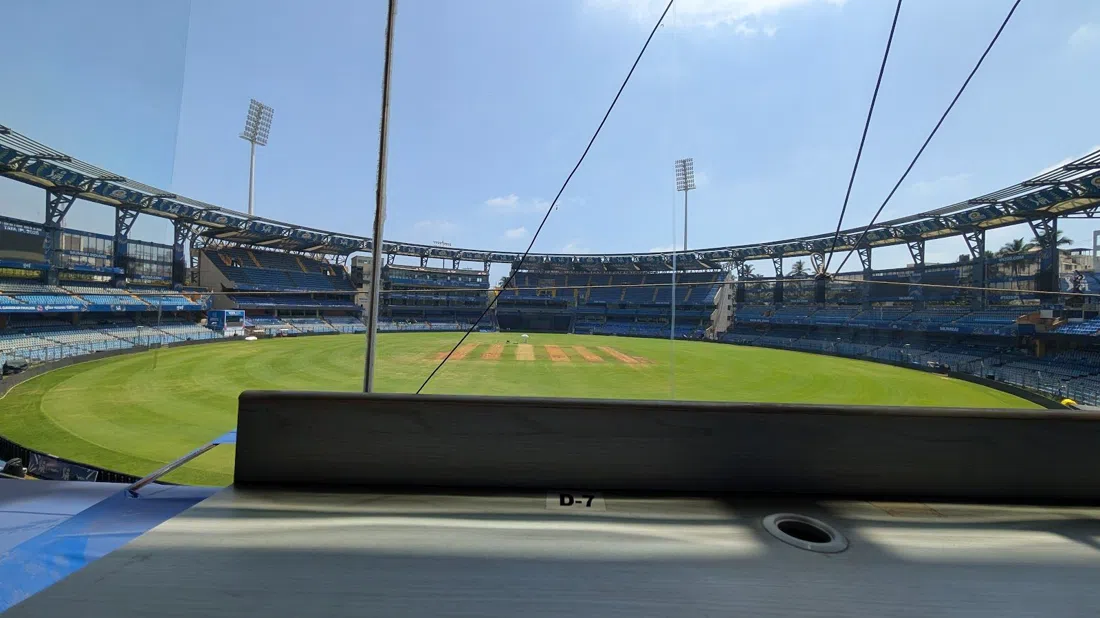
Five minutes inland from the promenade, the MCA Sharad Pawar Cricket Museum & Wankhede Stadium Tour (Churchgate) is the best wet-weather or midday option on the strip, and the most tightly rationed thing here. There is a hard cap of 20 visitors per slot, three slots a day Tuesday to Sunday, and tickets are sold online only, never at the gate. The 75-minute museum visit starts from about ₹499 and the 2.5-hour museum-plus-stadium version costs more but gets you into the dressing rooms and the media box, which is why its 20 seats go quickly around international fixtures. A group has to buy out a whole slot, in advance, as one booking.
Turning up versus booking ahead
The walk itself needs nothing. No ticket exists for the promenade, there is no queue and no door policy, and there is nothing to reserve. That is the rare pleasure of the place.
What does need planning is everything bolted onto it: the stadium tour (online, 20 seats, specific slot), an NCPA performance (ticket for that night only), a table at Dome on a weekend, the deco walks (email first), and nothing at all for CSMVS or Jehangir, where the counter is fine on the day. If your time in the city is short and you would rather see the arc with a car, a driver and someone explaining it, guided sightseeing that takes in Marine Drive runs seven days a week and starts from about 24 USD per person; there are 4,174 traveller reviews across the bookable options here, with the top one rated 4.8 out of 5 from 1,797 reviews. Book ahead if your day is fixed, and know what the money buys: a tour covers the rest of the city efficiently, not a better version of this walk.
Getting here from Bandra, Carter Road and the suburbs
From Bandra, the suburban train is the honest answer: Bandra to Churchgate on the Western Line takes roughly 25 to 30 minutes and deposits you a seven-minute walk from the water. Avoid the 8 to 10am and 6 to 8pm peaks unless you actively want the experience. By road, Bandra West to Marine Drive via the Sea Link is about 25 minutes off-peak and can double in the evening; Carter Road to Marine Drive is effectively a cab-only trip of 30 to 45 minutes depending on how the coast road is moving. Metro service has extended south through this district, but the train to Churchgate remains the simplest arrival for a first-time visitor. For how this corner fits with the rest of the city, see the broader Mumbai guide.
Is it worth it
Yes, with the expectations set straight. This is not a scenic cliff walk; it is a six-lane road with a wide pavement beside a working harbour, and the traffic noise never stops. You are there for the specific experience of several thousand people using a seafront at the same time, the light at around a quarter to seven, and a continuous kilometre of 1930s architecture nobody has demolished, all of it free.
It suits first-time visitors, couples, families with children (the beach end especially), and photographers willing to make the climb for the viewpoint. Groups are fine on the promenade, at Chowpatty, at the maidan and in the park, and awkward at Dome, at the stadium museum and in the gallery rooms, all of which need a booking or a split. It will disappoint anyone who came for a beach in the swimming sense, and anyone who wanted the tetrapod photograph they saw online, which in the rebuilt stretches no longer exists.
Best time to go
For the walk itself, the dry months from November to February are the comfortable ones, cool enough in the evening to go end to end without arriving soaked. March to May is hot and humid, so invert the day: museum and cinema through the worst of the afternoon, pavement after five. The monsoon from June to September is the most dramatic version, with spray coming over the wall and the sea wall doing visible work, but it is also when the deco walking tours have shown as paused, so do not build a trip around them in those months.
Time of day matters more than season. Sunset in winter falls roughly between 6:00 and 6:30pm, so being on the promenade by about 5:45pm gives you the light, the lamps coming on and the full crowd. For the necklace photograph, be at the hilltop park by 6pm and down by 8pm. Between 6 and 7am the whole arc belongs to runners and dog walkers, it is close to silent and the air is at its cleanest, which is the best time of day if you want the place rather than the scene. Midday is harsh and largely empty. Weekday evenings are busy; Saturday and Sunday evenings at Chowpatty are a fairground in the literal sense, which is either the point or the problem.
Practical notes
On transport, it is the Western Line to Churchgate for almost every approach; taxis and app cabs are plentiful along the whole arc but slow in the evening peak. The walk is flat and continuous, with the only climbs being the hill to the park and the temple steps.
Carry small rupee notes. The Chowpatty stalls are cash-first and the ice-cream counter is cash only. Restaurants, the cinema, the museums and the rooftop all take cards, and the stadium museum takes nothing at the gate at all.
On timing, allow an hour for the pavement alone, three to four hours for the walk with a drink and the hilltop detour, and a full day if you add CSMVS and the stadium museum. Remember the two early cut-offs: the museum ticket counter at 5:45pm and the park gates at 9pm.
A complete day here costs nothing but snacks, under about ₹500 a head with street food at the beach and ice cream on the way. Mid-range, about ₹2,500 for two at a window table. Add roughly ₹4,000 for two if you want the rooftop sunset, around ₹499 upwards for the cricket museum, and ₹700 for foreign admission to the big museum. Almost everything that matters on this walk is free.