Speciale Mumbai
Inside the Dome at Mumbai's Chhatrapati Shivaji Maharaj Terminus
The forecourt and concourse cost nothing, but the dome, the Star Chamber and the rail museum open only on one licensed tour, so the slot you book decides what you actually see.

Di Aditi RaneThe city read by its facades
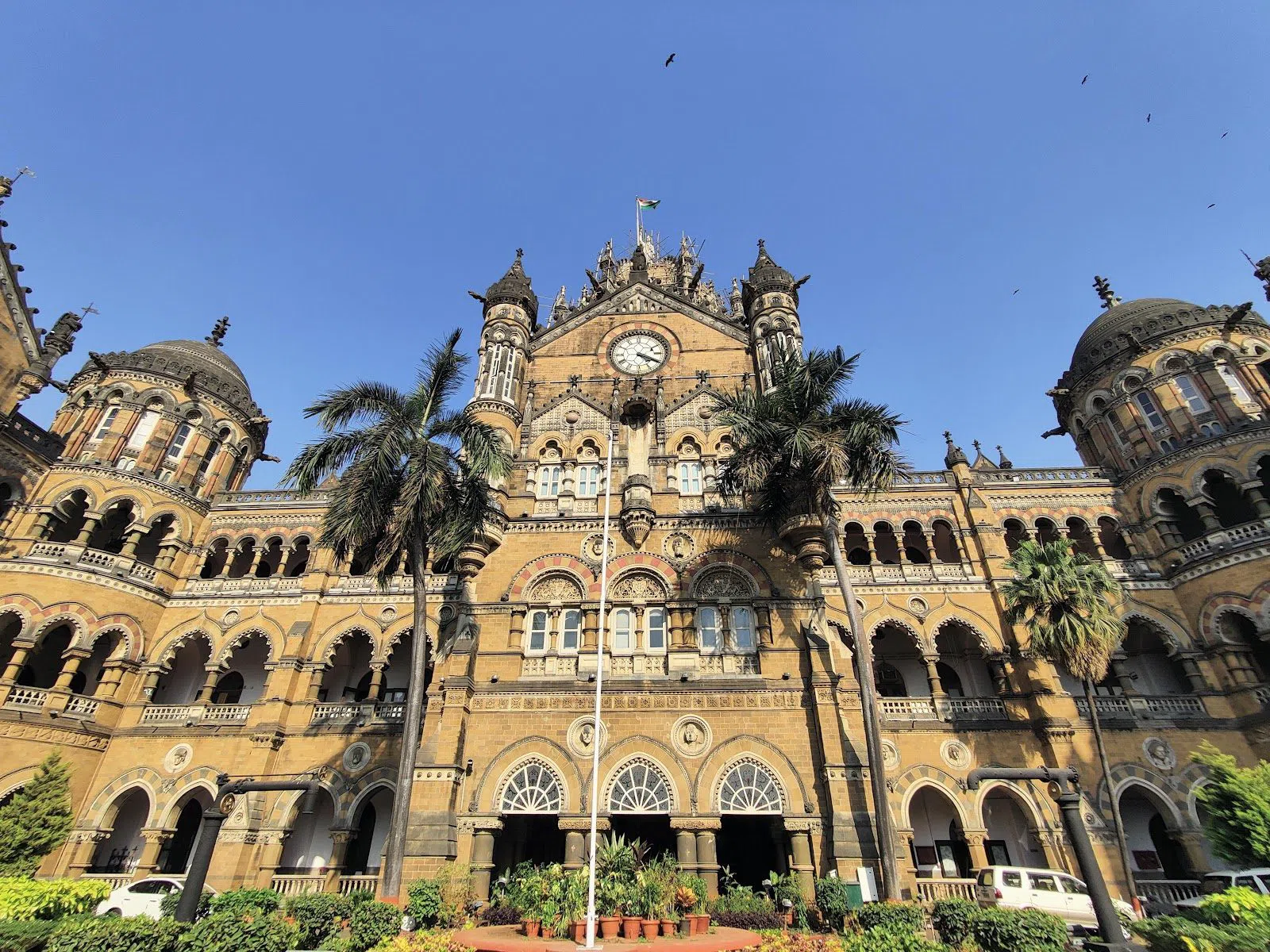
The stone lion on the gatepost of Chhatrapati Shivaji Maharaj Terminus has watched Mumbai go to work for well over a century, and most of the crowd pushing past it never looks up. Above the booking hall there is a ribbed dome, a carved zoo of monkeys and peacocks and palm fronds, and a wood-panelled Star Chamber that almost nobody standing at the taxi rank knows exists. The outside of the building is free and open all day; the inside costs ₹500 and about ninety minutes, and it is the part worth building a morning or a late afternoon around.
What you are actually looking at
Chhatrapati Shivaji Maharaj Terminus (Fort) is two things at once, and the confusion between them is why so many visitors leave disappointed. It is a UNESCO-listed Gothic Revival pile designed by F.W. Stevens and opened in 1888 as Victoria Terminus, with a figure of Progress on the central dome, a lion and a tiger on the gate piers, and stone carving that borrows as much from Indian craft traditions as from any cathedral. It is also a working mainline and suburban terminus, which means the thing you are admiring is full of people with trains to catch, luggage on their heads and no interest in your tripod.
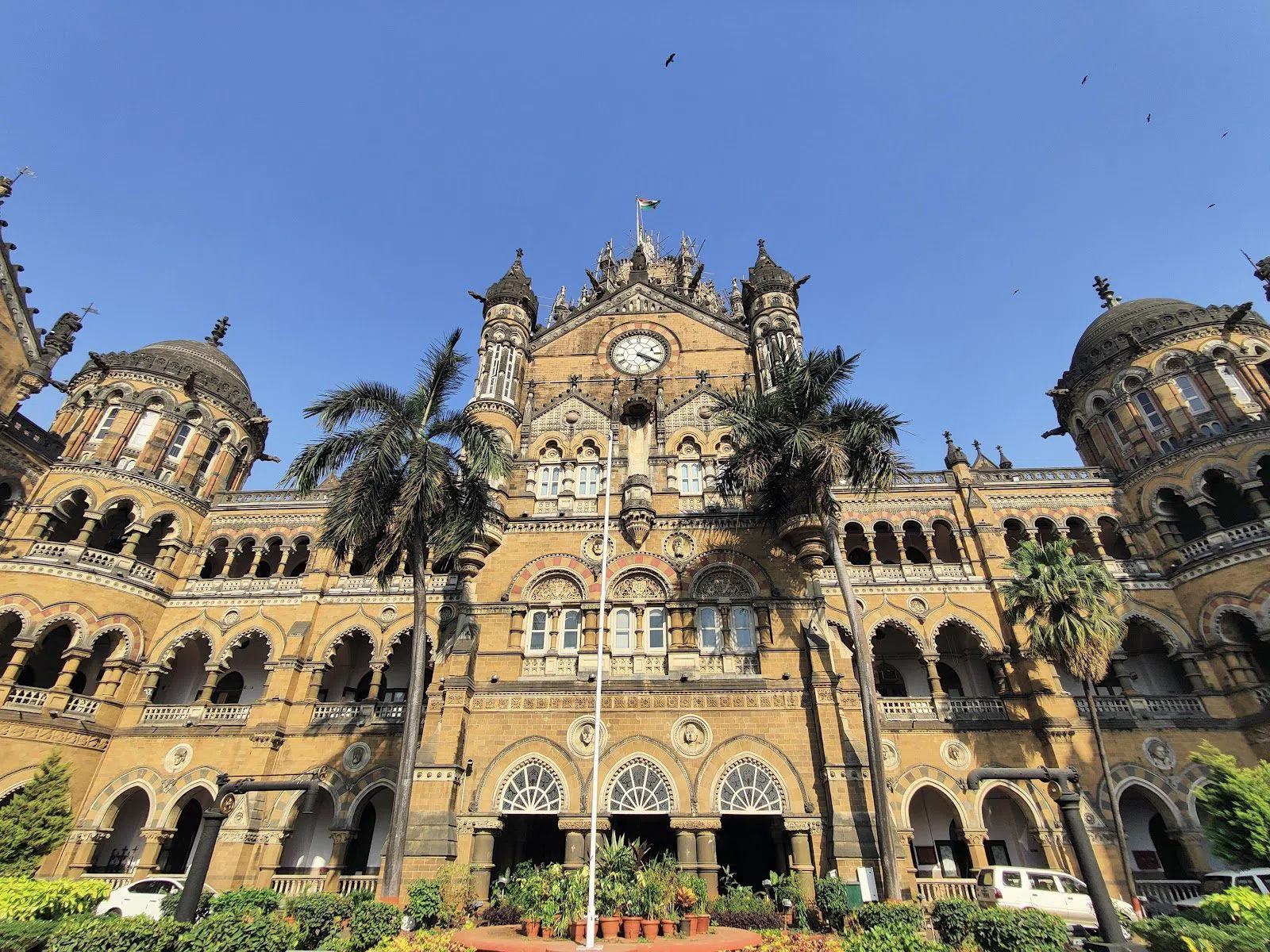
Standing in the forecourt and crossing the mainline concourse is free. There is no ticket, no booking and no door policy; large groups are fine outside, though a coach has to use the drop-off near the reception kiosk rather than idling on the carriageway. The long iron sheds with their blue-grey light are part of the architecture too, and to walk out onto the platforms you need a platform ticket, about ₹10 per head from the window. One ticket per person, no exceptions, and inspectors do check.
What the free half does not include is anything above or behind the booking hall. That is a separate visit, and it is the reason most people come.
Organizza il tuo viaggio a Mumbai
Prezzi in tempo reale dai nostri partner di prenotazione.
Cancellazione gratuita su molte camere. Potremmo ricevere una commissione quando prenoti.
The only way inside the dome
The CSMT Heritage Gallery, Star Chamber and Rail Museum (inside the terminus, Fort) are open by licensed guided tour only. There is no walk-up turnstile, no self-guided wander, and no amount of polite asking at the kiosk will get you up the staircase on your own. The tour is the only legitimate route to the central dome, the Star Chamber with its stained glass and booking counters, the gallery that looks down over the ticket hall, and the small rail museum of signalling gear, nameplates and photographs. Photography is allowed throughout. Videography is not, and that is enforced rather than suggested.
The operator is Raconteur Tours (Fort, running from the station's heritage entrance), which has been Central Railway's contracted partner since March 2023. Scheduled runs go at 4pm on weekdays and at 11am and 4pm at weekends, last roughly an hour and a half, and cover about 1.5 km on foot and stairs. Tickets are ₹500 per adult and ₹150 for students, and the kiosk also quotes a museum-only rate of around ₹200 if you want the exhibits and not the climb. Every visitor needs photo identification. A passport works; a photo of a passport usually does not. Once booked, tickets are non-refundable, so pick a slot you will actually make through Mumbai traffic.
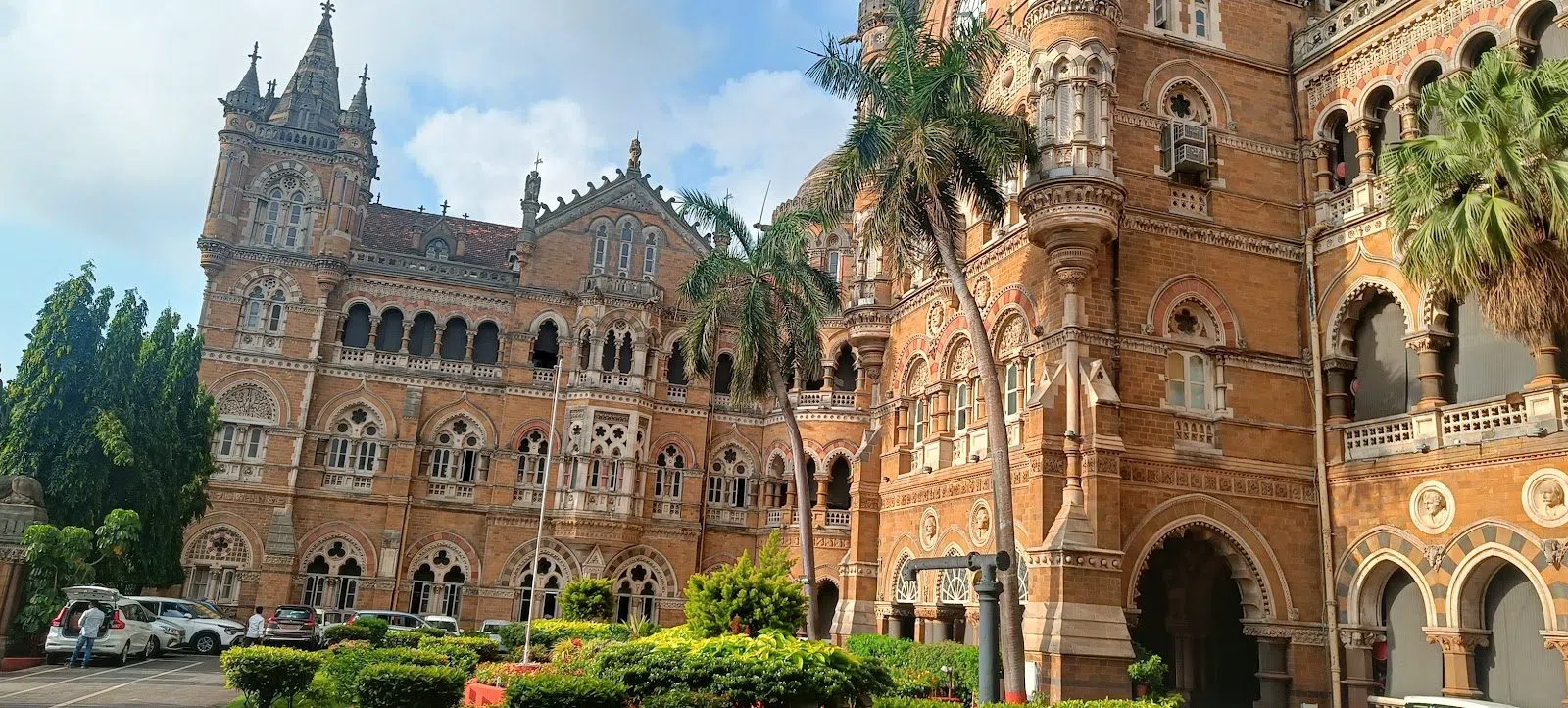
Small parties are absorbed into the scheduled slots without fuss. Anything larger than a family should book a whole slot in advance; private arrangements exist and are worth the admin if you are moving ten or more people, because a group that arrives hoping to be squeezed in at 4pm on a Saturday will be standing outside at 4.05pm.
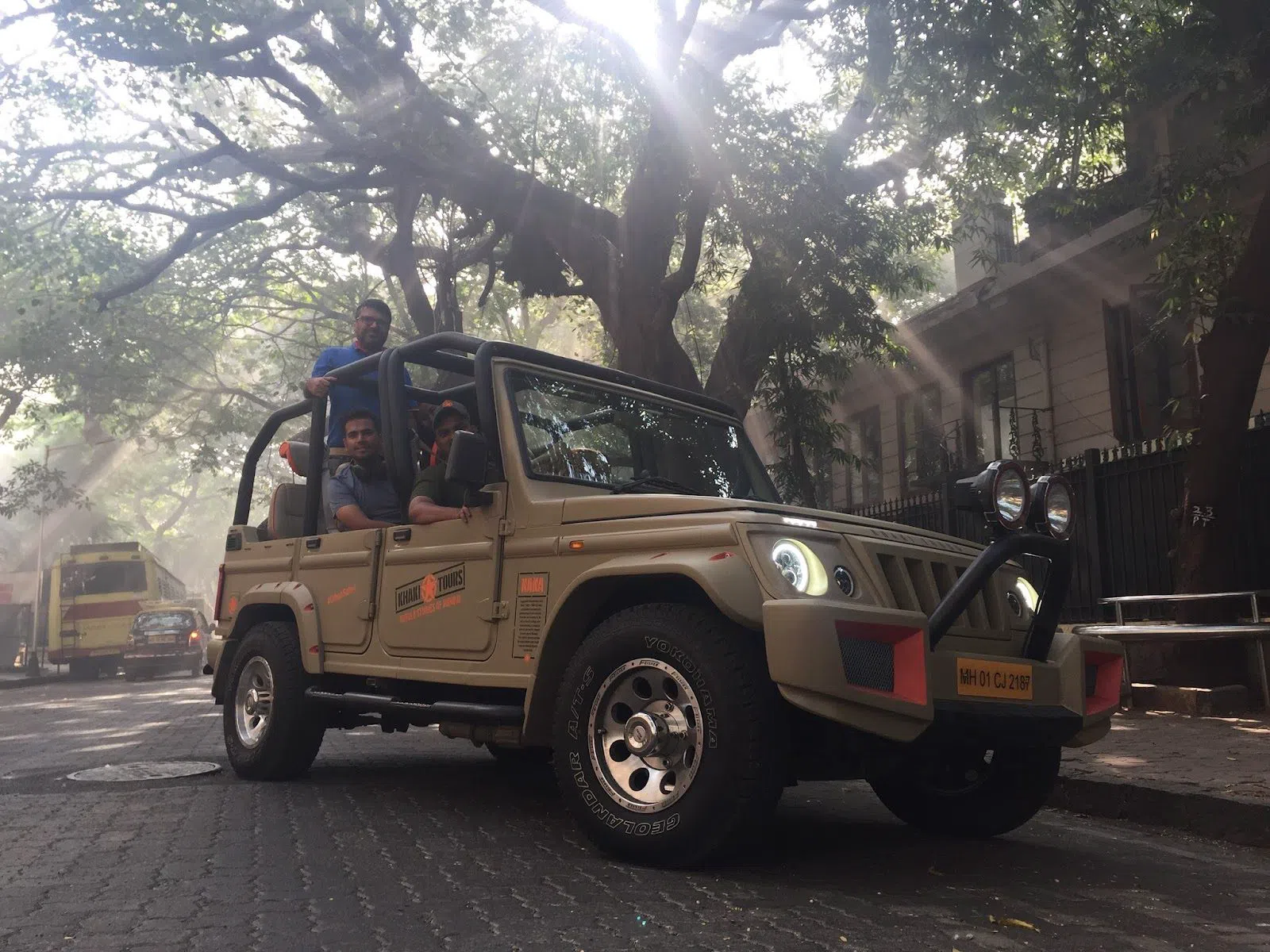
If you would rather read the whole precinct than just this one building, Khaki Tours (Fort) runs fixed-time public walks at roughly ₹699–₹1,199 per person and private walks for a whole party from about ₹5,999. Their Fort walk sets the terminus in the context of the streets around it, and their municipal-headquarters walk is the only way the public gets inside that interior at all.
Door prices, tour prices and booking ahead
The economics here are simple. Free gets you the facade, the forecourt and the concourse. Ten rupees gets you the platforms. Five hundred gets you everything above the booking hall with a guide who can explain the ventilation shafts and the original ticket windows. There is no premium tier beyond that and no skip-the-line product for the heritage tour, because the constraint is slot capacity rather than queue length.
That makes the booking decision a question of slots rather than queues. Turning up cold at 3.45pm on a weekday often works. Turning up cold at 11am on a Sunday, or at 4pm on a long weekend, frequently does not, and because the tour runs only once or twice a day, a missed slot means a different day rather than a later hour.
A guided sightseeing option that takes in the terminus alongside the rest of the city is attached to this page as a card rather than written into the prose, and it is a reasonable fallback if your logistics are tight. For what it is worth, reviews for the leading one are landing at roughly 0.7 a day, so it is being booked steadily right now; it runs seven days a week, and prices start from 24 USD per person. A car-based city tour will give you the facade, the context and the two Gothic giants from the kerb. It will not give you the Star Chamber; only the licensed heritage tour does.
Rules, bags and what the works mean right now
This is an operational railway station in a city that takes station security seriously. Expect bag scanning at some entrances, armed police on the concourse, and a general expectation that you do not block the flow. Nobody cares what you wear, but do not photograph security staff or ticket counters at close range, and keep out of the way of porters.
The redevelopment is live and large. A ₹2,450 crore programme is rebuilding the long-distance side, with hoarding and heavy plant visible, and a 75-day traffic and power block is running on Platforms 14 and 15 from 1 October to 15 December 2026. None of this touches the heritage half, the dome tour or the facade views, but it does mean the long-distance end looks like a construction site, and it means you should check your own train arrangements separately if you are actually travelling. Plan the visit around the 1888 building, not the works.
Free angles on the facade
The single best photograph is not from the forecourt, where you are too close and the traffic is in the way. It is from the Himalaya Footover Bridge (Fort, beside the terminus), reopened in March 2023 after the 2019 collapse and rebuilt in stainless steel with structural sensors. It is a public footbridge with no door policy, it gets you above the traffic, and it is the place to be when the floodlights come on. It is also narrow and heaving at commuter hours, so keep a group to one side and do not set up a tripod across it.

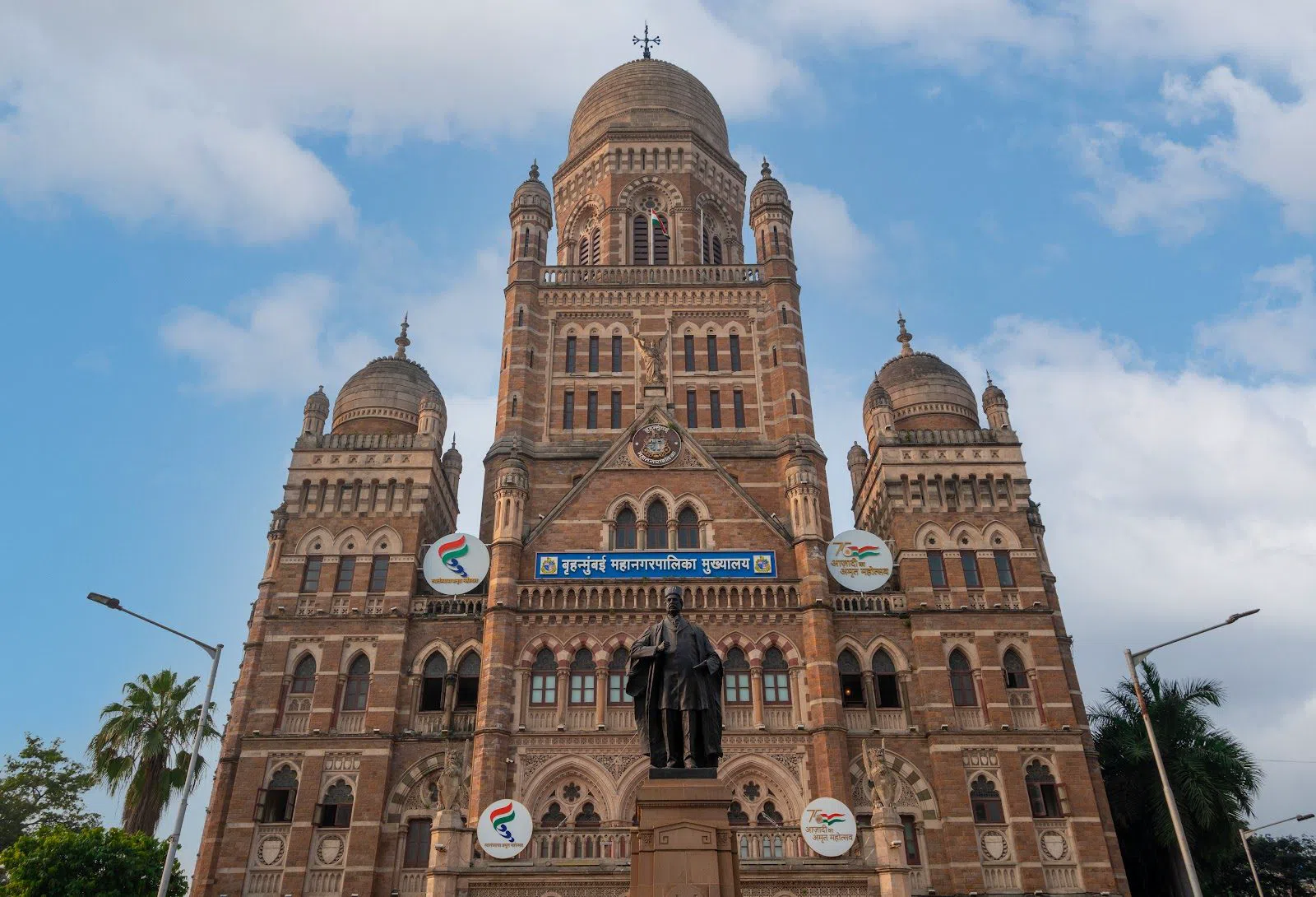
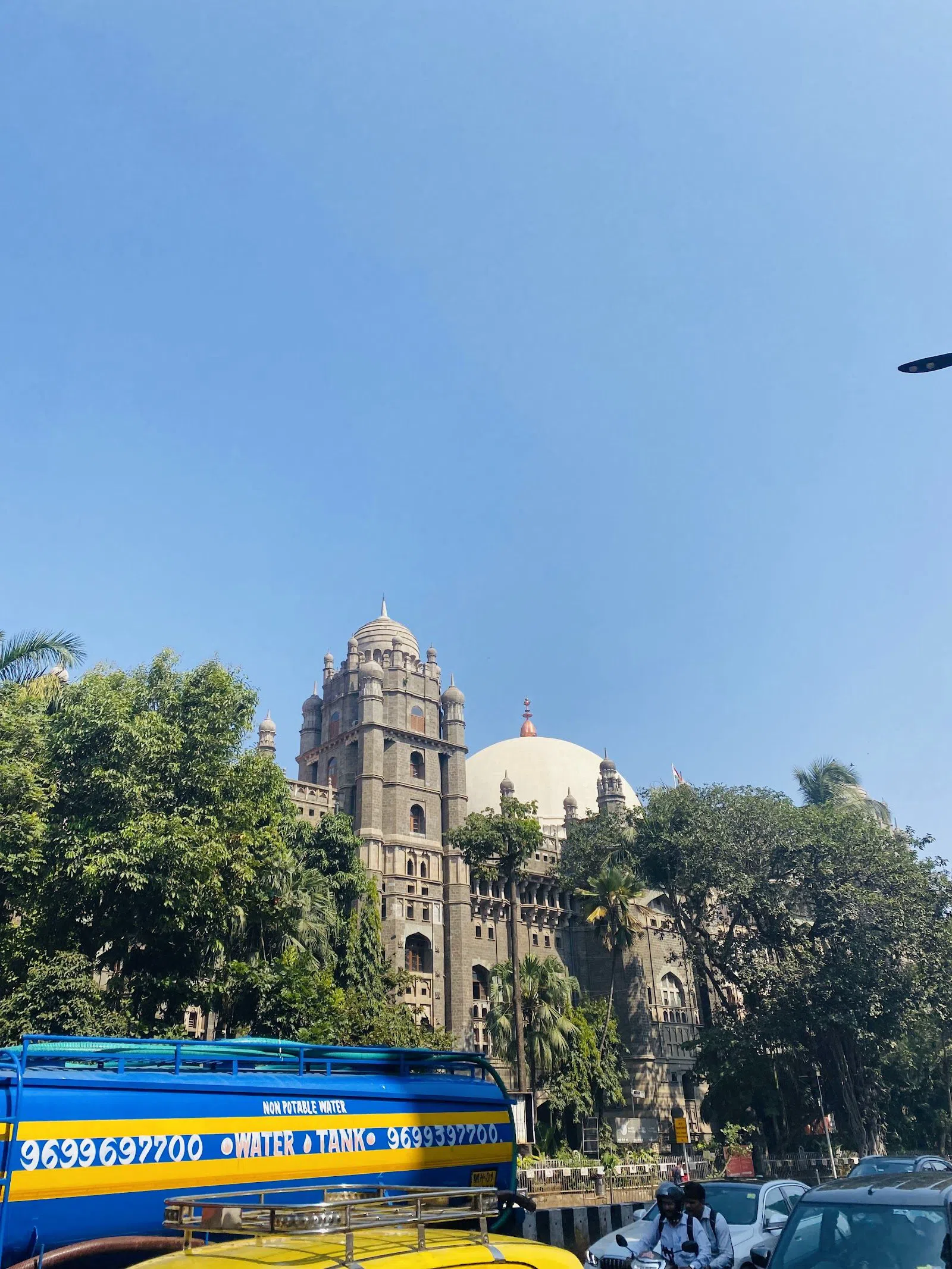
Directly opposite stands the Municipal Corporation Building (Fort), the city's municipal headquarters, by the same architect and almost the same vocabulary of stone. The front-yard viewing deck is open for photographs, which gives you the two Gothic giants in one frame. The interiors are restricted and reachable only on a booked heritage walk, so do not promise anyone a look at the council chamber on the strength of turning up.
Eating within five minutes of the terminus
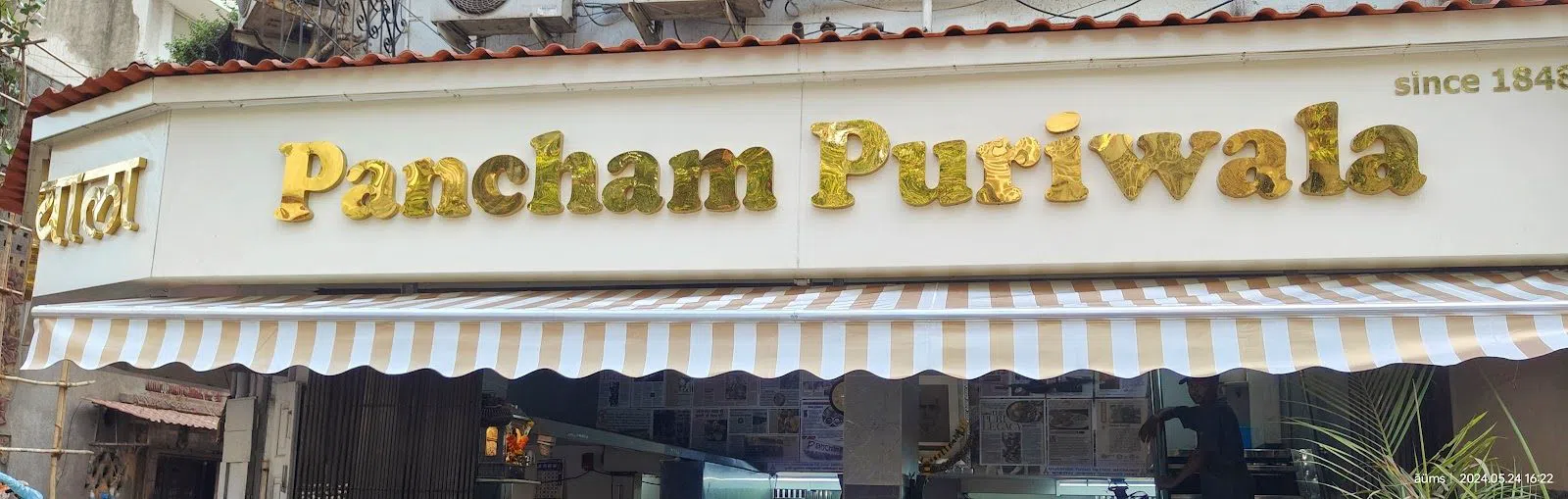
Pancham Puriwala (Fort, across the road from the terminus) has been feeding railway passengers for close to 150 years and is open roughly 10:30 to 23:00. It is pure vegetarian, walk-in only, no reservations, shared tables, and about ₹150–₹350 a head. Lunchtime turnover is brisk and a large party will be split across tables rather than seated together, which is fine if nobody has strong feelings about it. For a cheap, fast meal in the gap between photographing the facade and making a 4pm slot, it is the obvious answer.
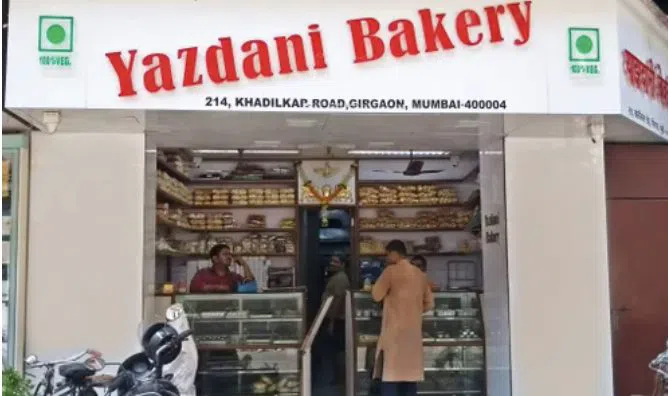
Yazdani Bakery & Restaurant (Fort) is the early option, one of the last working Irani bakeries in the precinct, open roughly 07:00 to 19:00, counter-and-bench service, no bookings, about ₹60–₹200 a head. Go at eight in the morning for brun maska and chai before the station crowds thicken. It suits two or four people. A coach party will not fit through the door, let alone onto the benches.
For a proper sit-down lunch, Ideal Corner (Fort) is a ten-minute walk away and is the most honest Parsi kitchen near the station, at roughly ₹400–₹800 a head, open about 12:00 to 21:45 and closed on Mondays. It is one small room. Call ahead for anything above four people, and avoid the 13:00 office rush unless you enjoy hovering.
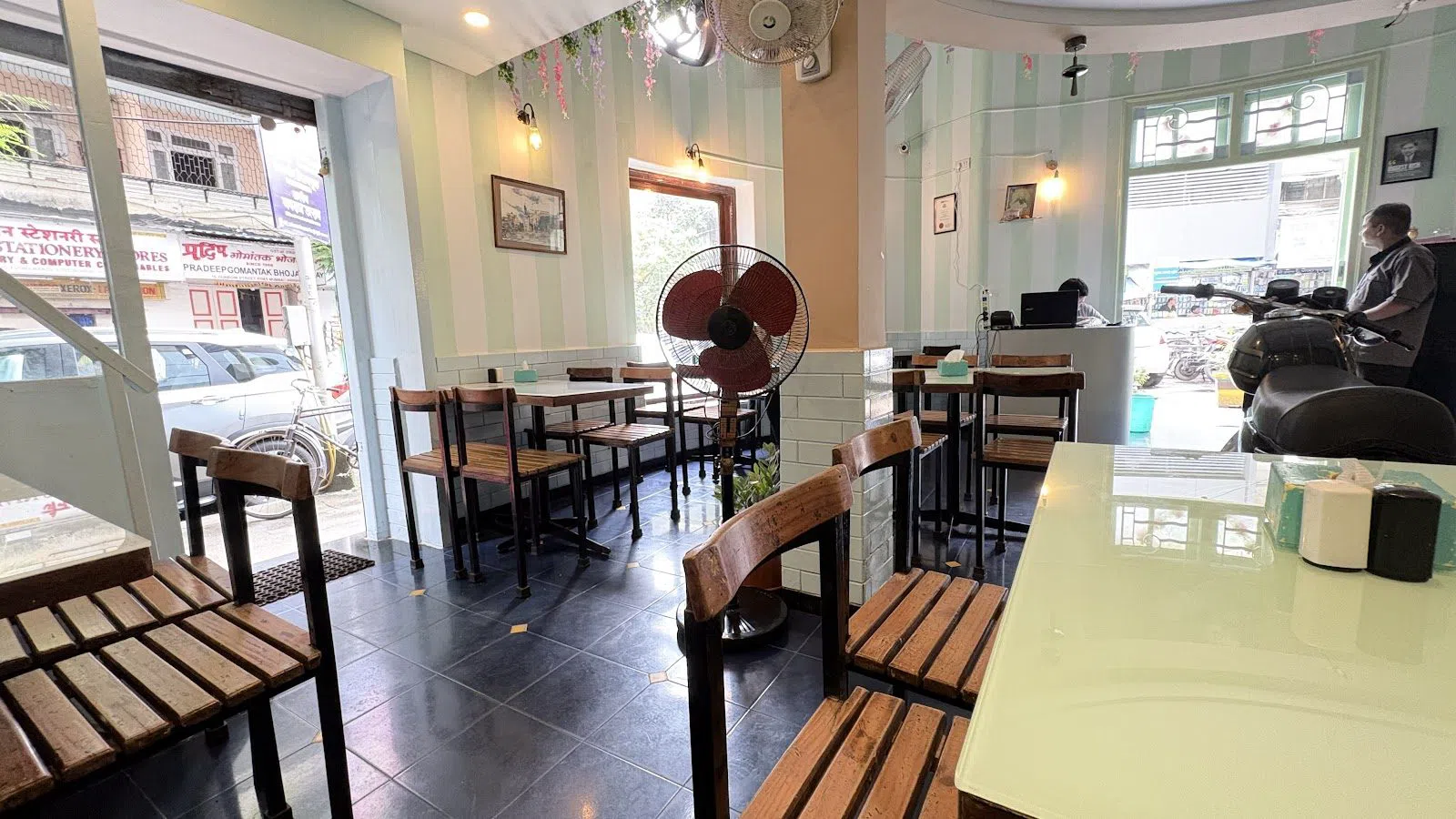
The Fort walk that turns it into a half-day
Five minutes behind the station, the Mumbai General Post Office (Fort) is a working post office with a domed sorting hall, a philatelic bureau and a small display on India's postal history. Entry is free, no booking is needed, and it opens Monday to Friday 10:00–17:00 and Saturday until 14:00, closed Sundays and public holidays. Keep your party small, keep your voice down, and ask before photographing staff. When the heritage slots are gone, this is a real free interior rather than a consolation prize.
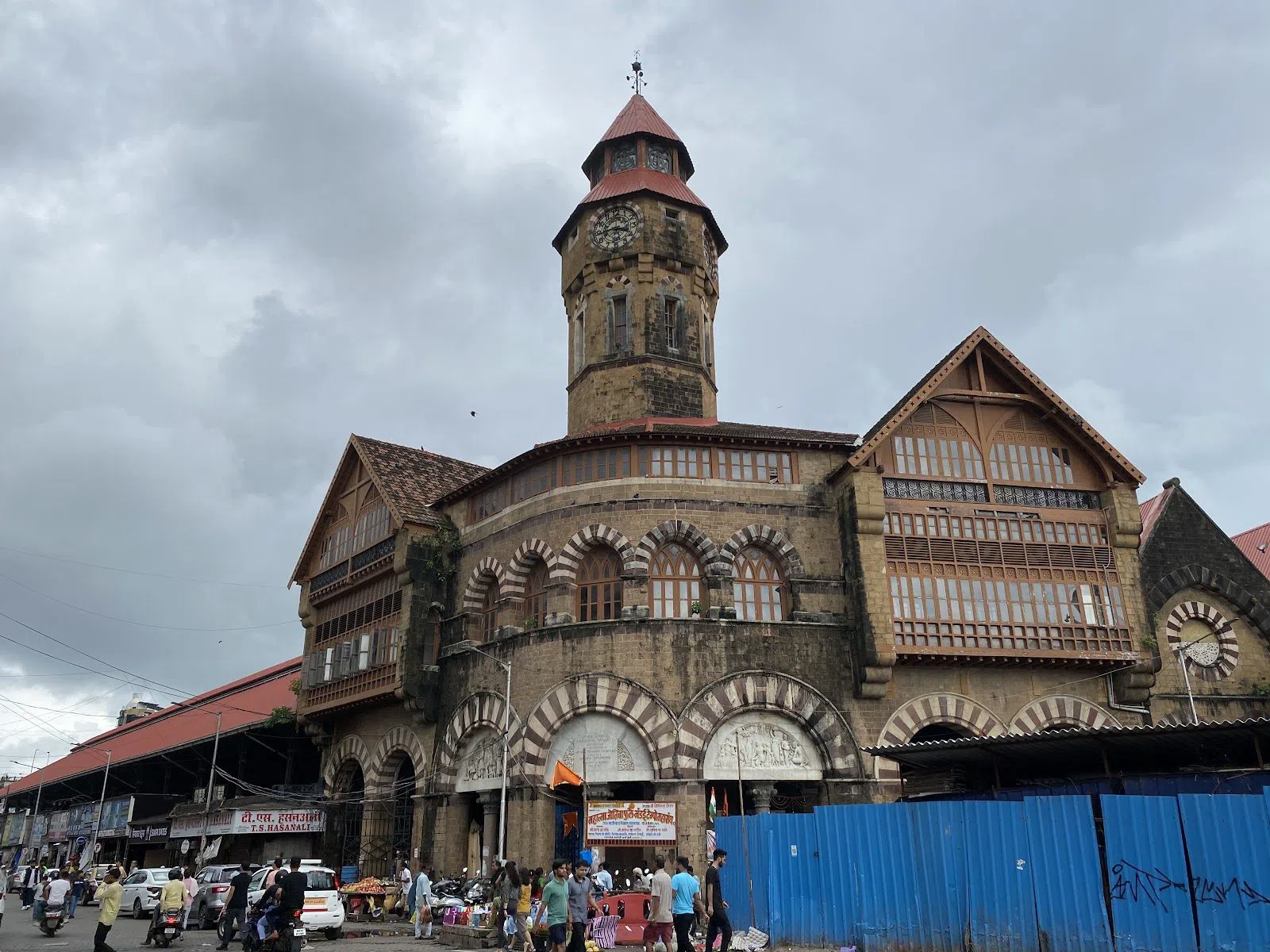
Ten minutes north, Crawford Market (Mandvi) is free to enter, recently refreshed on the facade and layout, and still a working wholesale and retail market. Most shops run 11:00–20:00, Sunday is mornings only, and some spice and pet sellers shut on Tuesdays. The aisles are tight and porters shove handcarts through them, so walk single file and agree a meeting point before you go in. Ask the price of anything before you accept it into your hands.
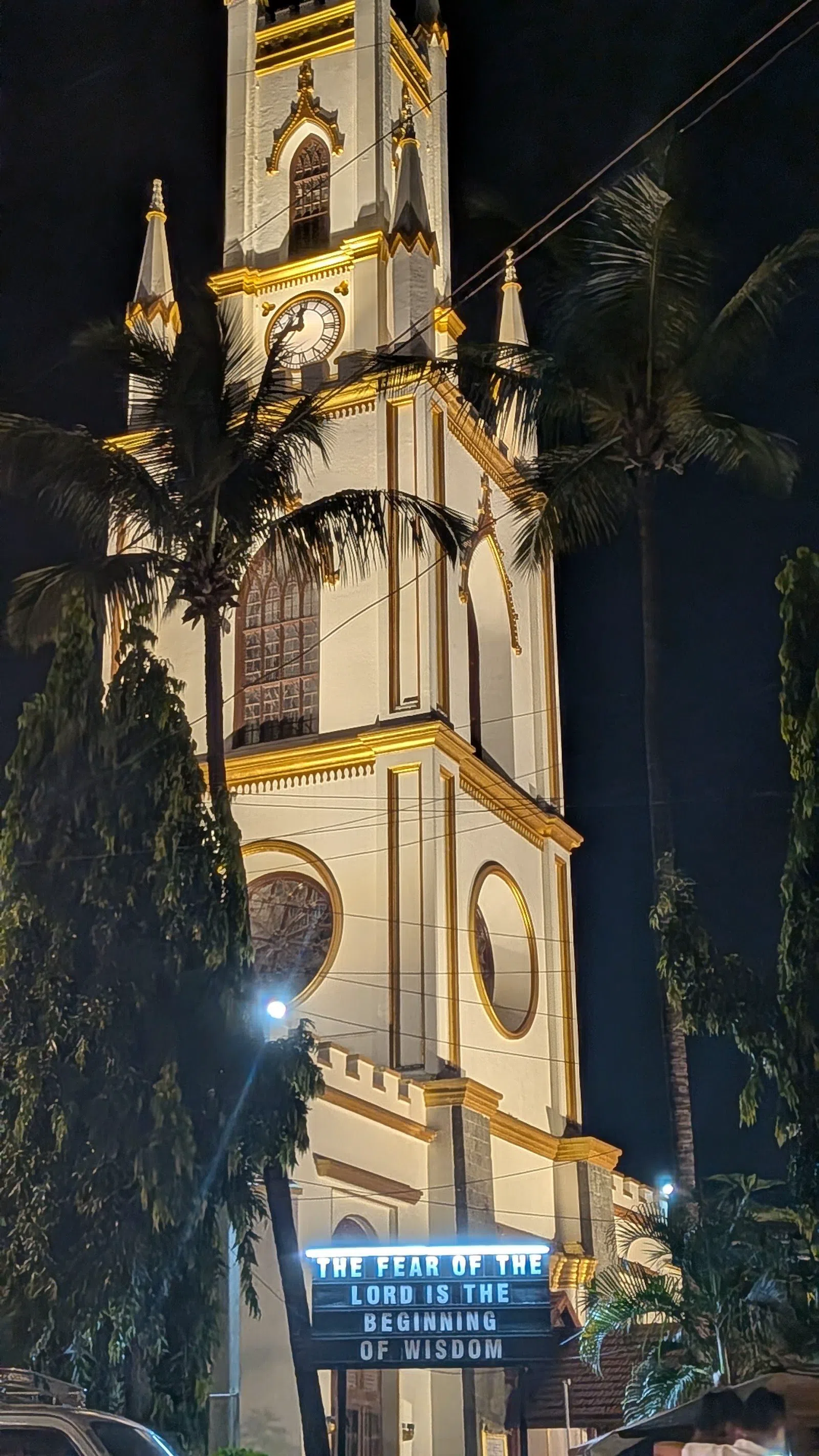
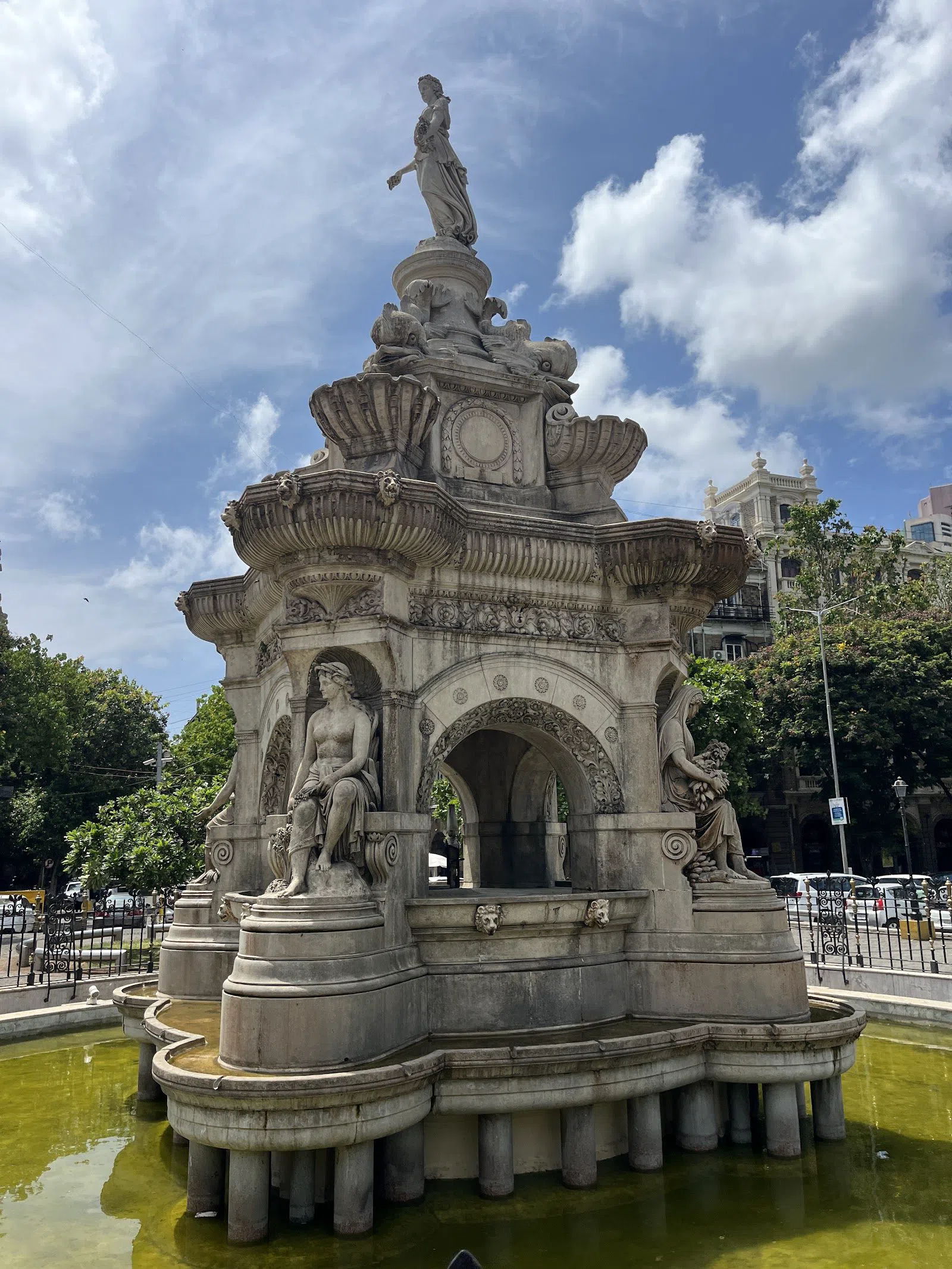
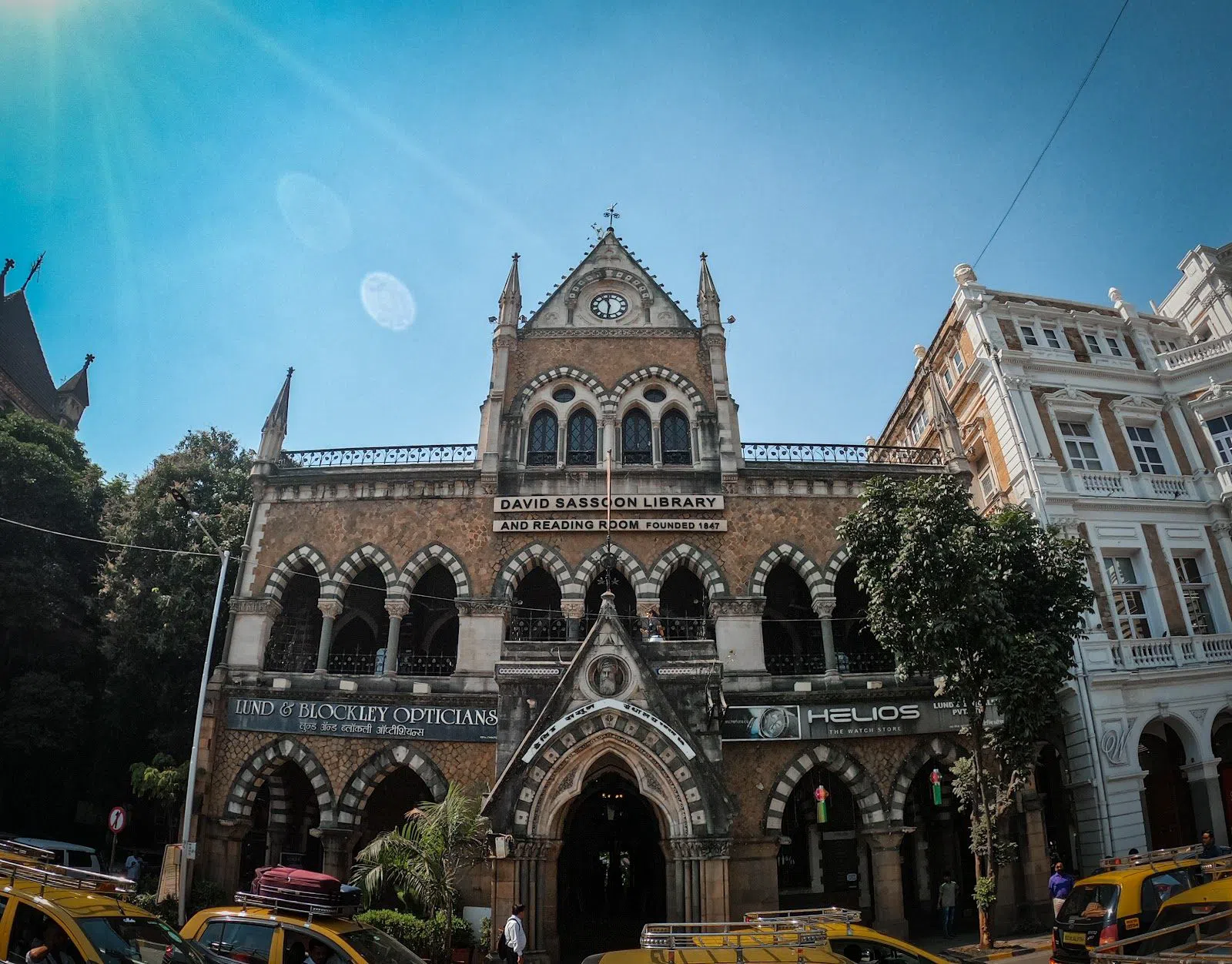
Walking south instead, Hutatma Chowk (Fort), the restored Flora Fountain plaza, is an open square with no restrictions, lit at night, and the easiest place in the precinct to tell a group to meet. From there, St Thomas Cathedral (Fort) is a five-minute detour that most visitors skip: the oldest British-era building in the city and the original Churchgate of the old walls, free to enter, roughly Monday to Saturday 07:00–18:00 and Sunday until 20:30, with shoulders and knees covered and services respected. A little further on, the David Sassoon Library and Reading Room (Kala Ghoda) reopened in June 2023 after a sixteen-month restoration and is now the calmest ten minutes anywhere near the station. Visitors are welcome in the reading room and on the verandah at the staff's discretion; it is a working library where locals genuinely nap over newspapers, so a few people at a time and no chatter.
Indoors when the slot is gone or the rain lands
The Chhatrapati Shivaji Maharaj Vastu Sangrahalaya (Kala Ghoda) is the natural indoor companion to the station and the right place to park two or three hours if the heritage tour is full or the monsoon arrives sideways. It opens daily 10:15–18:00 with the counter closing at 17:45. Tickets run to about ₹700 for a foreign adult and ₹200 for a foreign child, far less for Indian residents, with an audio guide included for foreign visitors. Buy online if you are a group, because the counter queue is the only queue here worth avoiding. It is wheelchair-friendly and used to handling school and tour parties.
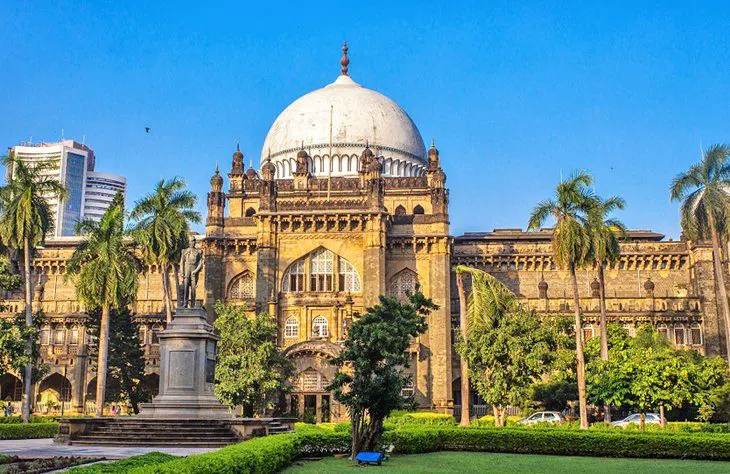
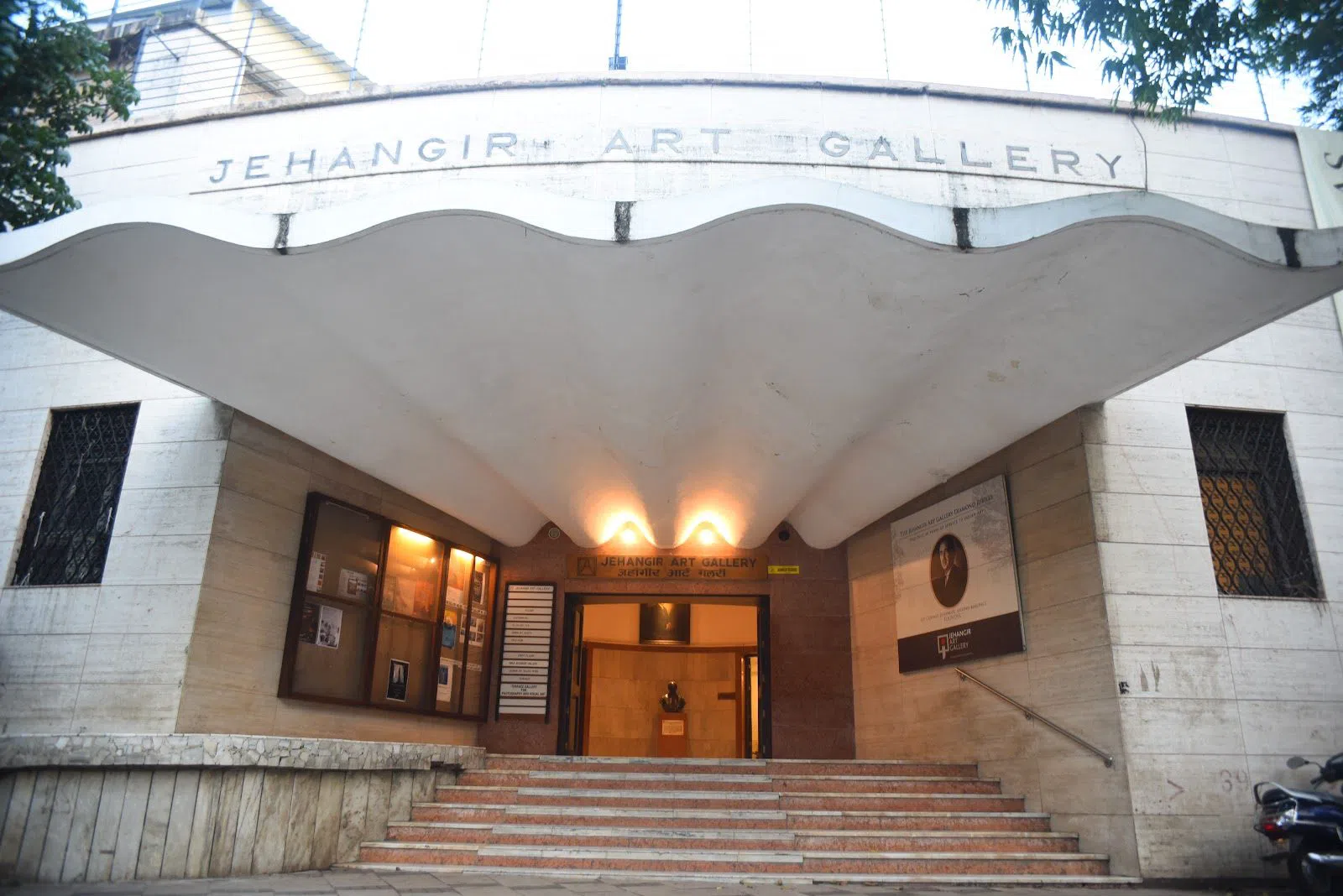
Across the road, Jehangir Art Gallery (Kala Ghoda) costs nothing, needs no booking, and rotates its exhibitions weekly. Individual halls are small and the occasional private-view evening is closed to the public, so check what is hanging before you promise anybody anything specific. As a twenty-minute, zero-commitment stop at the end of a CSMT half-day, it does its job.
Is it worth it
Yes, with one condition: do the licensed interior tour or accept that you are visiting a facade. The free half is a magnificent building seen from a traffic island, and plenty of people are perfectly happy with that plus the footbridge angle at dusk. But ₹500 for ninety minutes inside a working Victorian terminus, with access to the Star Chamber and the dome and someone who can explain why the ventilation works the way it does, is among the best-value paid experiences in the city.
It suits architecture and railway enthusiasts most obviously, along with anybody who likes buildings that are still doing their original job, and it works well for couples, small groups and families with older children. Large coach parties fare worst: the interior tour has fixed small slots, the footbridge is narrow, the market aisles are single file and the best food nearby seats four. If you are moving twenty people, book a private slot and a private walk, and budget more time than you think for crossing one road.
Best time to go
Early morning, between about 07:00 and 09:00, is the best light on the facade and the worst crowds on the concourse, because that is peak commuter flow. It is the right window for photography and for breakfast at the bakery, and the wrong window for a leisurely wander.
Mid-morning at a weekend is the civilised compromise: the 11am tour slot exists only on Saturday and Sunday, the concourse has calmed, and you still have the whole afternoon for the Fort walk. On a weekday the only slot is 4pm, which works neatly if you spend the day on the museum and the library and arrive at the station with an hour to spare. Late afternoon into dusk is the other sweet spot: finish the tour around 5.30pm, walk to the footbridge, and wait for the floodlights.
Seasonally, November to February is the obvious answer: dry, warm rather than punishing, and comfortable for the amount of walking this precinct demands. March to May is hot enough that you will want the indoor hours in the middle of the day. During the June to September monsoon, the building looks spectacular wet and the streets around it flood; keep the museum, the post office and the library as your fallbacks and do not plan a tight day. Avoid major public holidays if you can. The post office closes, the market thins out, and the station is at its busiest.
Practical notes
Getting there is the easy part: this is a terminus, so suburban and mainline trains arrive at the building itself, and black-and-yellow taxis and app cabs will all recognise either CSMT or VT as a destination. The whole precinct described here (station, municipal headquarters, post office, market, fountain, cathedral, library, museum, gallery) fits inside a walkable grid, and nothing in it is more than about twenty minutes on foot from the station gates.
Carry small notes. The ₹10 platform ticket, the market and the bakery are all happier with cash than with a card, and foreign cards are accepted unevenly in the older establishments. Allow four to five hours for a satisfying half-day: ninety minutes for the interior tour, half an hour for the facade and the footbridge, an hour for lunch, and the rest spread across the post office, the fountain and whichever of the library or the gallery appeals. Budget roughly ₹1,000–₹1,500 per person for the day if you do the heritage tour and eat cheaply, or ₹2,500 and up if you add the museum at foreign-visitor rates and sit down for a Parsi lunch.
Stay in or near this precinct if the architecture is the point of your trip. Everything above is walkable from it, and the evening light on the facade is a two-minute stroll rather than a taxi ride. Compare rates on our Mumbai hotel search, and read the rest of our Mumbai guide for the neighbourhoods either side of the Fort grid.
Prima di partire
Can you go inside CSMT without booking a tour?
Partly. The forecourt and the mainline concourse are free public space with no ticket and no booking, and a platform ticket of about ₹10 per person lets you walk the platforms. The dome, the Star Chamber, the heritage gallery and the rail museum are reachable only on the licensed guided tour; the upper floors have no self-guided access.
How much does the CSMT heritage tour cost and what does it cover?
₹500 per adult and ₹150 for students, which covers the guided interior tour of the central dome, the Star Chamber, the heritage gallery overlooking the ticket hall and the rail museum. The kiosk also quotes a museum-only rate of around ₹200. Every visitor needs photo ID (a passport is fine), and tickets are non-refundable once booked.
What time do the heritage tours run and how long do they take?
Scheduled runs are at 4pm on weekdays and at 11am and 4pm at weekends. Each lasts roughly an hour and a half and covers about 1.5 km of walking and stairs. The guides fit small parties into the scheduled slots; larger groups should book a whole slot or a private one in advance, because missing a slot costs you a day rather than an hour.
Can I take photographs inside the heritage building?
Still photography is allowed throughout the interior tour, including the Star Chamber and the dome. Video is not permitted, and the staff enforce that. On the concourse, keep away from close-range shots of security staff and ticket counters, and do not block passenger flow with a tripod.
How do I get Chhatrapati Shivaji Maharaj Vastu Sangrahalaya tickets if the station tour is full?
Buy Chhatrapati Shivaji Maharaj Vastu Sangrahalaya tickets online or at the counter; the museum opens daily 10:15 to 18:00, with the counter closing at 17:45. A foreign adult pays about ₹700 and a foreign child ₹200, far less for Indian residents, and foreign visitors get an audio guide. It is a twenty-minute walk from the station and the best indoor fallback alongside the free post office and library.