Het Mumbai-nummer
Walking Mumbai's Banganga Tank and Malabar Hill Temples
A 12th-century stone step-tank sits below Malabar Hill, free to enter from dawn to late evening, with three working shrines on its banks and a 1904 Jain temple up the road.

Door Aditi RaneThe city read by its facades
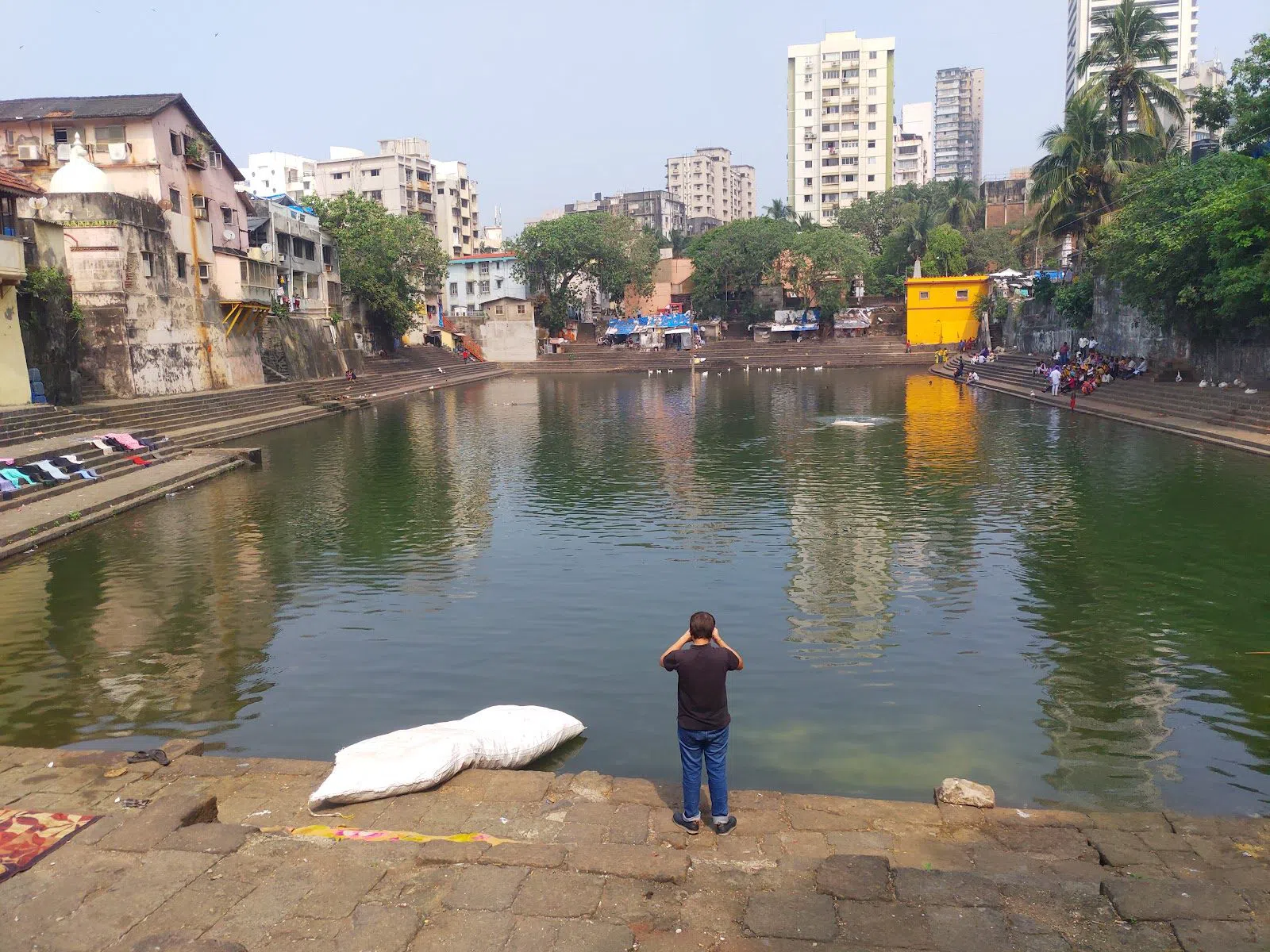
Banganga Tank sits below street level on Malabar Hill, a rectangular 12th-century step-tank with worn black basalt ghats running down all four sides. The precinct has no gate and no ticket, and it stays open from dawn to late evening. Two tall stone deepstambha lamp towers stand at the water's edge.
What you see at the tank
Banganga Tank (Malabar Hill), also written Banganga Talav, is sunk below the level of the street, so you arrive looking down on it. The water is still and green and holds fish. Worn steps line all four sides, and the two lamp towers rise where the ghats meet the water.

Small painted shrine spires and faded low-rise buildings crowd the rim, with the towers of Malabar Hill behind them. The lanes feeding the tank are narrow, and guides split larger parties into smaller ones before taking them down.
Plan je reis naar Mumbai
Actuele prijzen van onze boekingspartners.
Gratis annuleren bij veel kamers. We kunnen een commissie ontvangen als je boekt.
The temples on the banks
Shri Walkeshwar Mahadev Mandir (head of the tank) is the temple the tank was built for, and the reason people still come here to worship. Darshan is free, 6 a.m. to 9 p.m. daily. The shikhara is painted cream and ochre above a silver-clad doorway, a brass bell hangs at the entrance, and a stone Nandi faces the sanctum past the marigold garlands. Devotees queue barefoot on polished stone. The sanctum is small. Entry comes a few people at a time and the rest of the queue waits outside.


Walkeshwar Shri Kashi Math Samsthan (west bank of the tank) has three centuries of Gaud Saraswat Brahmin history behind it, and its rebuilt white-and-gold building is the newest landmark in the precinct. Carved stone pillars hold up a stepped temple tower, saffron flags show against the water, and the courtyard holds vrindavan samadhi shrines and a Hanuman shrine. This is a working religious institution. Quiet visitors are tolerated at the courtyard and the outer shrines. Ask before you enter a prayer hall, and stay away during scheduled puja. The detour takes two minutes.
Parshuram Mandir, Walkeshwar (western bank of the tank) was built in its present form in 1965 on donated garden land and is still active. A plain pillared porch fronts the inner sanctum, a small Ganesha shrine sits beside it, and the steps drop straight down to the ghat. The temple is tiny and run by the Gaud Saraswat temple trust. Shrines of this kind still get added here; the precinct has not been frozen as a monument.
The Jain temple on Ridge Road
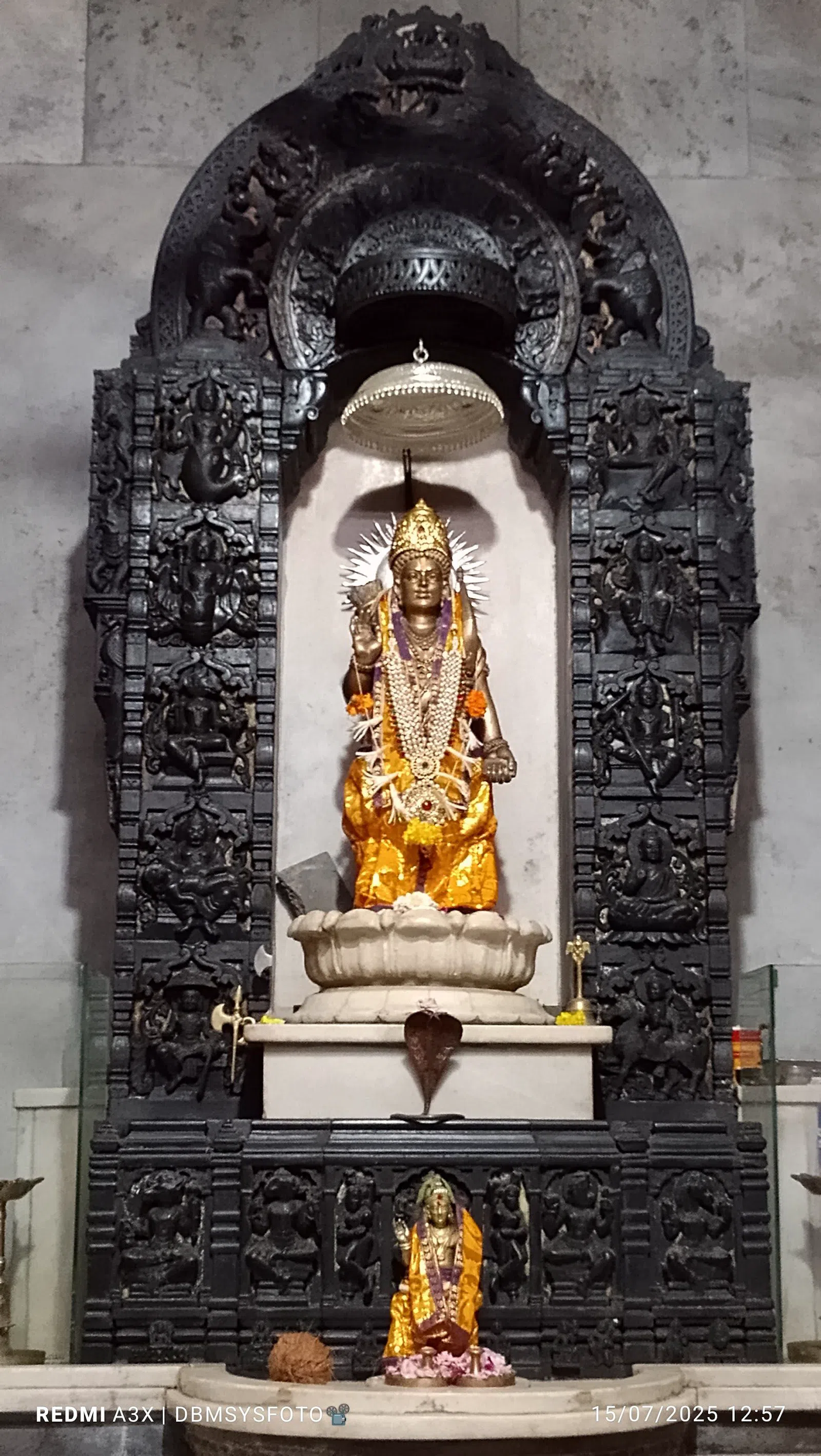
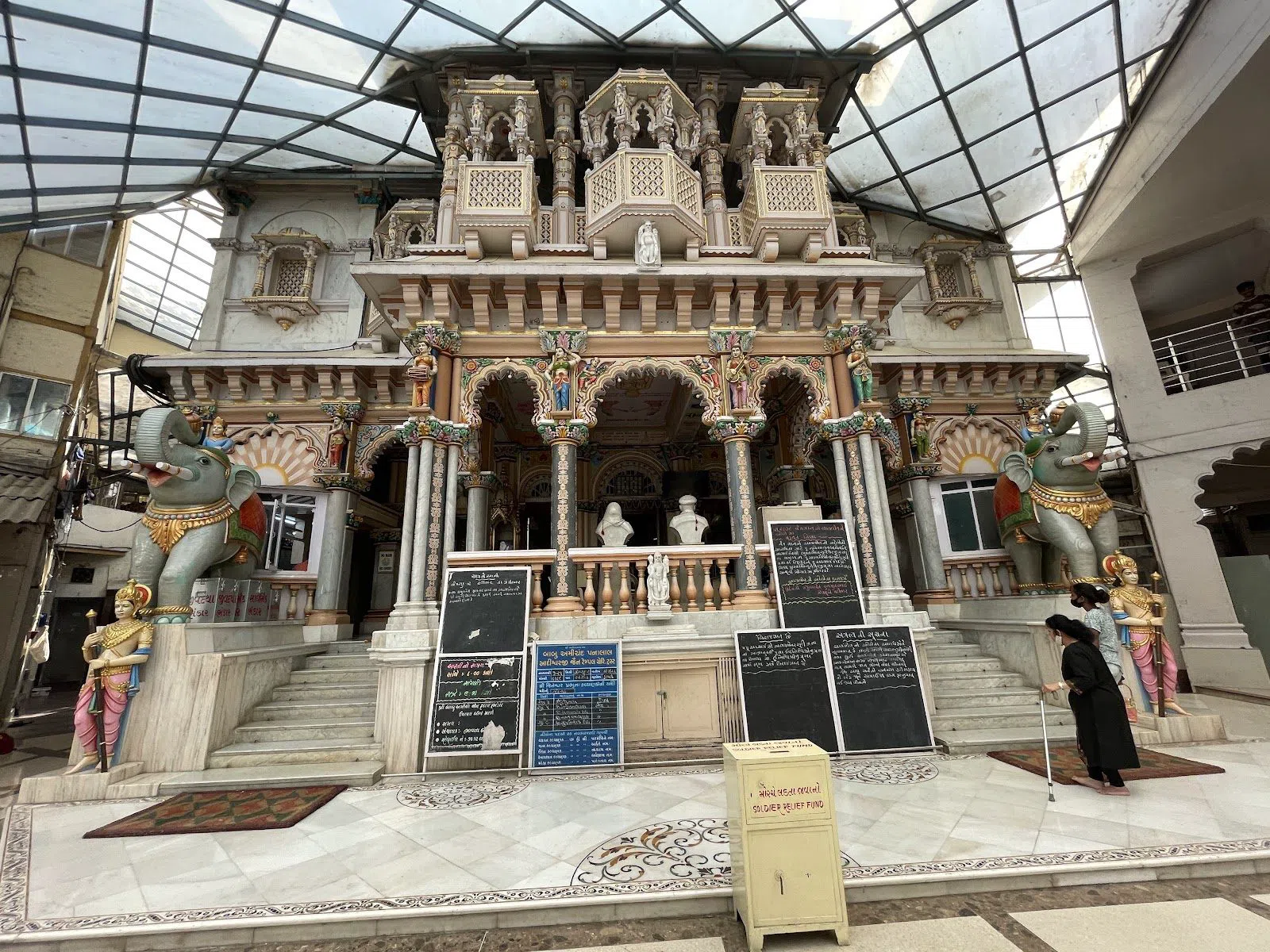
Babu Amichand Panalal Adishwarji Jain Temple (Ridge Road) dates to 1904 and takes visitors of all faiths free of charge, 6 a.m. to 9 p.m. daily. Striped marble columns carry mirrored and painted ceilings with zodiac frescoes. Carved white marble idols stand under silver canopies, and elephant figures flank the entrance steps. The interior is the most elaborate within walking distance of the tank and costs nothing to see, so it goes well with a morning at the ghats. During morning puja, keep to the outer hall.
Shoes, leather and the steps
Shoes come off at Walkeshwar and at the Jain temple, where leather of any kind also stays at the door. Photography is restricted inside the Jain sanctum. Ritual areas occupy the south ghats of the tank, and those need space.
Access comes down to the steps. Khaki Tours, a Mumbai heritage walking outfit, states plainly that this route does not suit seniors, toddlers or pregnant visitors. Take that at face value before you bring an older relative down to the water.

Free at the door or a guided walk
The precinct has no official guides and no audio tour, so the choice is reading the stones yourself or paying someone who knows them. Khaki Tours lists its Banganga walk at ₹1,199 per person and runs it as a scheduled public group walk, covering two kilometres in two hours. The same route can be built as a private booking for your own party, and guided walks here run seven days a week. Book ahead for the private version, since the operator assembles it to order.
Uphill to the park and the gardens
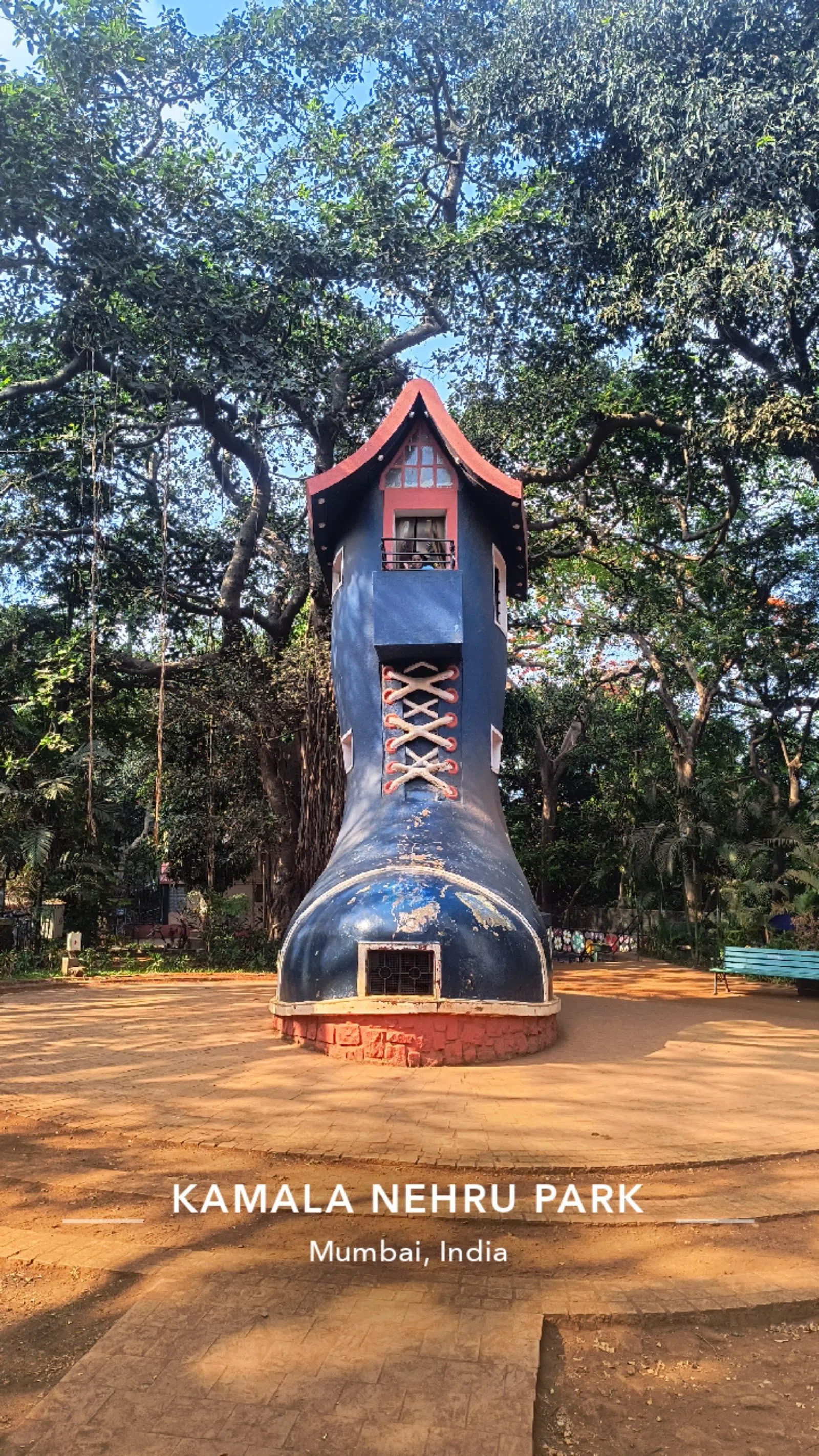
Kamala Nehru Park (Malabar Hill) is 10 minutes uphill from the tank, free and unticketed. The low parapet looks straight down the curve of Marine Drive and Girgaum Chowpatty, the Queen's Necklace view. Children climb through the giant concrete Old Woman's Shoe, and clipped hedges and gravel paths fill the rest. The park is also the entrance end of the forest trail. The parapet crowds at sunset. Come in the hour after opening for photographs.
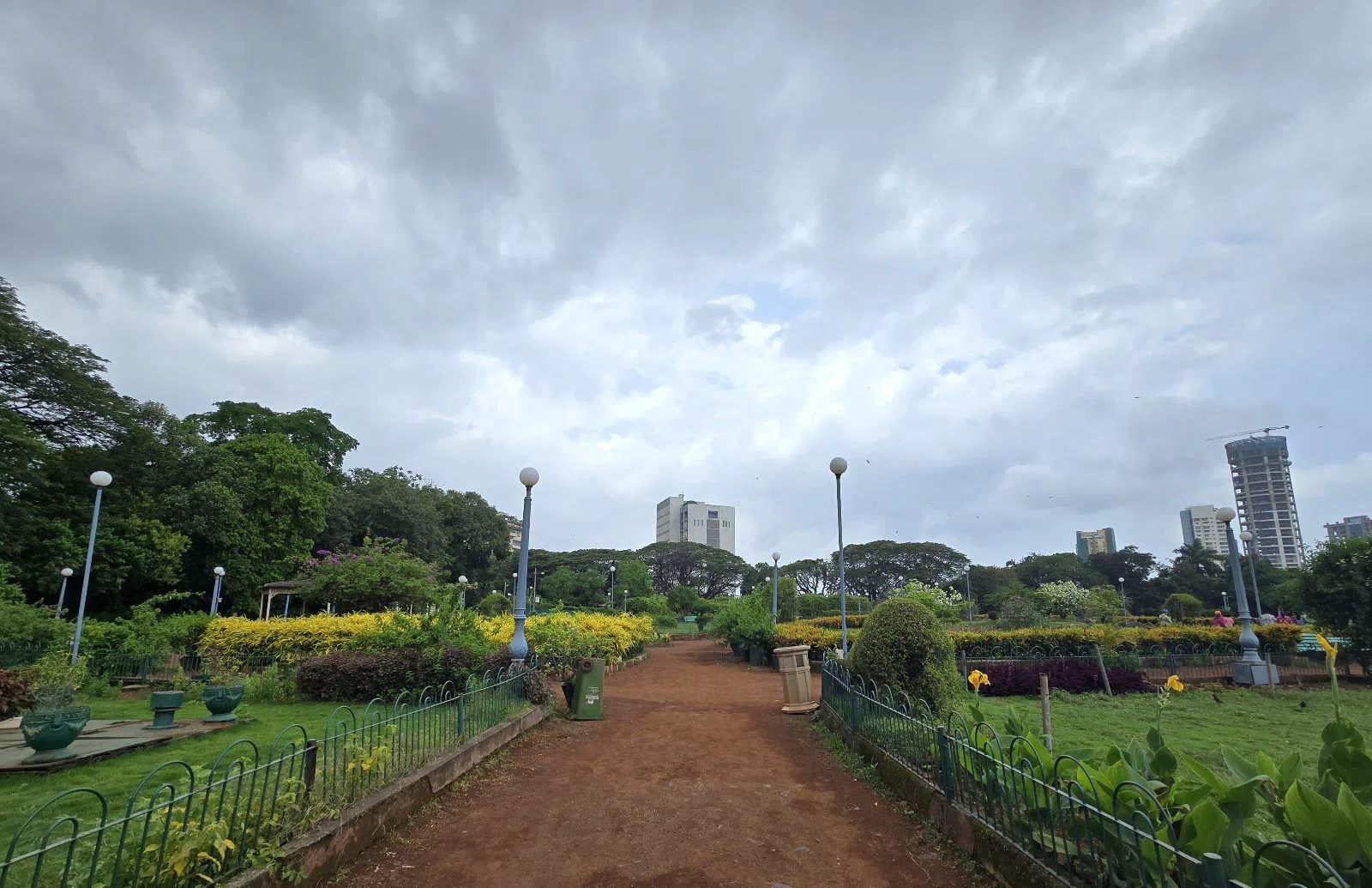
Pherozeshah Mehta Gardens (Malabar Hill), known as the Hanging Gardens, were laid out on the roof of a Raj-era reservoir. Animal-shaped topiary lines straight gravel avenues with painted benches, and dense palms screen the sea view. Entry is free and the paths are wide. The garden is open as of late 2026. The Malabar Hill reservoir rebuild has been deferred repeatedly, so check locally before you fix a date for it.
Lunch at Teen Batti and Sadguru Sadan
Dakshinayan (Teen Batti Road) is five minutes uphill from the tank and the nearest good cheap meal to it, still trading in 2026. Podi idlis arrive dusted orange with chutney powder, filter coffee comes in steel tumblers, and the waiters move fast between laminate tables. Order the idlis and the coffee. Consistency across the longer menu draws complaints. The room is plain and the seating is tight, and it takes walk-ins only. The bill sits in the ₹₹ band.

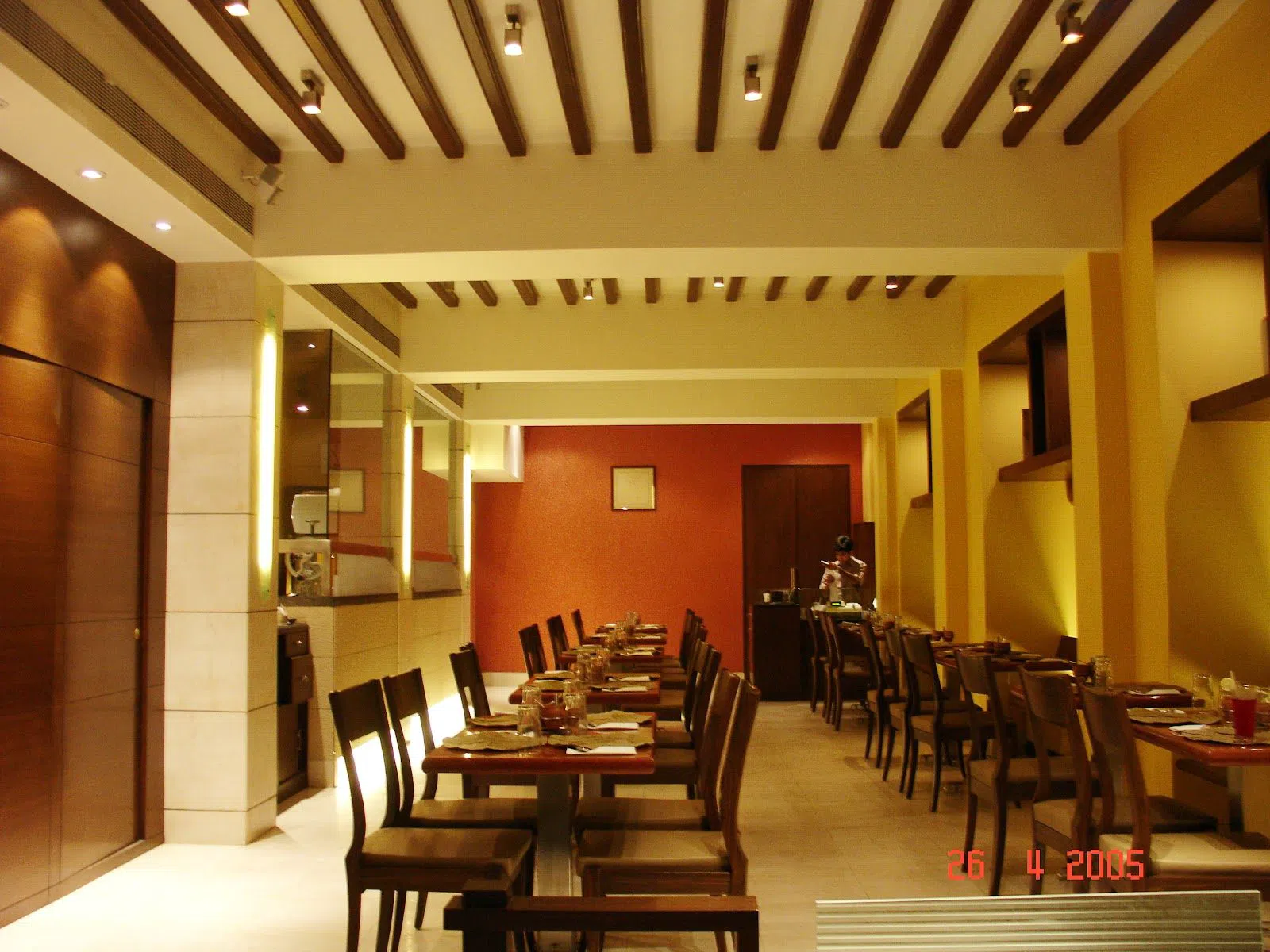
Soam (Sadguru Sadan, opposite Babulnath temple) has cooked Gujarati and Rajasthani vegetarian food since 2005, 11:30 a.m. to 10:30 p.m. daily. Farsan platters of dhokla and samosa and brass bowls of dal dhokli land on light wood tables in a bright corner room behind a glass frontage. The menu rotates seasonally. The room is small and fills at lunch and dinner. Book ahead for a party of more than four. Prices sit in the ₹₹₹ band.
Downhill to Babulnath and Chowpatty
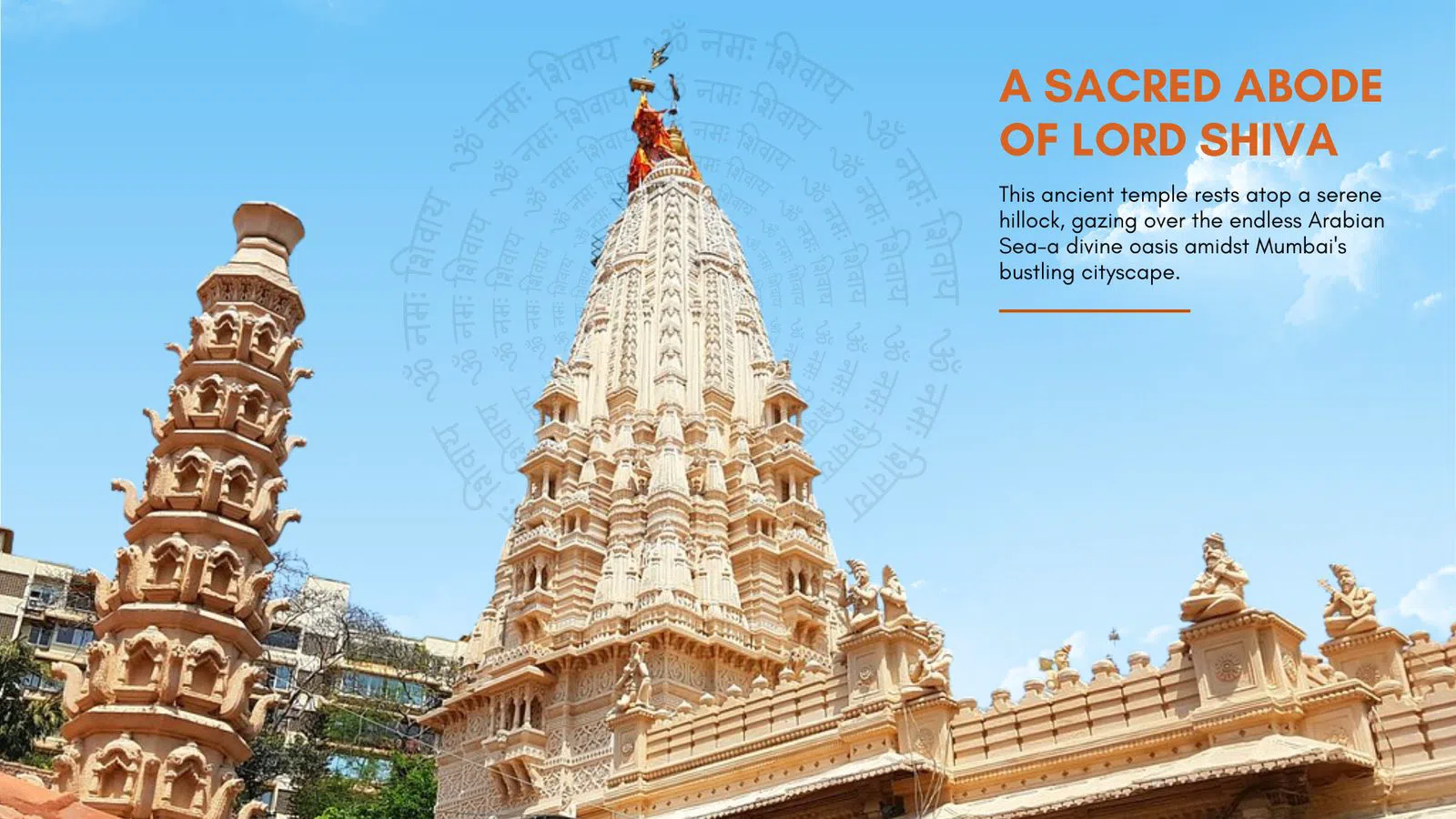
Shri Babulnath Mandir (above Girgaum Chowpatty) is the other great Shiva temple of the hill and far busier than Walkeshwar. Darshan is free, 6 a.m. to 9 p.m. daily and later on Mondays. The grey stone temple stands on a rocky knoll, its carved spire set against sea-facing apartment blocks, reached by a long covered flight of 110 steps. A lift runs for a token ₹1 fare for anyone who cannot manage the climb. Use the temple as the downhill end of a Banganga walk.
Girgaum Chowpatty (north end of Marine Drive) is 10 minutes downhill, open and free, and it works best in the evening. Bhelpuri stalls trade under strings of bulbs on a wide grey-sand crescent, families paddle at the water's edge, and the lit sweep of the Queen's Necklace curves away behind. The view you took from the parapet at Kamala Nehru Park stands in front of you here.

Two museums that fill out the history
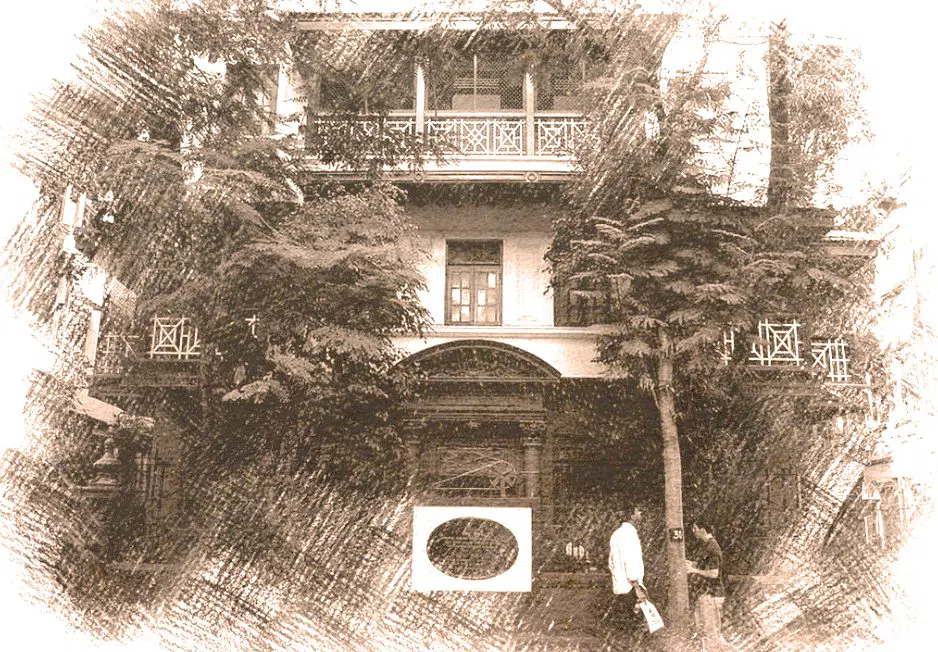
Mani Bhavan Gandhi Sangrahalaya (Gamdevi) was Gandhi's Mumbai base for 17 years and is a short drive from Malabar Hill. Entry is ₹20. It opens daily at 9:30 a.m. and closes between 5:30 p.m. and 6 p.m. The blue-grey two-storey townhouse keeps a wooden balcony under a tiled roof, and his bare terrace room holds a low writing desk and a spinning wheel. Glass-cased diorama figures and walls of book spines fill the reference library and the rooms around it. The rooms are small and the stairs are narrow, so stagger your entry.
Chhatrapati Shivaji Maharaj Vastu Sangrahalaya (Kala Ghoda) holds the objects behind the history you walked through. It opens daily 10:15 a.m. to 6 p.m., the ticket counter shuts at 5:45 p.m., and a foreign adult ticket is ₹700 with an audio guide included. A ribbed blue-tiled dome crowns the Indo-Saracenic building above a palm-lined forecourt, and the arcaded galleries carry Gandhara sculpture, miniature paintings and Chinese jade. Allow two hours.

Arriving from Ballard Pier
Mumbai International Cruise Terminal (Ballard Pier) began operations in April 2025 and is built for thousands of passengers a day, with public areas also opened up for dining and events. The arrivals hall runs immigration counters and retail units under a wave-form roof, with Fort's stone office blocks just inland. From the pier, the tank is a short drive up the western shore. The museum at Kala Ghoda sits close enough to the port to absorb a spare hour before you sail.

Best time to go
Start early. The tank opens at dawn, the water takes the light before the lanes fill, and the walk down the ghats is easier when the steps are quiet. Keep the morning for the tank and its shrines, and the evening for Chowpatty.
Mondays and Shravan are the two times darshan queues lengthen sharply at Walkeshwar. If a short wait matters more than the ritual crowd, pick another weekday.
Water quality is the reason to change a plan. Fish die-offs recurred as recently as October 2026 after ritual offerings during Pitru Paksha, and the tank can look and smell poor in that late-September-to-October window.
Is it worth going
It suits a visitor with a free morning who wants a working temple precinct and will walk worn stone steps to see it. The tank, the three shrines on its banks and the Jain temple on Ridge Road cost nothing at the door, and the only spending in the day is lunch, a museum ticket or a guide. Anyone who cannot manage the steps will see the water from the rim but get no closer.
Before you go
The tank and the temples open daily, bare feet are required at Walkeshwar and the Jain temple, and the only bookings to make are a private walk and a table at Soam for a party of more than four. Mani Bhavan's reference library shuts on public holidays and on the second and fourth Saturdays even when the house opens.
See the Mumbai guide and the Mumbai hotel search.
Voor vertrek
How much does it cost to visit Banganga Tank?
Nothing. The precinct is open and public from dawn to late evening, without a gate or a ticket, and the temples on its banks give free darshan. Khaki Tours runs a guided walk at ₹1,199 per person, two kilometres in two hours.
How long do you need at Banganga Tank?
The guided route runs two hours over two kilometres, which is about how long the tank, its shrines and the lanes around them take at walking pace. Add two hours if you continue to the museum at Kala Ghoda.
What is the best time of day to go?
Early. The tank opens at dawn and the ghat steps are quiet then. Avoid Mondays and the Shravan period if you want a short darshan queue at Walkeshwar, and keep the evening for Girgaum Chowpatty, 10 minutes downhill.
Is Banganga Tank suitable for children or older visitors?
The route runs over worn stone steps and narrow lanes, and Khaki Tours says it does not suit seniors, toddlers or pregnant visitors. For mixed mobility, Shri Babulnath Mandir has a lift at ₹1 instead of its 110 steps.
Can you enter the temples if you are not Hindu, and what are the rules?
Yes. The Babu Amichand Panalal Adishwarji Jain Temple on Ridge Road admits visitors of all faiths free of charge, though you leave shoes and all leather at the door, and photography inside the sanctum is restricted. At Walkeshwar Shri Kashi Math Samsthan, ask before you enter a prayer hall and stay out during scheduled puja.