The Mumbai issue
Chowpatty and Beyond: A Local's Guide to Mumbai's Street Food
A dish-by-dish, stall-by-stall crawl through Mumbai's street food — from a 5am dosa counter to a 3am kebab stall — with exact prices, who cooked it, and where to stand.

By Marta KowalskaTwo recipes deep, every meal
Mumbai eats standing up, on the pavement, with one eye on the traffic and grease on both thumbs. This is a city where a sandwich invented on a Dadar footpath in 1966 now ranks among the best in the world, where a beachfront counter still pours fruit juice at two in the morning, and where the line between "restaurant" and "stall" blurs into a griddle, a token queue and a man who has been frying the same thing for forty years. What follows is a route, not a list — I've walked it hungry so you can walk it fed. Book your bed first with a Mumbai hotel search, then come with an empty stomach and small notes.
Start at dawn: the 5am breakfast counter
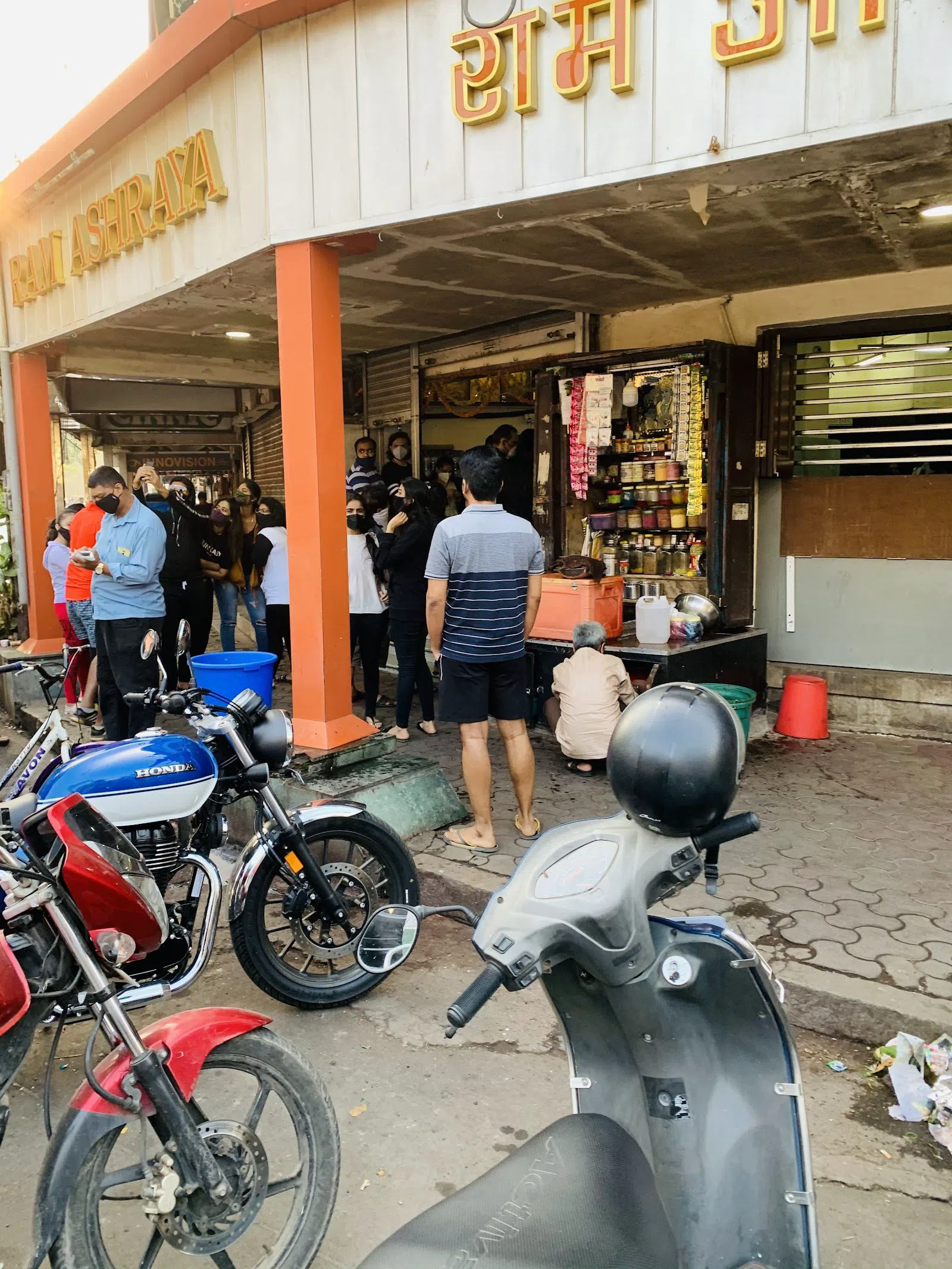
If you land jet-lagged and awake at an unreasonable hour, don't waste it on a hotel buffet. Go to Ram Ashraya in Matunga's South Indian quarter, which has been feeding the neighbourhood since 1939 and opens its shutters at 5am. It's a sit-down eatery, plain-tiled and unbothered by decor, seating a group easily — there's a queue at the 8–10am peak but turnover is fast, so you rarely wait long.
Order the Mysore masala dosa: a rice-and-lentil crêpe griddled crisp at the edges, smeared inside with a red chilli-garlic chutney that carries genuine heat, folded over a soft potato mash flecked with mustard seed and curry leaf. It runs ₹60–150 (about 60p–£1.50), depending on what you pile alongside. Chase it with filter coffee — served in the steel tumbler-and-saucer that lets you cool it by pouring between the two. Dishes here are ₹60–150 across the board, so a full table costs less than a London flat white each. This is the gentlest possible introduction: cooked to order, served hot, no raw water in sight.
Plan your Mumbai trip
Live prices from our booking partners.
Free cancellation on many rooms. We may earn a commission when you book.
The two-bite icons: vada pav and pav bhaji
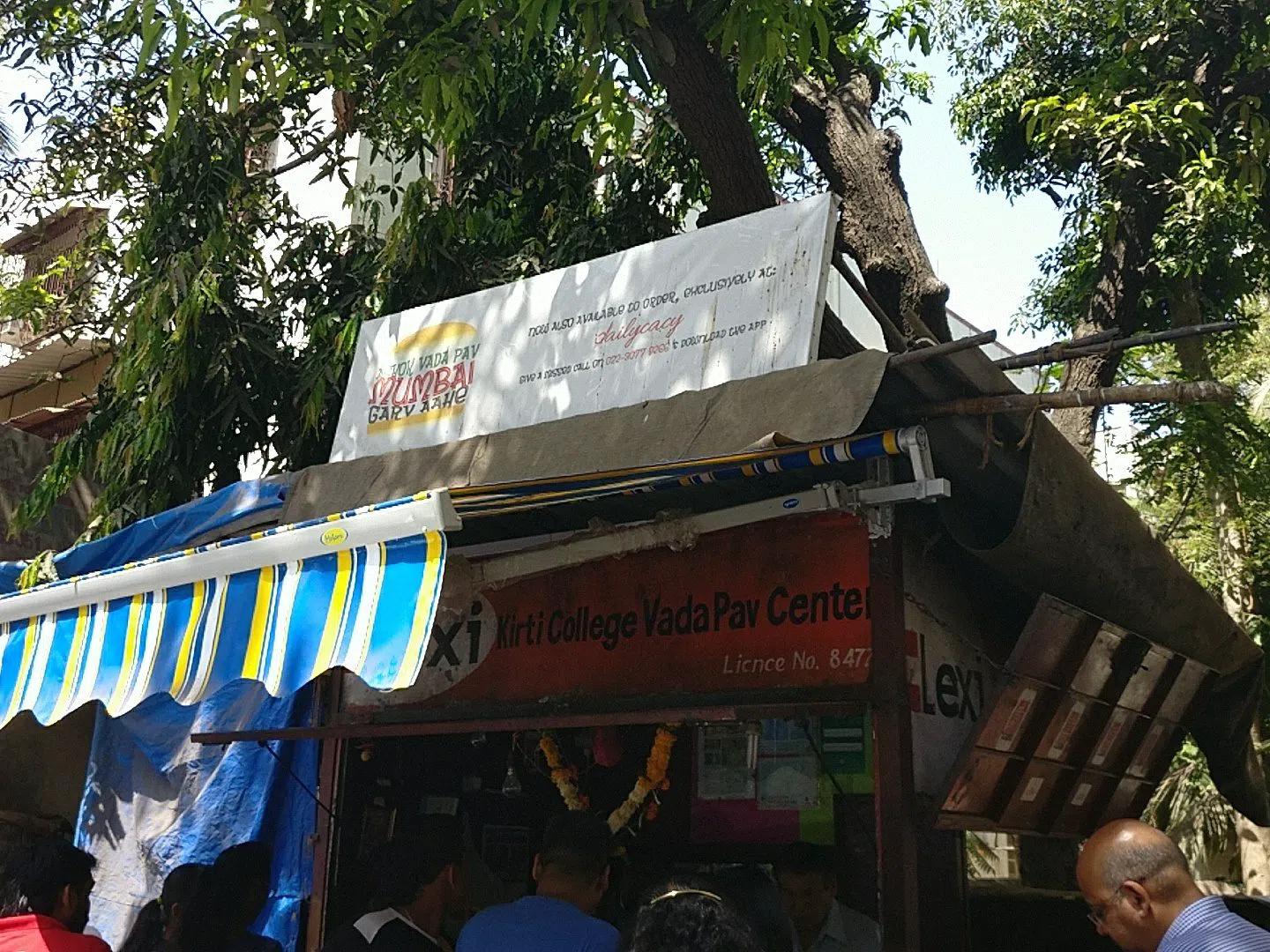
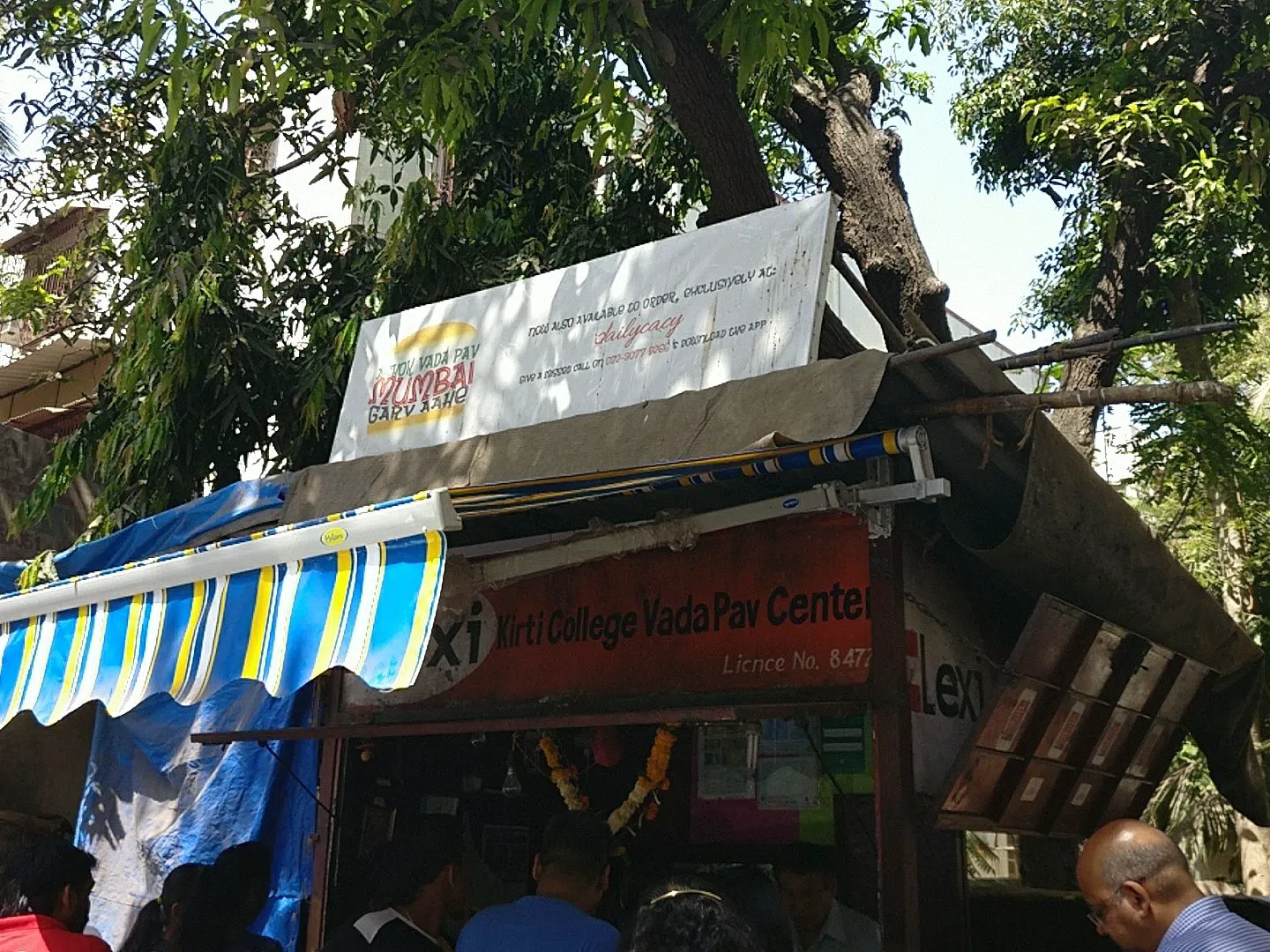
Every Mumbai food story starts with the vada pav, and there is one honest place to start: Ashok Vada Pav in Dadar. This is the stall widely credited as the vada pav's birthplace — Ashok Vaidya sold the first one here in 1966, a spiced potato dumpling battered in gram flour, deep-fried, and jammed into a soft pav bread roll with dry garlic chutney. It's a pure standing pavement stall, no seating, and you eat shoulder-to-shoulder with commuters. Fine for a group, so long as nobody in it minds elbows. At ₹20–25 (roughly 20–25p) it's the cheapest famous bite in the city, and in 2026 it landed in TasteAtlas' top 40 sandwiches in the world. The queue looks alarming and moves in about ninety seconds. Ask for it with the fried green chilli on the side.
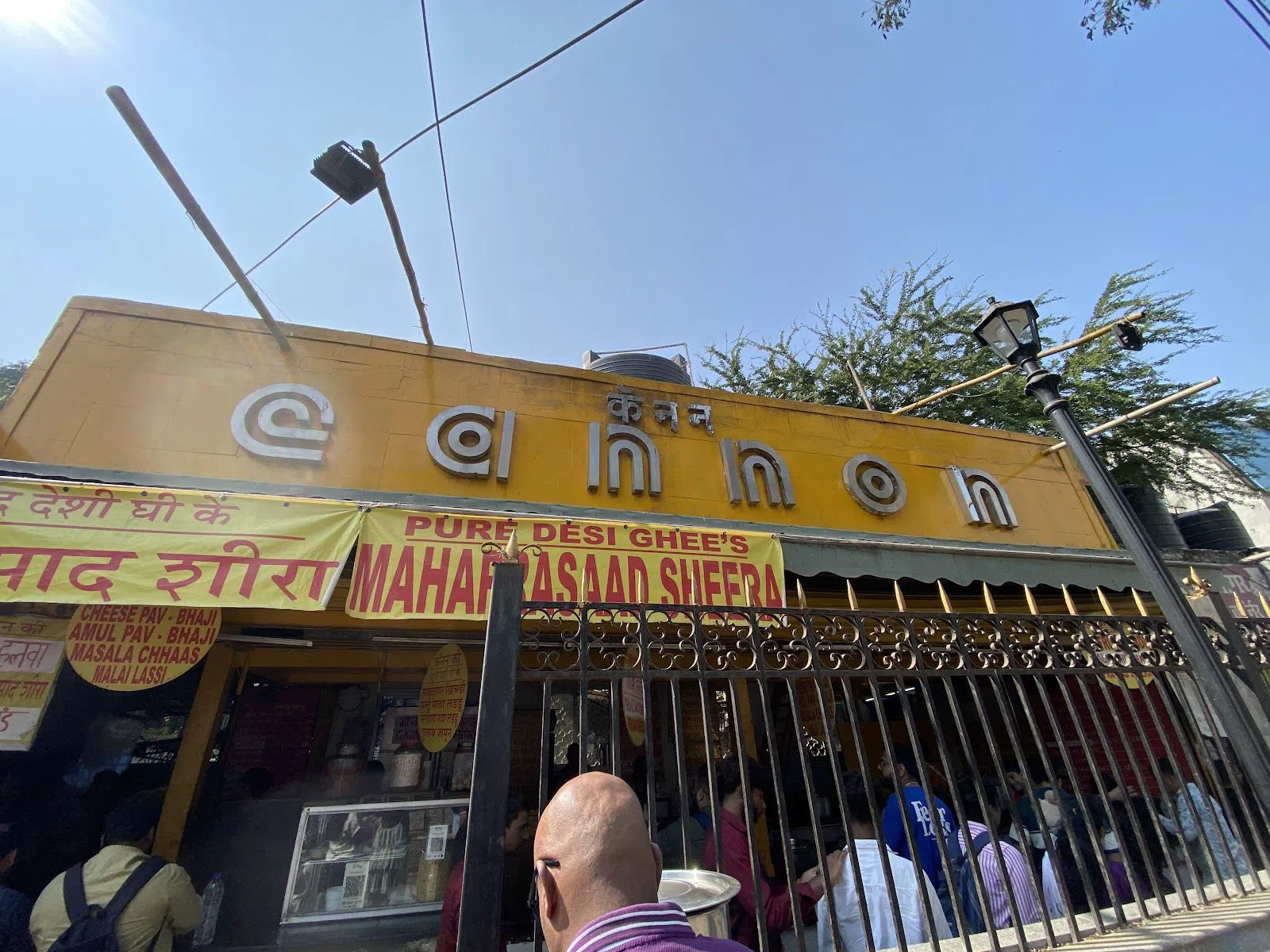
For pav bhaji — a mash of tomato, potato and vegetables cooked down on a vast flat griddle, served with butter-fried pav — you have two ways to go. Straight off the heritage-station tourist trail near CST is Cannon Pav Bhaji, the original Cannon and reliably one of the best plates in the city. It's a standing-only roadside counter, no real seating; a group is welcome but you'll cluster on the pavement to eat. A plate is ₹120–180 (£1.20–1.70). Watch the cook press the bhaji flat, flood it with a puck of butter until it goes glossy, then hand it over with a raw onion and a lime wedge — squeeze both.
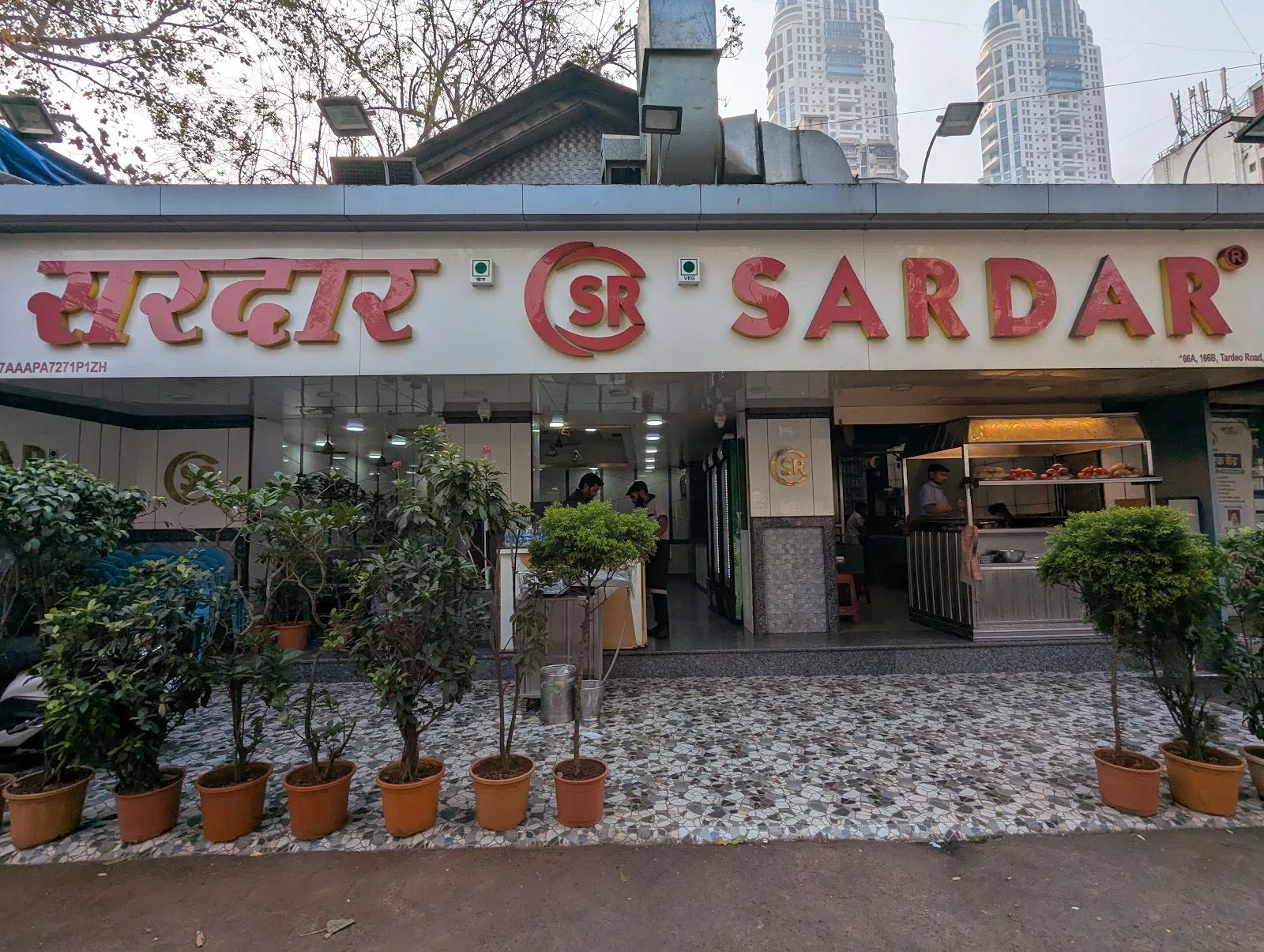
The other way is Sardar Refreshment, known to everyone as Sardar Pav Bhaji, running in Tardeo since 1966 and famous for a 'Sardar special' so buttery it should come with a warning. This one is a proper sit-down cabin with takeaway too — it seats groups, but it's tight and busy, so expect a short wait at peak. Plates are ₹180–260 (£1.70–2.50). Crucially it stays open into the early hours, which makes it the smartest post-night-out feed in this guide: come at 1am, order the special, and watch them bury the bhaji under a landslide of Amul butter.
Chaat, pani puri, and the nervous first-timer
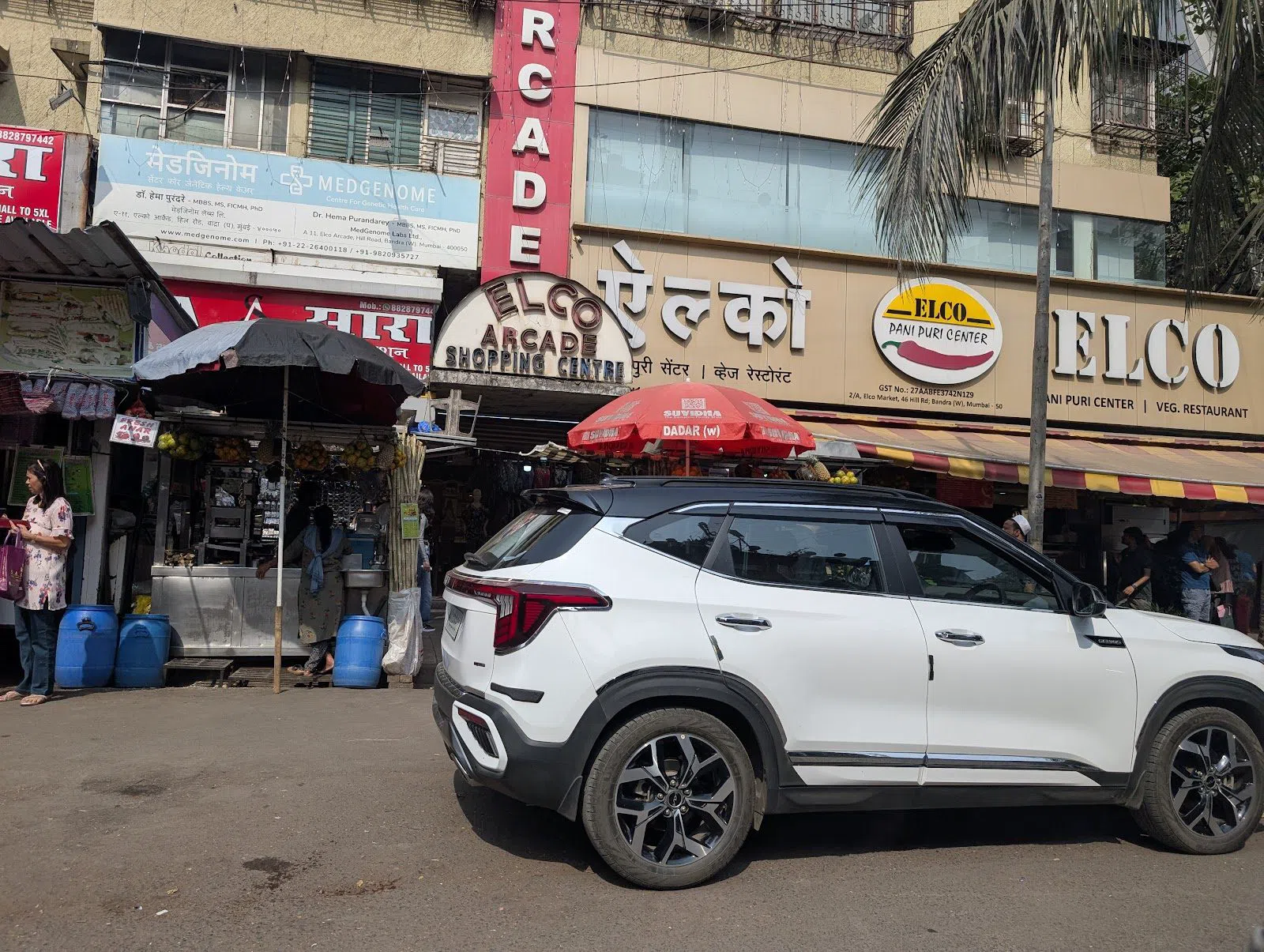
Pani puri is the dish UK visitors fear most and love hardest once they've tried it — hollow crisp semolina shells, cracked open, filled with spiced potato and chickpea, then dunked in a cold, sharp mint-and-tamarind water and eaten whole in one go before they collapse. If your group includes someone anxious about a roadside stall, take them to Elco Pani Puri Centre in Bandra. It began as a stall and now seats around 150 across two floors, with air-conditioning upstairs and visibly hygienic prep. It's genuinely group-friendly. Two people eat well for about ₹950 (£9) — pricier than the street, but this is the safest way to get the real flavour without gambling your stomach. Take the puris the moment they're filled; that's the whole art.
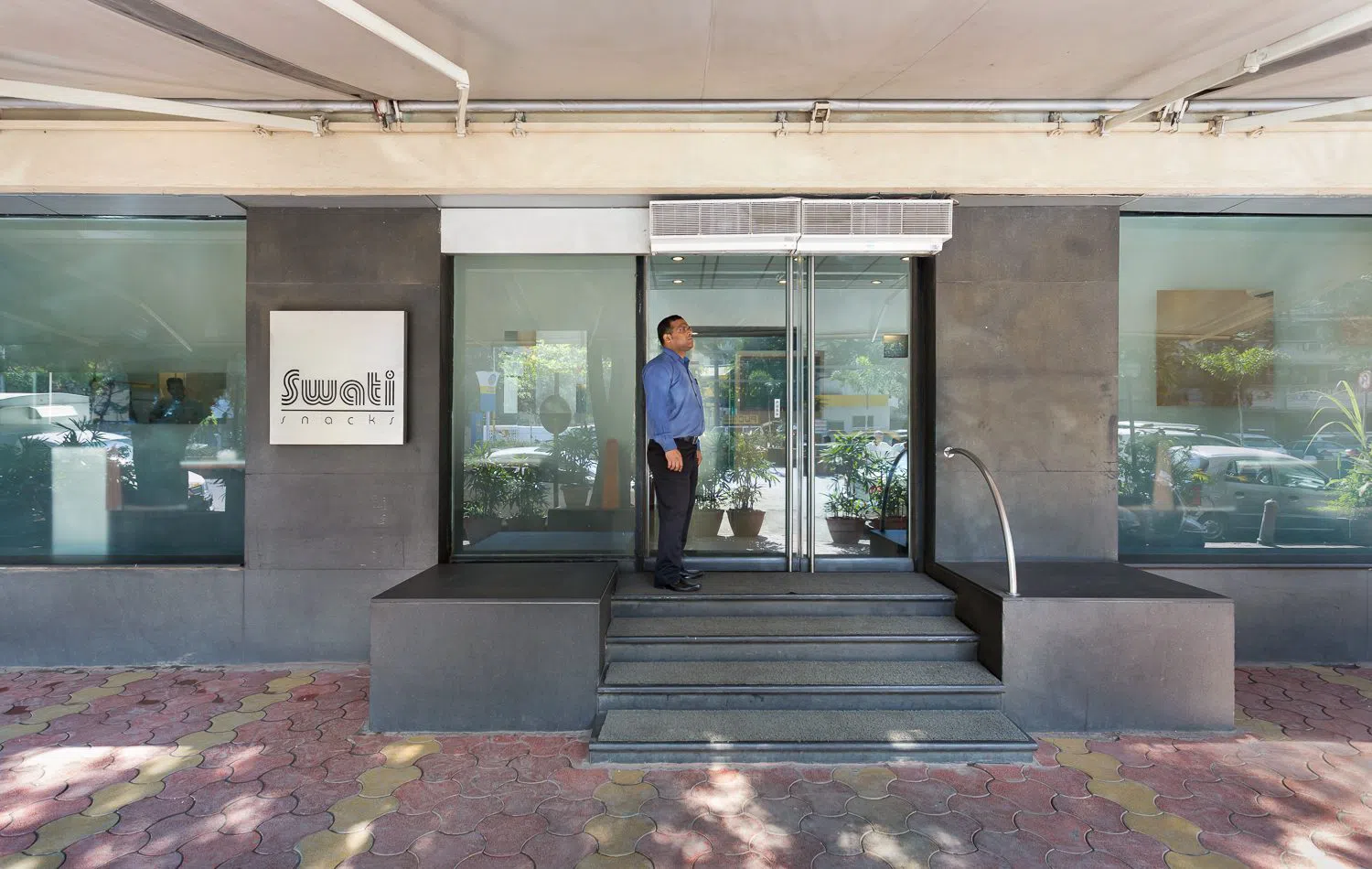
For the same reassurance in a fuller sit-down setting, Swati Snacks does street classics immaculately — a polished, spotless restaurant treatment of chaat and Gujarati snacks. It's the safest bet for anyone who flatly won't risk a roadside cart, and it doesn't dumb the flavours down. Two people run to ₹700–1,000 (£7–10). There are no bookings and there is always a wait; put your name down and be patient. Order the panki (a rice-flour batter steamed between banana leaves, peeled off at the table) and the pani puri to compare it against Elco's.
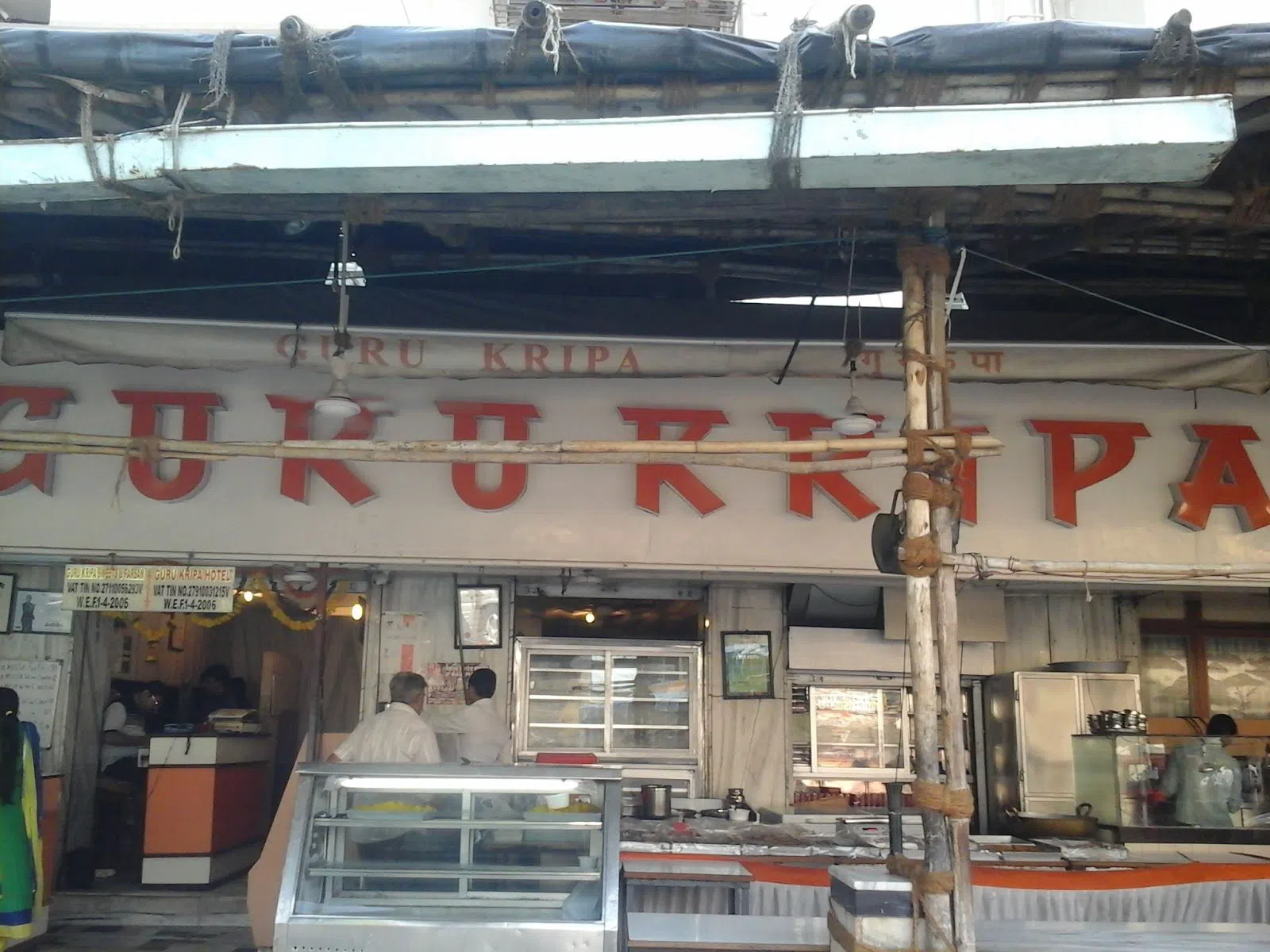
If you'd rather eat where the flavour comes hearty and vegetarian, Guru Kripa in Sion built its name on the chole samosa — a fat, crisp samosa split open and drowned in a spiced chickpea curry, ₹100–250 per person (£1–2.50). It grew from a single cart into an institution and, as of 2025, opened a South Mumbai branch, so it's easier to reach than it used to be. It's a casual sit-down/counter format that comfortably seats a group. This is filling, crowd-pleasing food — order one chole samosa and one round of ragda pattice for the table and share.
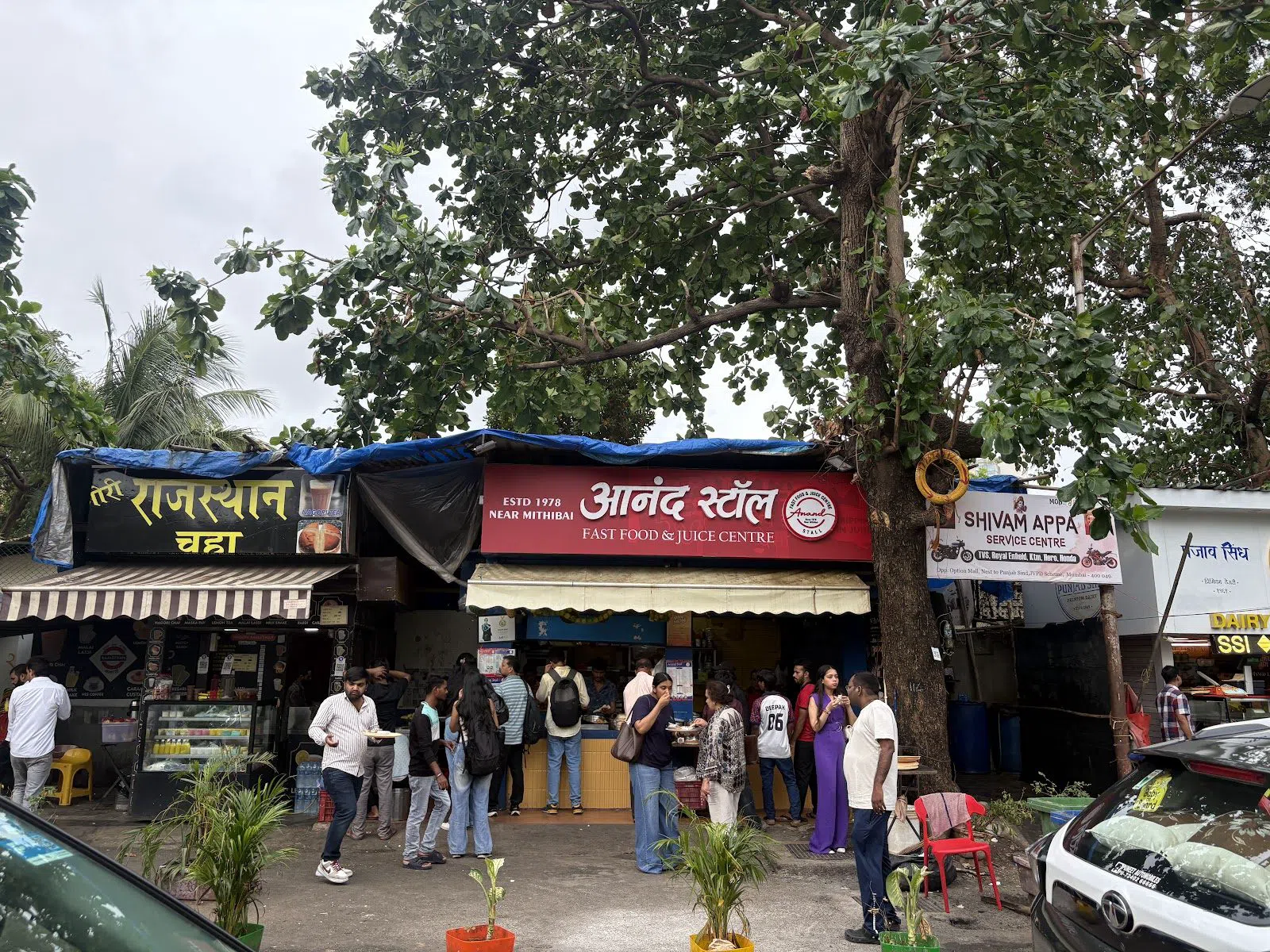
Students in Vile Parle have kept Anand Stall in business for decades on the strength of one thing: a griddled veg-cheese sandwich big enough to split between two, cut through with a fierce green coriander chutney. It's a token-system street stall, standing only — it copes with student-sized crowds but there are no seats. Sandwiches are ₹80–160 (80p–£1.60). It's gentle, meat-free, and a good mid-crawl bite when you want something warm and un-spicy. Buy your token first, then join the collection scrum.
The beach graze: sand, bhel and a sea breeze
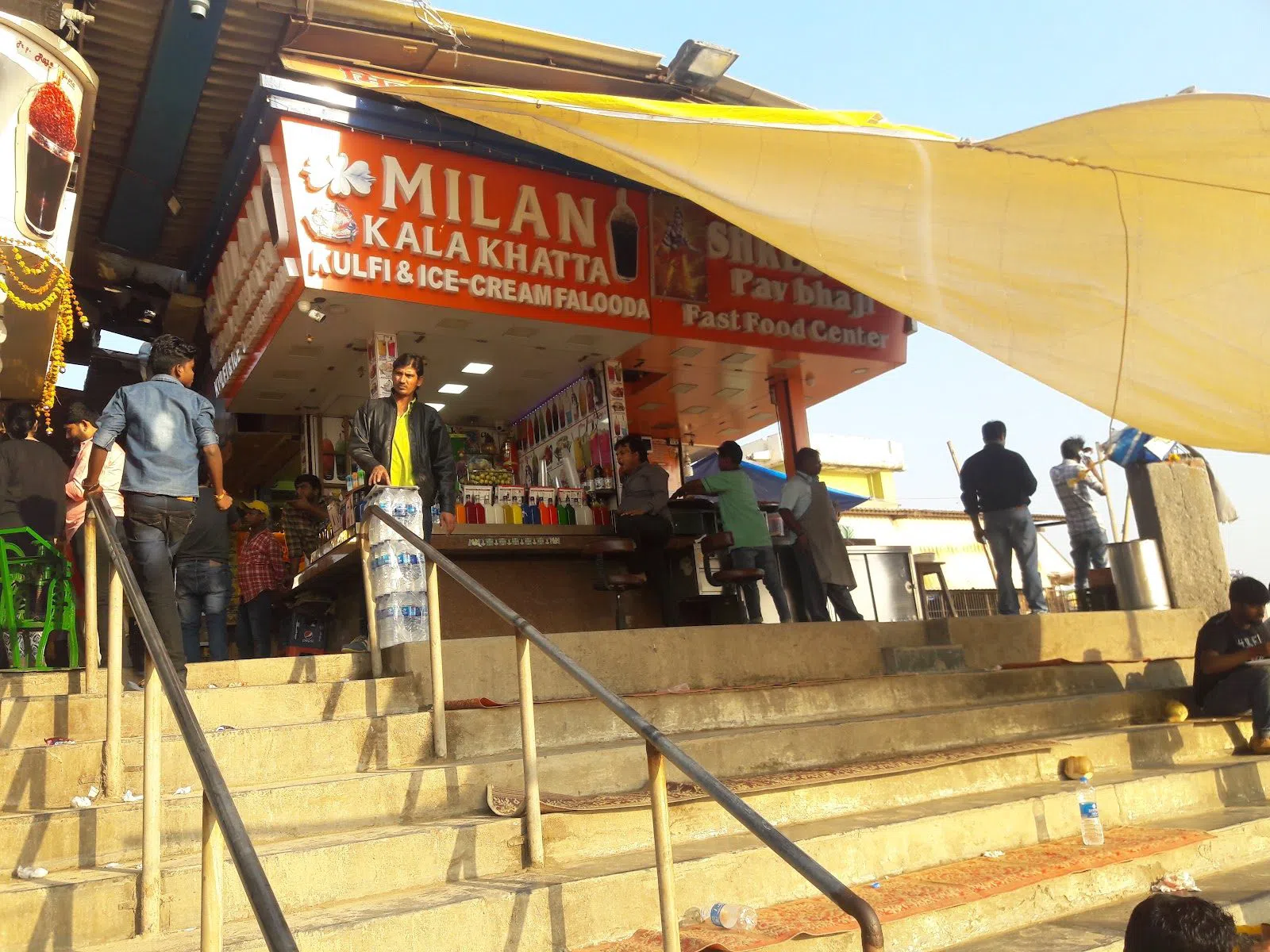
No Mumbai food crawl is complete without eating with sand underfoot. The Juhu Chowpatty beach food stalls are the quintessential version — an open beachfront cluster where you stand or perch on the sand and graze bhel puri (puffed rice, tamarind, onion and coriander tossed to order), sev puri, and pav bhaji cooked within sight of the waves. Items run ₹50–200 (50p–£2), so a group can eat a lot for very little. It's atmospheric and photogenic, especially at sunset — but be sensible: stick to the busy stalls with high turnover where everything is fried or assembled fresh in front of you, and skip anything sitting out. Bhel is the one to order first; it's assembled cold and eaten immediately, so freshness is obvious.
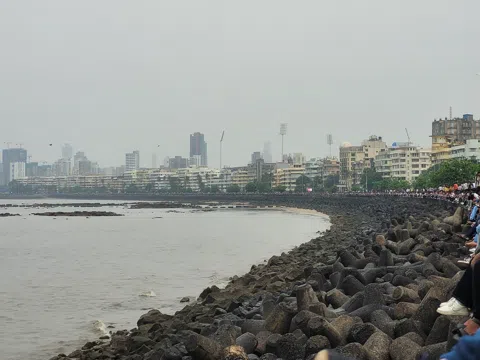
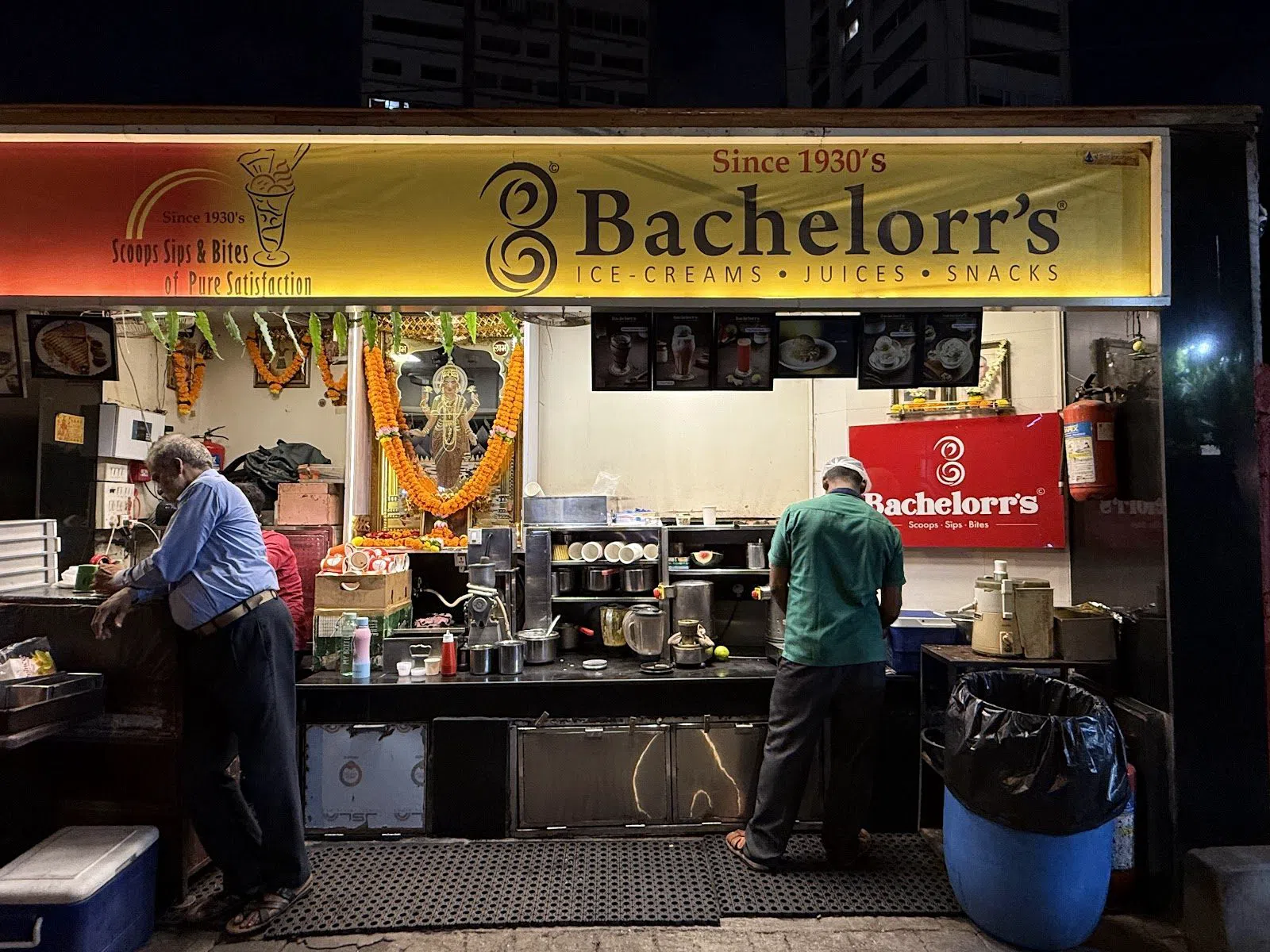
End the beach leg — or the whole night — at Bachelorr's on Marine Drive, a seafront fixture since the 1930s and open until 2am. It's an open-air counter where you order and stand by the promenade, and it absorbs a group with ease, especially late. Reckon on ₹150–350 per person (£1.50–£3.50). The draw is fresh fruit juice pressed to order, thick milkshakes, and — if you're brave — their chilli ice cream, a genuine sweet-heat oddity. Take a mango juice, lean on the sea wall, and let the breeze do the rest. It's the sweet, calm full stop to a day of griddles and frying oil.
After dark: the carnivore crawl
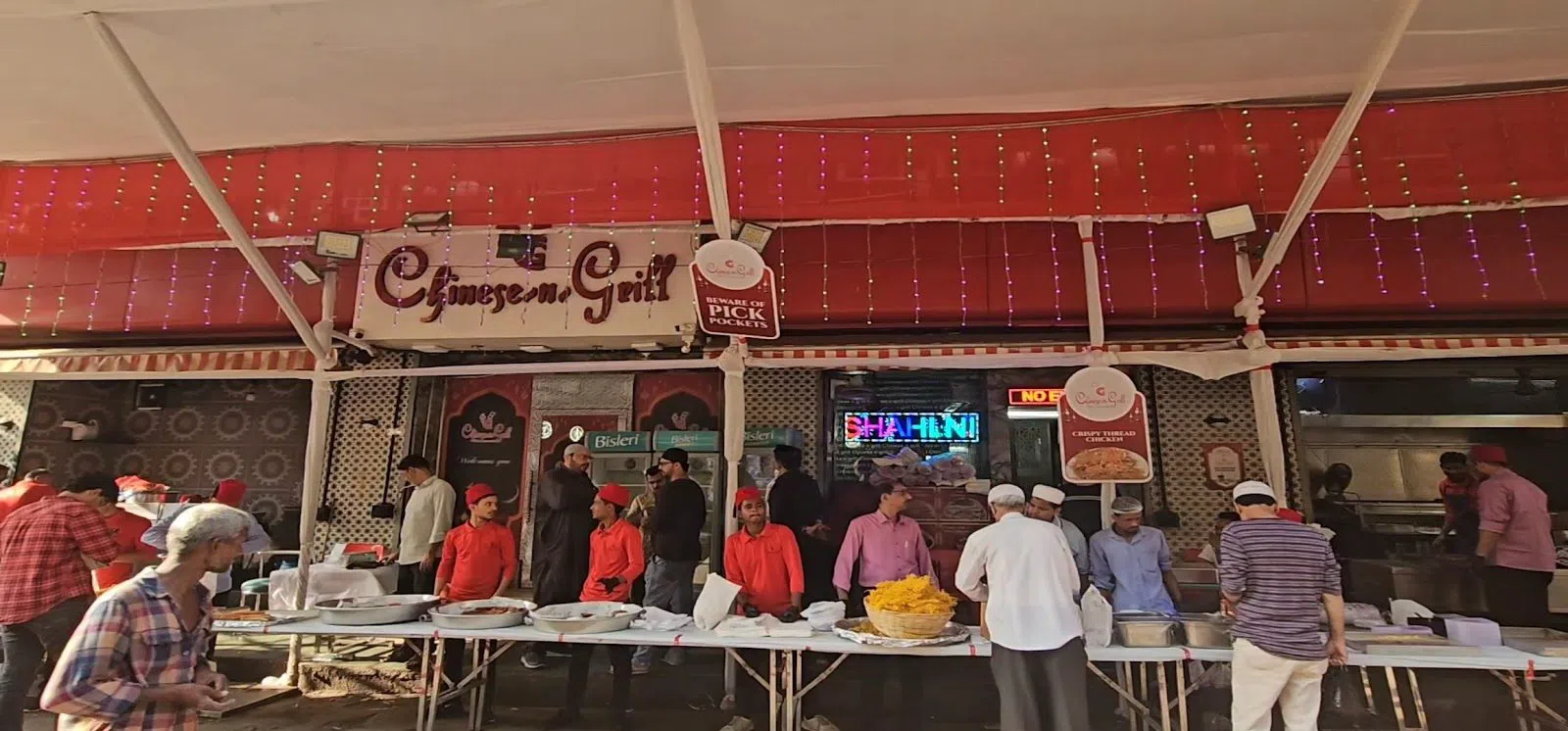
Mumbai's street food turns properly carnivorous after sunset, and the beating heart of it is the Mohammed Ali Road food street — a walkable run of stalls including Noor Mohammadi and Surti 12 Handi, best tackled as a small group hopping from one to the next. Budget ₹200–500 per person (£2–5) and go early evening to mid-night. This is a grazing crawl, not a sit-down dinner: seekh kebabs, nihari, kebab rolls, and sweets eaten on the move. It peaks spectacularly during Ramadan, when the stalls come alive in the evenings only — if your trip overlaps, time your visit for after dark and come hungry. Go in a group; it's more fun and you can order across more stalls.
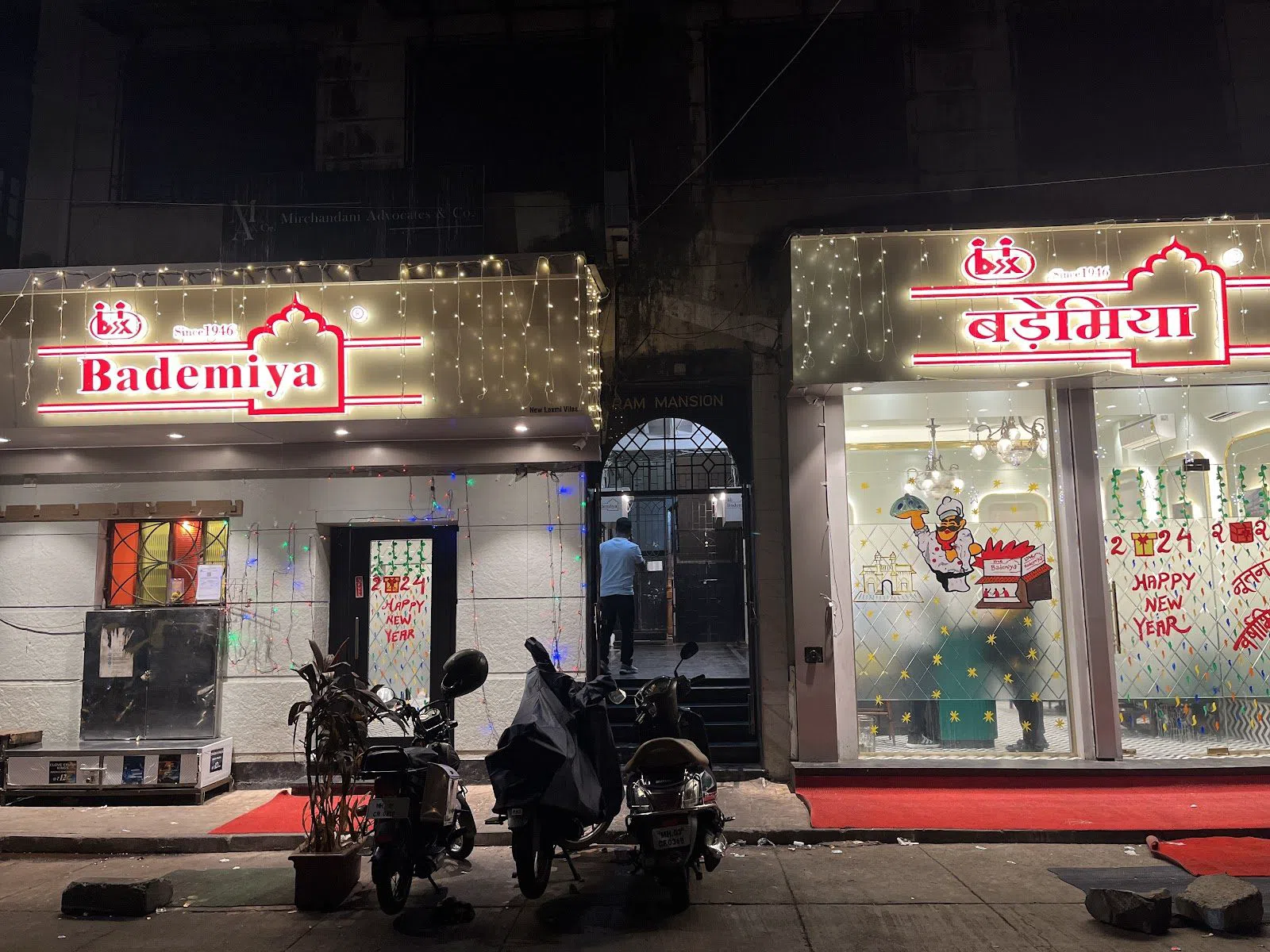
When the bars close, there is only one address: Bademiya in Colaba, a legend since 1946. It's a street stall with a small sit-down annexe, and it handles groups well — in fact it lives for the 12am–3am after-party crowd. Two people eat for ₹300–500 (£3–5). Order the chargrilled seekh kebab (minced spiced meat moulded on skewers over coals) and the reshmi kebab (a milder, marinated chicken), wrapped into rotis as rolls. You'll eat standing in a happy, lively crush — it's the classic end to a big night out and, for a UK group fresh out of a Colaba bar, exactly the right kind of chaos.
Practical notes: money, timing and getting around
Cash is king. Most stalls take small notes and coins; some now accept UPI, but a foreign card is useless at a pavement counter. Carry ₹500–1,000 in small denominations per person per crawl and you'll never be stuck. Nobody has change for a ₹2,000 note.
Timing. The city runs on a split rhythm: breakfast spots like Ram Ashraya open at 5am; the beach stalls come alive late afternoon into the evening; and the non-veg streets and late counters (Sardar, Bademiya, Bachelorr's) run past midnight. Build your day around that — dawn dosa, afternoon lull, sunset beach graze, midnight kebabs.
Getting around. Mumbai's suburban trains are fast and cheap but brutally crowded at peak; for a food crawl, avoid 8–10am and 6–8pm. Autorickshaws work in the suburbs (Bandra, Juhu, Vile Parle); black-and-yellow taxis and app cabs cover the island city (Colaba, CST, Marine Drive, Tardeo). Distances between neighbourhoods are real, so cluster your stops geographically rather than zig-zagging.
Stomach sense. Drink only sealed bottled water, eat where the queue is longest and the food is cooked or assembled in front of you, and favour hot-off-the-griddle over anything sitting out. That single rule covers most of the risk. If anyone in the group won't take the chance, Swati Snacks and Elco give them the real thing under a clean roof.
Budget. A full day of grazing — dosa, vada pav, pav bhaji, chaat, beach snacks and midnight kebabs — comes to roughly ₹800–1,500 per person (£8–15), even after the pricier sit-downs. Street food is the best-value luxury in this city.
For everything beyond the plate — neighbourhoods, hotels and how to string a trip together — see the full Mumbai guide. Then go eat standing up.
Before you go
Is Mumbai street food safe for tourists to eat?
Largely, if you're sensible: eat where the queue is long and turnover is fast, choose food cooked or assembled fresh in front of you, drink only sealed bottled water, and avoid anything left sitting out. Nervous eaters can start at hygienic sit-downs like Elco Pani Puri Centre in Bandra or Swati Snacks, which serve the real flavours under a clean roof.
How much does a day of street food in Mumbai cost?
Very little. Individual bites run from ₹20–25 (about 20p) for a vada pav to ₹180–260 (£1.70–2.50) for a special pav bhaji. A full day of grazing across breakfast, chaat, beach snacks and midnight kebabs comes to roughly ₹800–1,500 per person (£8–15), even including the pricier sit-down spots.
What are the must-try Mumbai street foods for a first-timer?
Start with vada pav (a spiced potato fritter in a bread roll) at Ashok Vada Pav in Dadar, pav bhaji at Cannon near CST, pani puri at Elco in Bandra, bhel puri on Juhu beach, and seekh kebabs at Bademiya in Colaba. Between them they cover the veg icons, the beach graze and the late-night carnivore scene.
Where can I eat Mumbai street food late at night?
Several institutions run past midnight. Bademiya in Colaba serves chargrilled kebabs and rolls from around 12am–3am, Sardar Refreshment in Tardeo does its buttery pav bhaji into the early hours, and Bachelorr's on Marine Drive pours fresh juices and shakes until 2am. Mohammed Ali Road's stalls run from early evening to mid-night.
Do I need cash for Mumbai street food?
Yes. Most pavement stalls deal in small notes and coins; some accept UPI, but foreign cards are useless at a roadside counter. Carry ₹500–1,000 per person in small denominations per crawl — vendors rarely have change for a ₹2,000 note.