The Mumbai issue
Bandra to Marine Drive on Mumbai's Coastal Road
An afternoon heading south down Mumbai's western edge, from the mangroves at Carter Road to the Art Deco parapet at Marine Drive, with notes on which stops are worth making and which ones you have to time.
By Aditi RaneThe city read by its facades
Start at Carter Road with the tide coming in and the mangroves close enough to smell. End at Marine Drive after dark and you are on a parapet with a few thousand other people, watching the bay bend away in lights. Between those two points lies a coastline Mumbai has spent the last two decades re-engineering, and driven southward in the late afternoon it is the one route that shows you the whole western edge of the city without leaving you stuck in traffic for three hours.
The Bandra end, before you touch the bridge
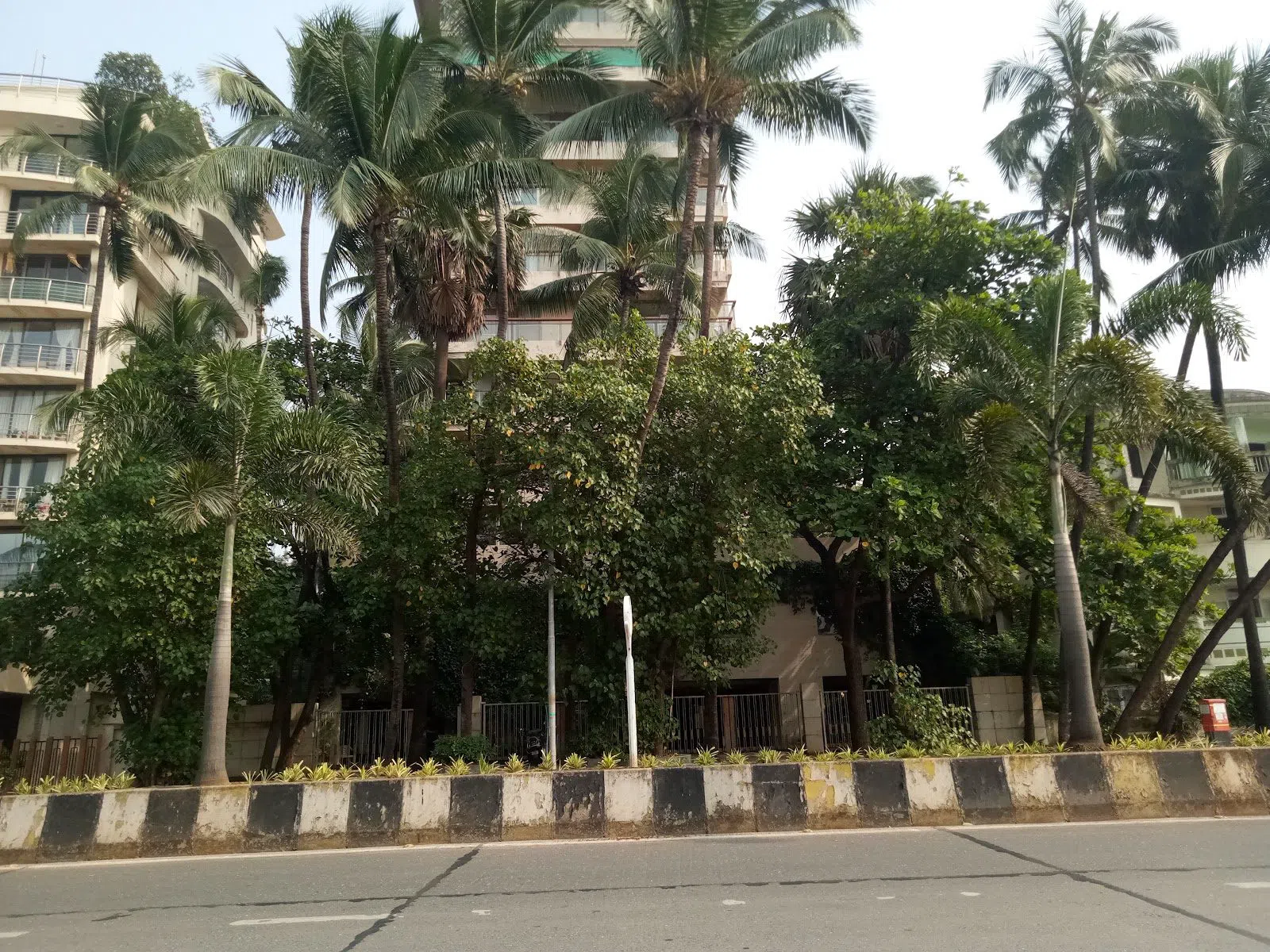
Carter Road Promenade (Bandra West) is the sensible place to begin, less for the view than for the parking. It is free, open, and governed by no door policy at all, so a group of any size can walk it, but kerb space along Carter Road is the genuine constraint and it thins fast after four in the afternoon. The promenade itself is rocky and mangrove-edged rather than sandy, the sea audible below the railing, and it is the last easy place to leave a car before the crush further south begins.
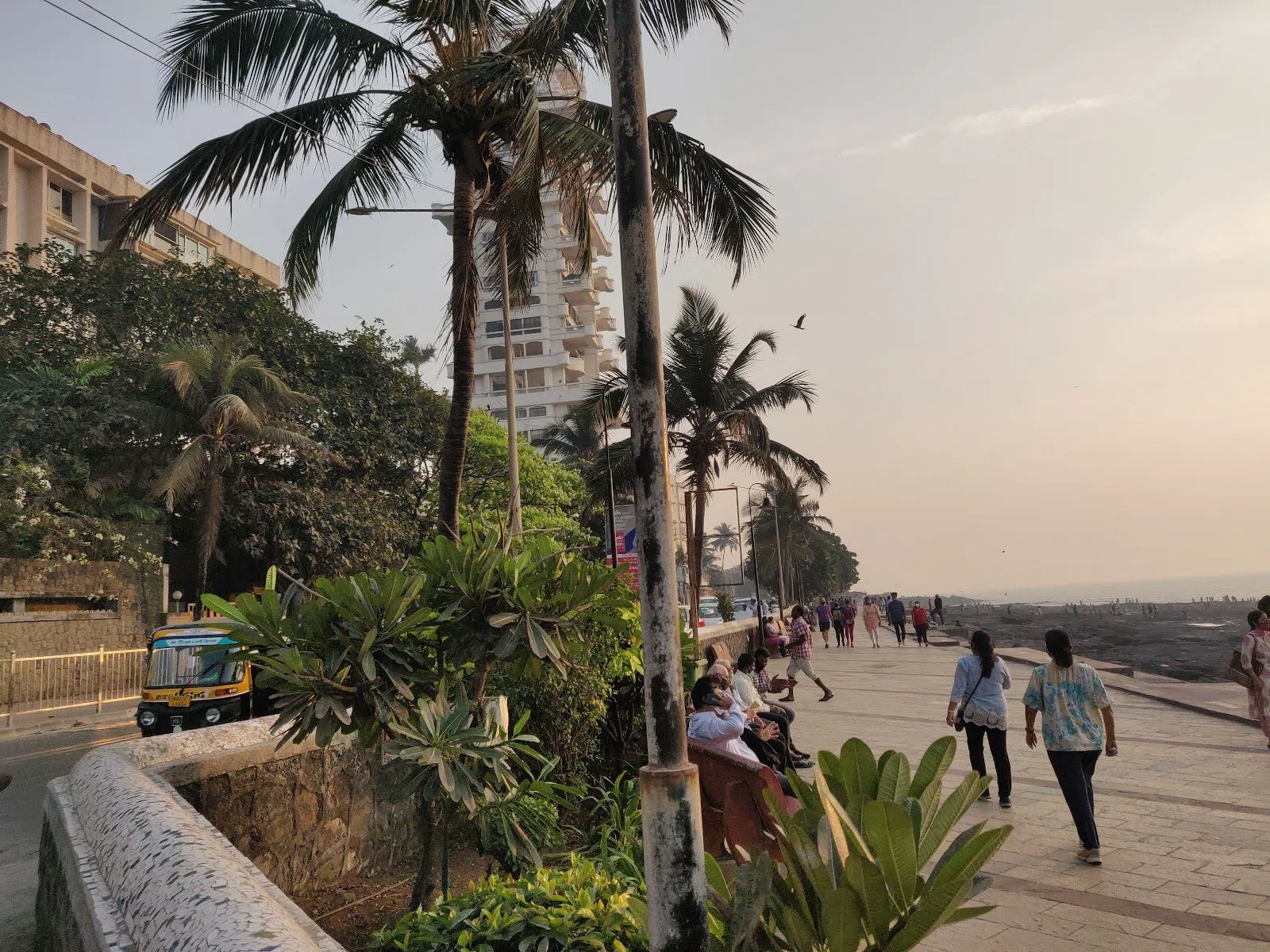
Carter Road runs into Bandstand Promenade (Bandra West) at its southern end, and this is where you get the first proper sightline of the bridge you are about to cross. It is open around the clock, but come an hour before sunset. After six in the evening, and especially at weekends, the walkway is shoulder-to-shoulder; groups are welcome in the sense that nobody stops you at the entrance, not in the sense that you will manage to stand together.
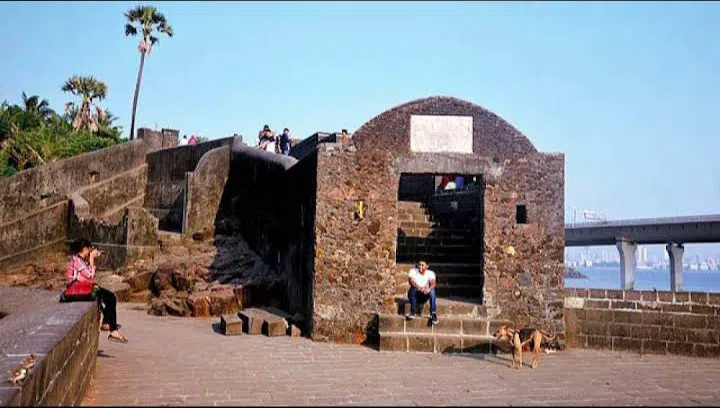
On the headland the city calls Land's End sits Bandra Fort (Castella de Aguada) (Land's End, Bandra West), a Portuguese watchpoint from 1640 that now does the single best framing of the Sea Link anywhere in the city, the cables rising out of open water directly beyond the ramparts. It is free, unticketed and open daily from roughly 10am to 8pm, and the amphitheatre cut into the seaward side seats a group easily. A restoration round in 2024 drew real criticism for plastering over the old basalt, so what you see is tidier and flatter than the fort in older photographs. The sightline is the reason to come, not the stonework.
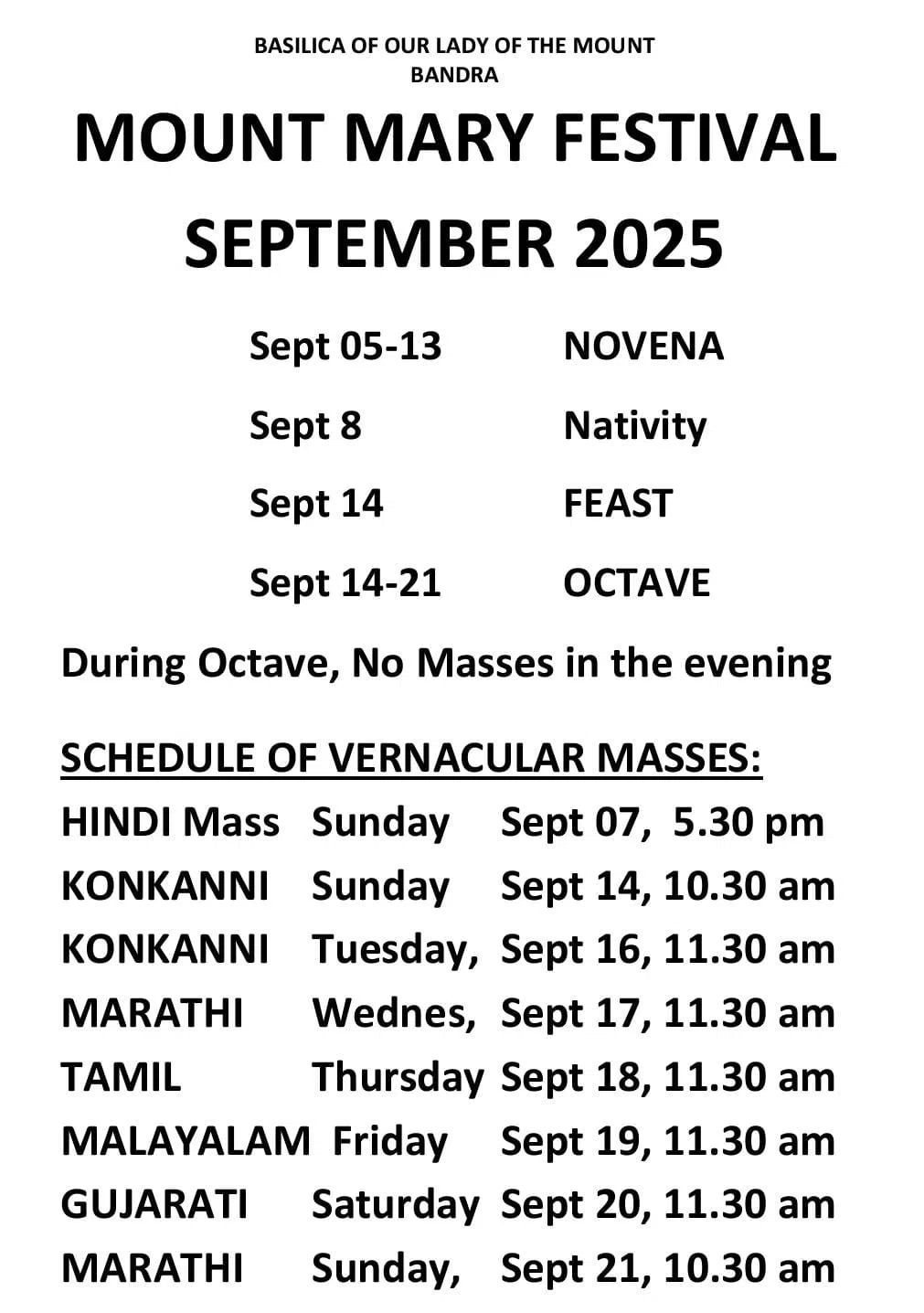
Five minutes uphill, the Basilica of Our Lady of the Mount (Mount Mary Church) (Mount Mary, Bandra West) repays the detour with height and quiet, which is a rarer combination in Bandra than the view. Entry is free, the church is open to everyone from about 6am to 8:30pm with a midday break on weekdays, there are no group restrictions, and modest dress is expected. One date is worth holding in your head: the week following 8 September, when the Bandra Fair takes over the hill and the approach roads become impassable by car. Any other week, it is ten minutes off the route.
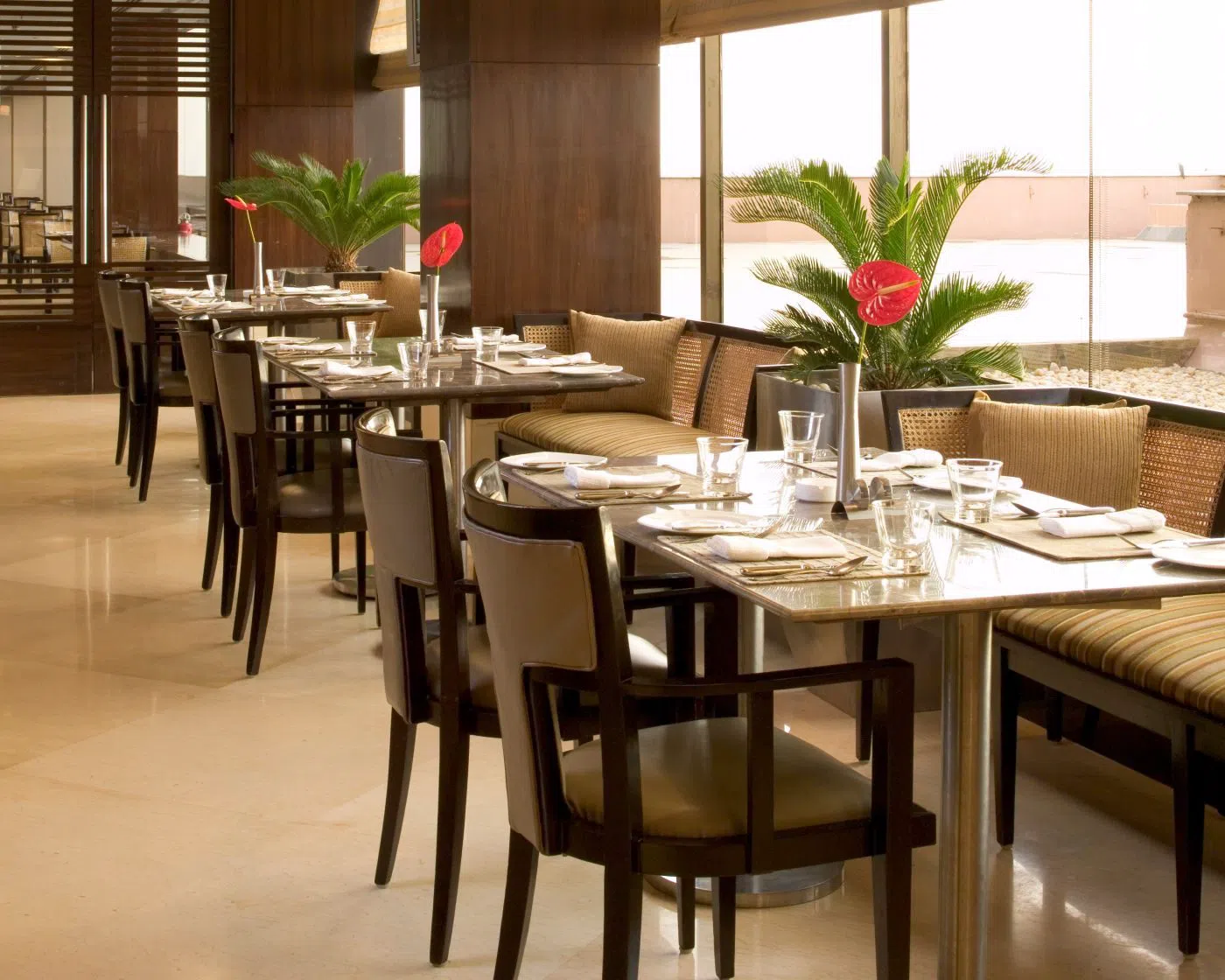
If you would rather eat before the drive than after it, Vista, Taj Lands End (Bandra West) is the easiest sit-down booking at this end of the route. It is open 24 hours, takes reservations and large tables, and runs to around ₹4,500 for two. The buffet is the draw more than the à la carte, and the room holds the changing light over the Sea Link long enough that a late lunch turns into the beginning of the evening. Basing yourself in Bandra saves you the cross-town approach altogether, and the Mumbai hotel search covers this end as well as the southern one.
Plan your Mumbai trip
Live prices from our booking partners.
Free cancellation on many rooms. We may earn a commission when you book.
Crossing the Sea Link
The Rajiv Gandhi Bandra–Worli Sea Link is the reason the whole drive works. Before it opened in 2009, everything moving south from Bandra funnelled inland through Mahim and the causeway traffic that came with it; the bridge replaced that with a crossing of about five minutes over open sea. The toll is ₹100 one way for a car, with rates fixed to 31 March 2027, and any size of vehicle is allowed.
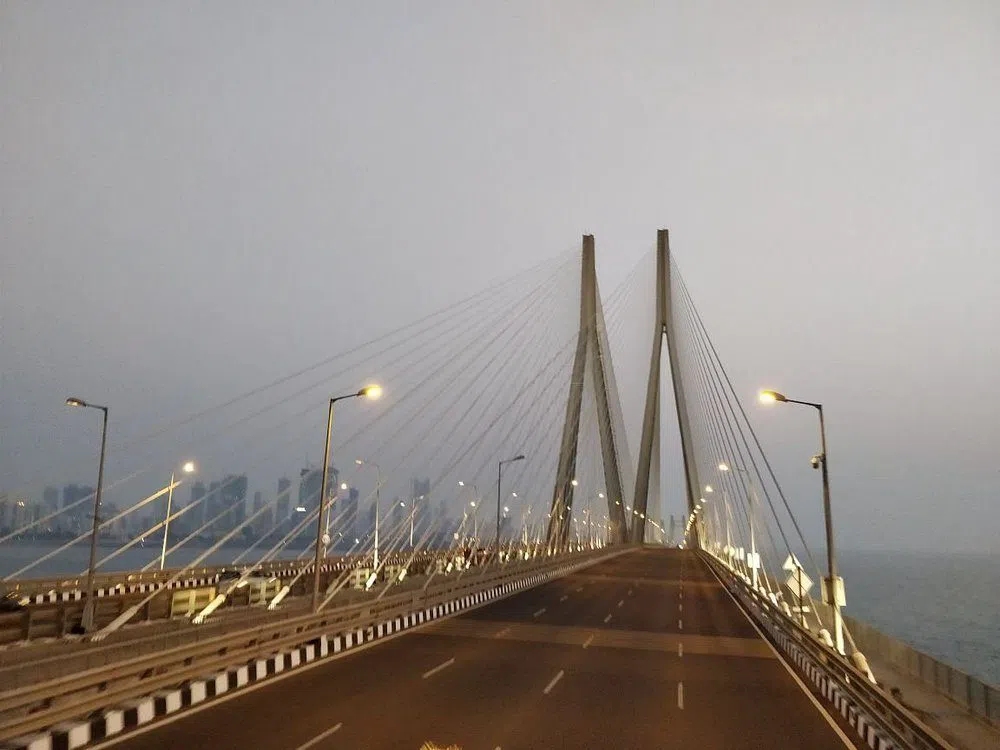
The rules are simple and enforced. No stopping, no walking, no pulling over for a photograph, and no asking the driver to slow down while you get one. This is a drive-through, and the traffic police treat it as such. What you can control is where you sit: take the left side going south for the open-sea view, with the city off your right shoulder. It is a short crossing and it is the transition point of the day, Bandra behind you and the reclaimed southern coast ahead.
Worli, where the old coast is still visible
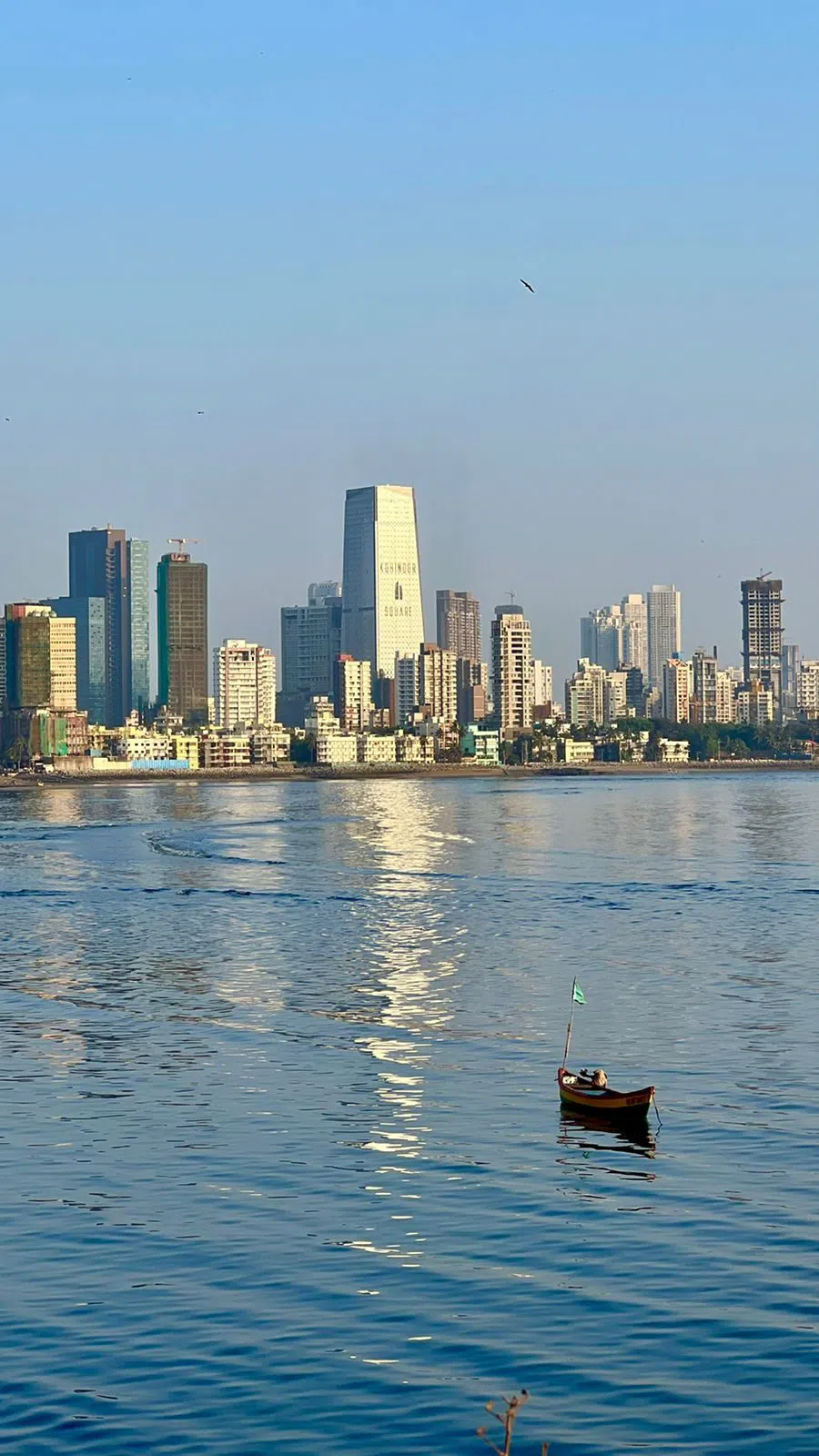
Coming off the bridge you land at Worli Sea Face (Worli), which does two jobs at once. It is the southern bookend of the Sea Link view (the bridge reads as a whole shape from here in a way it never does from Bandra) and the junction where the new coastal promenade begins. Treat it as one stop rather than two. It is free and open at all hours, groups are fine, but the benches are limited and they go early at sunset.
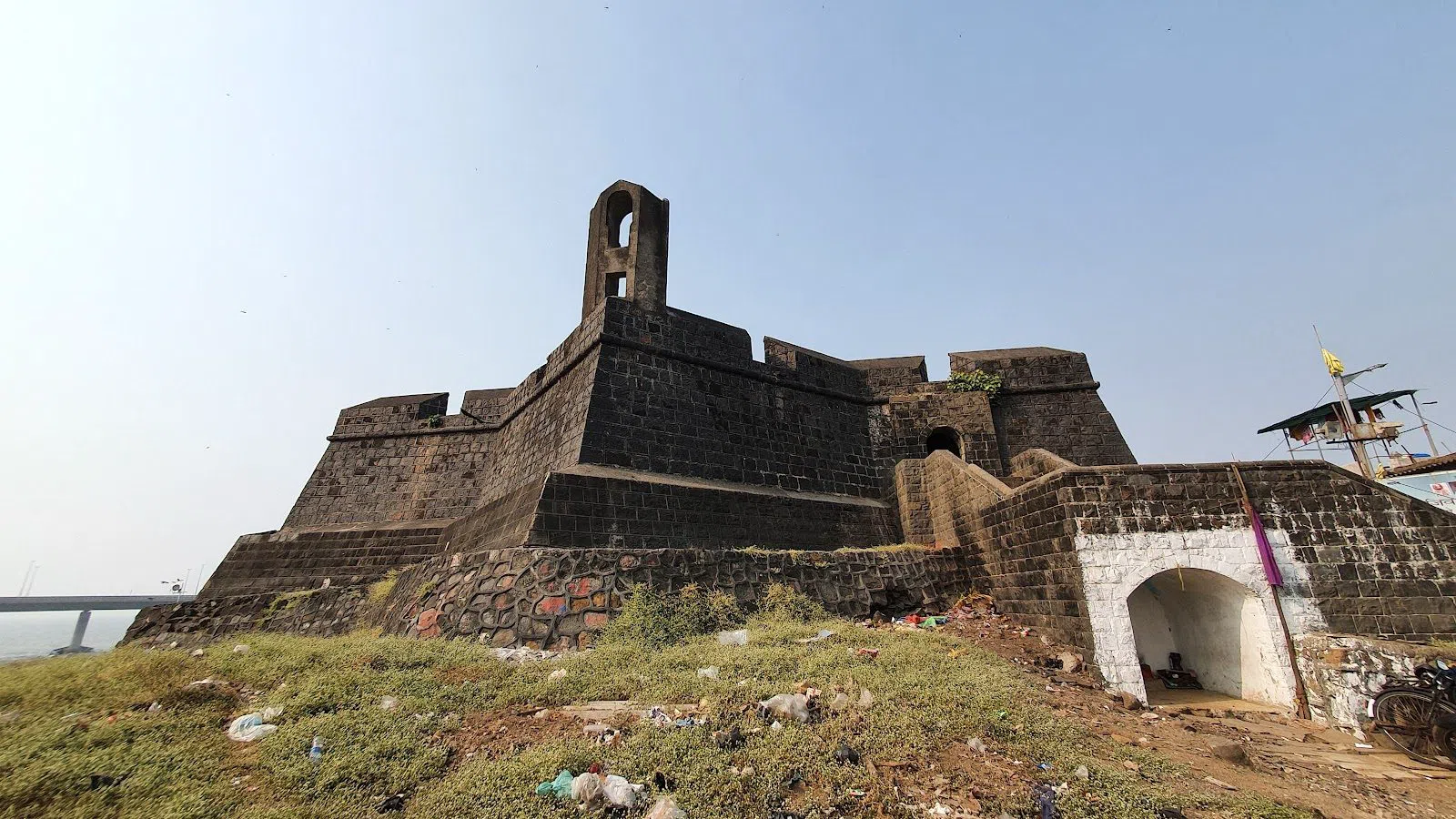
A few hundred metres inland, Worli Fort (Worli Koliwada) is the stop most people skip and the one that explains the drive. It is free, open daily from roughly 7am to 6pm, and reached on foot through the narrow lanes of the koliwada, the fishing village that has been working this shoreline for far longer than any of the roads around it. Small groups only; a coach cannot get near, and even a car is a mistake past a certain point. Go with a local guide or be prepared to ask directions repeatedly, because the lanes do not signpost themselves. The village around the fort is as much the point as the fort. This is the coast the coastal road was built over, and standing in it for twenty minutes changes how the rest of the afternoon reads.
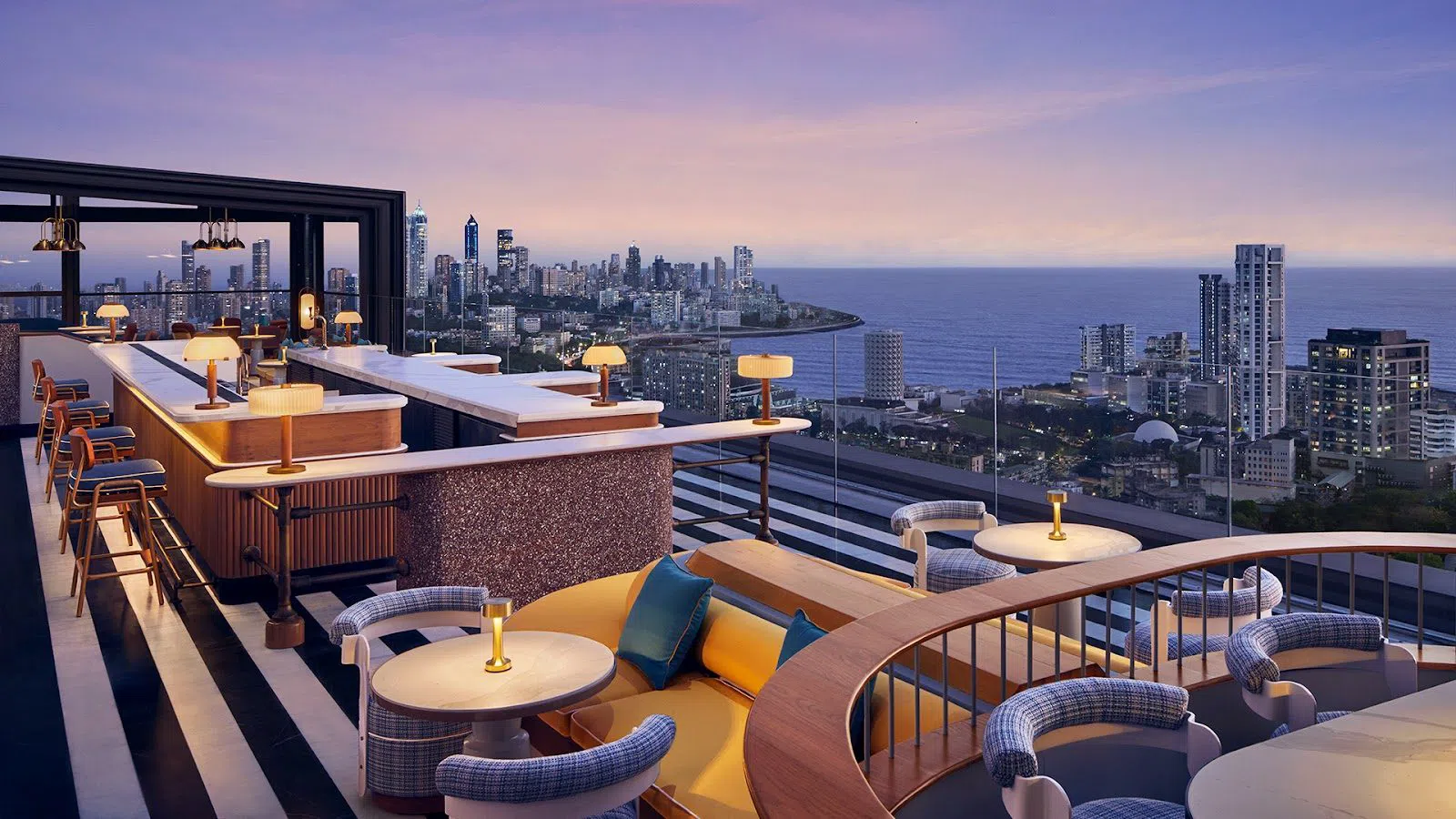
For the aerial version of the same idea, AER, Four Seasons Hotel Mumbai (Worli) is India's highest rooftop bar and gives the clearest read of the route you have just driven: bridge, sea face, the new promenade running south. Reservations are recommended and it takes groups, but the door is strict, 21 and over, smart dress, no exceptions worth arguing about. Cocktails start around ₹1,200 and two people should expect ₹4,000 or more. The covered Yacht Club half means it still works in monsoon, which is not true of most rooftops in this city.
The new promenade and the shrine you have to time
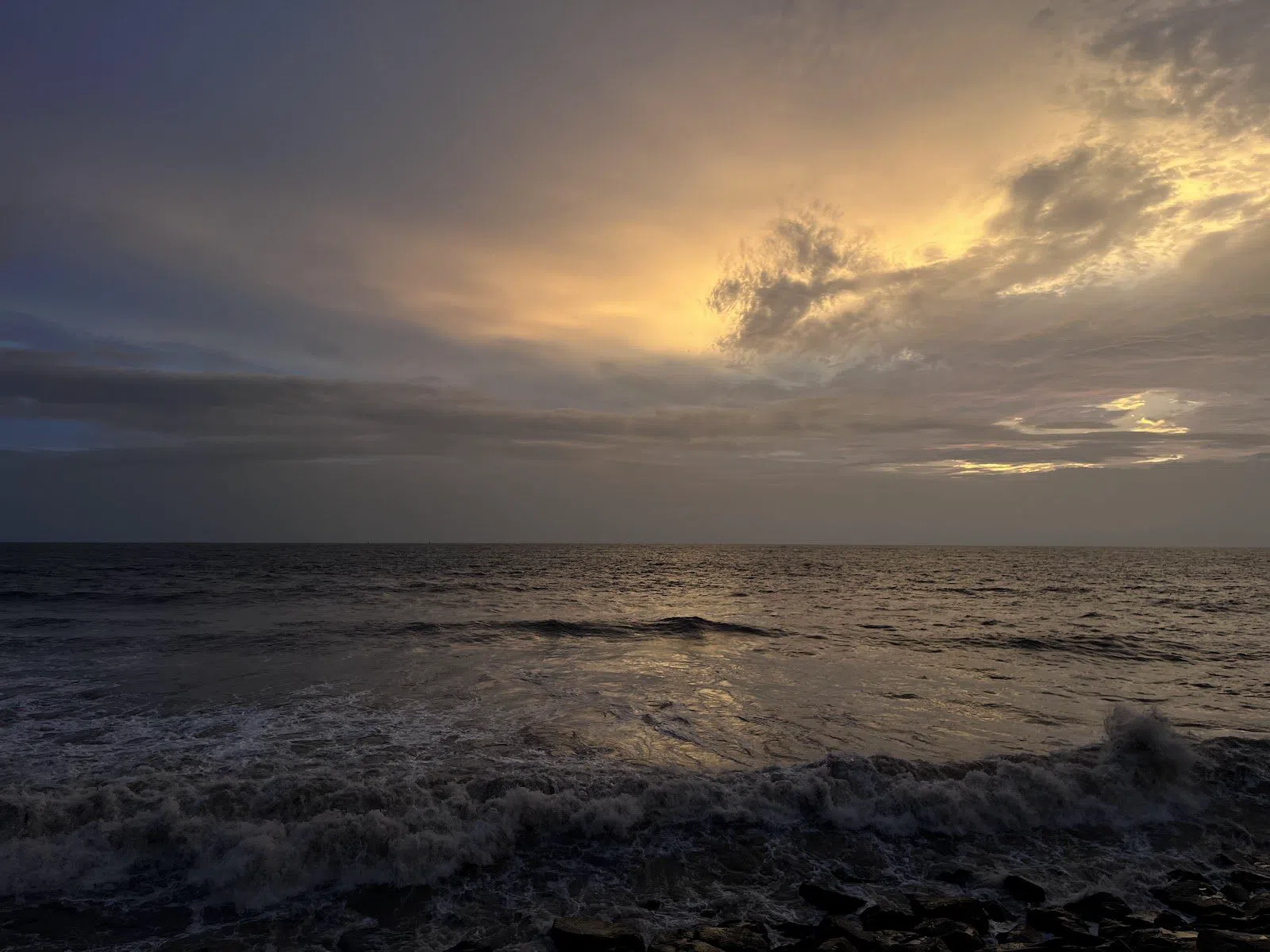
South of Worli Sea Face the Coastal Road Promenade (Dharmveer Swarajya Rakshak Chhatrapati Sambhaji Maharaj Marg) (Worli to Marine Drive) runs 5.25 kilometres along the reclaimed edge. It opened to the public in August 2025 and it is the largest new seafront the city has built since Marine Drive in the 1930s, more than twice its length. Access is free and it never closes, there are wheelchair ramps and four pedestrian underpasses, and groups of any size are fine. The one honest complaint is shade: there is almost none yet, and the young planting will take years. Walk it late in the day or not at all.
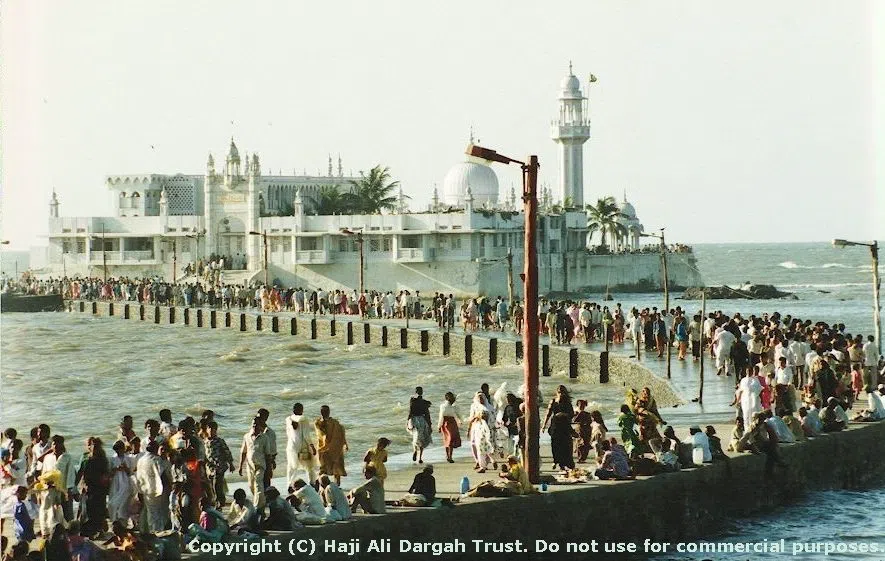
The Haji Ali Dargah (Mahalaxmi) sits offshore roughly halfway along, and it is the single stop on this drive you must time rather than schedule. The causeway out to the island shrine floods at high tide, and when it does you are looking at the dargah from the road rather than standing on it. Check tide times before you leave Bandra. Entry is free, hours run from about 5:30am to 10pm, heads should be covered and dress modest, and groups are fine as long as you walk single-file when the causeway is busy, which at low tide on a weekend evening it always is.
A short climb up Malabar Hill
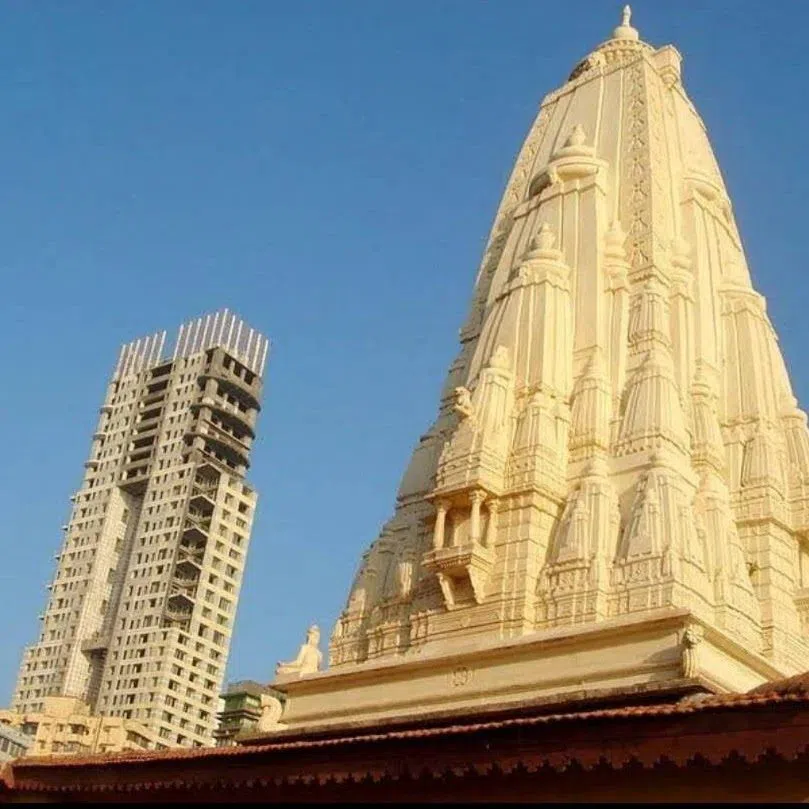
The road tunnels under Malabar Hill, but the hill itself is worth surfacing for. Banganga Tank and Walkeshwar Temple (Walkeshwar, Malabar Hill) is a 900-year-old freshwater tank a few hundred metres from the Arabian Sea, stepped down on all four sides and ringed by shrines and dharamshalas. It is free, open from roughly 6am to 9pm, and reached down lanes narrow enough that only small groups make sense and no coach will get close. Phased restoration is ongoing, so expect parts of the precinct to be hoarded off. It is a complete change of register after two hours of promenades, and the noise level alone justifies the stop.
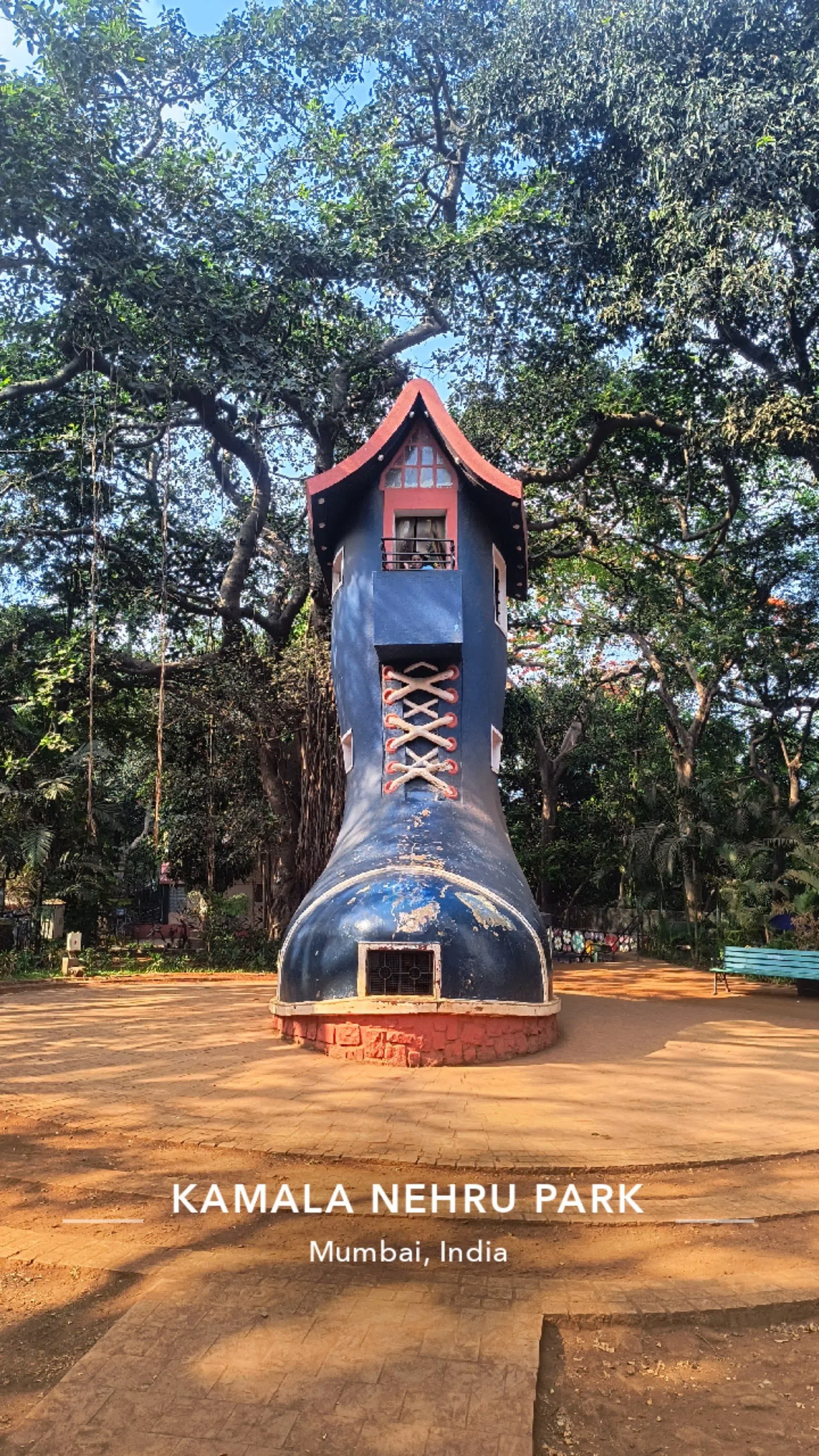
A few minutes away, Kamala Nehru Park (Malabar Hill) gives the classic elevated view of the Queen's Necklace, the only vantage from which the whole bay reads as one continuous shape rather than a series of stretches. Entry is free, the park opens daily, and the viewing terrace handles groups without trouble. Two caveats: the Boot House that older guides send families to is fenced off as unsafe, and the neighbouring Hanging Gardens face a long-running reservoir rebuild that may disrupt access on the day you turn up.
Chowpatty, Marine Drive and the last drink
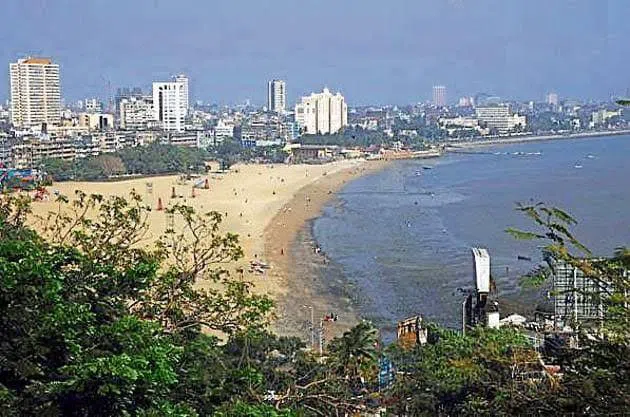
Come down off the hill and the road ends where it should. Girgaon Chowpatty (Girgaon) is the eating stop that genuinely belongs to this route: bhelpuri on the sand at sunset, a few metres from where the coastal road finishes. The stalls are informal, they handle groups easily, and snacks run ₹50 to ₹200. Carry cash, because not every vendor will take a card or a QR code cleanly at the busiest hour. Treat the sea here as scenery rather than swimming.
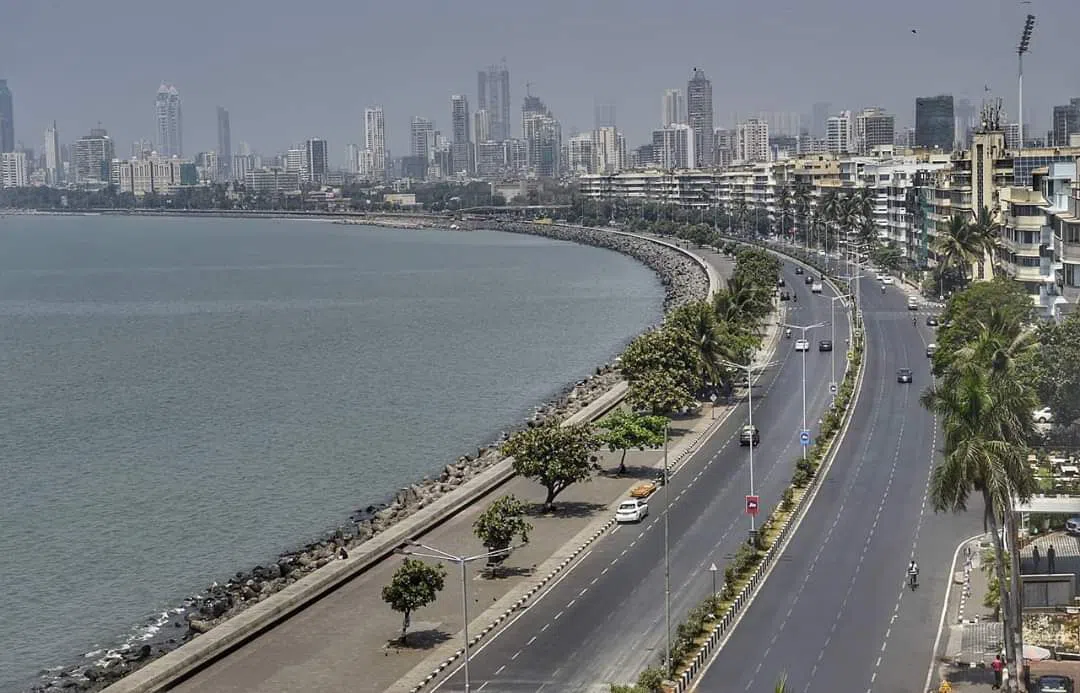
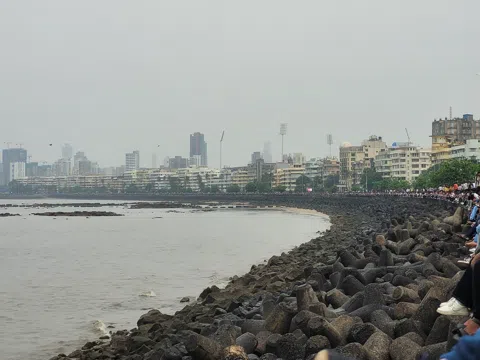
From Chowpatty, Marine Drive (Girgaon to Nariman Point) curves away south, and it is the thing the whole drive has been aiming at: a UNESCO-listed Art Deco ensemble as well as a seafront, with the parapet seating an unlimited crowd every night of the year. It is free and open at all hours. The one practical note is at the northern end, where MMRDA road-widening works near Charni Road can pinch traffic badly; if you are driving the last stretch rather than walking it, allow for that.
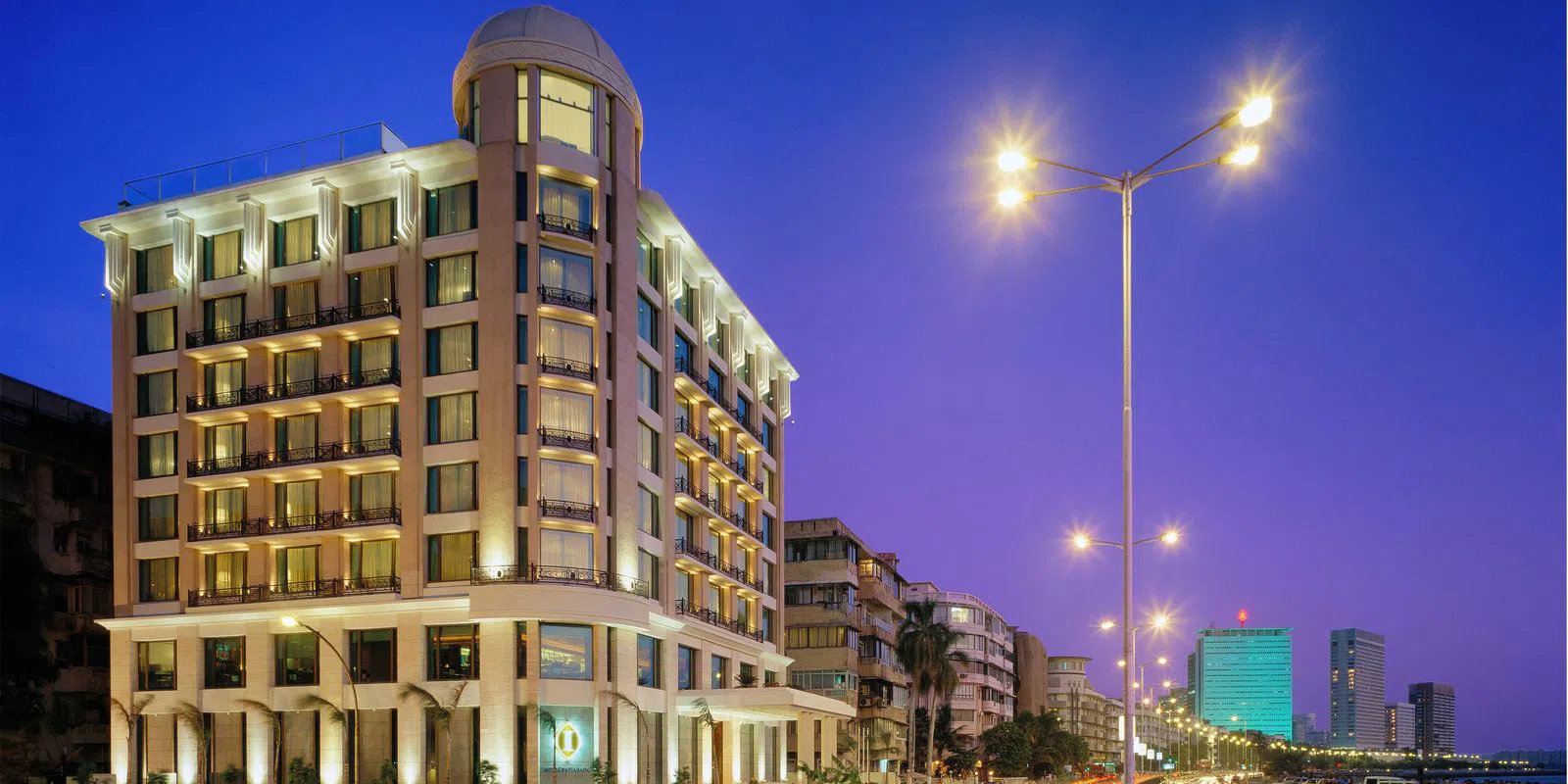
For a final drink with the payoff view straight down the promenade, Dome, InterContinental Marine Drive (Marine Drive) is the obvious close. Reservations are essential for sunset, it takes groups, dress is smart and the bar is over-21. Expect ₹4,000 to ₹5,000 for two. The kitchen relaunched with a new menu in January 2026, so older reviews of the food are out of date. The view has not changed.
Practical notes for the drive
Drive it north to south, in that order, in the second half of the day. Sunset in Mumbai runs from about 6pm in December to just after 7pm at midsummer, so leave Carter Road roughly two and a half hours before it to get the fort in daylight, the bridge in gold, and Chowpatty at dusk. Monsoon runs June to September, and the drive still works in it (the sea is more dramatic and the promenades emptier), but pick the covered rooftop over the open one.
An app cab is fine and often simpler than parking twice, but say clearly at the start that you want the Sea Link and the coastal road. The default route may take you inland, and the toll is added to your fare either way. Self-driving gives you the Malabar Hill detour without negotiation, at the cost of finding kerb space at Carter Road and Chowpatty.
Carry cash. The stalls at Chowpatty, small parking attendants and the odd guide at Worli Koliwada are all easier with notes.
For two people, the fixed costs are small: ₹100 for the bridge, parking at either end, and ₹100 to ₹400 for a proper eat at Chowpatty. Every viewpoint on this route (both promenades, both forts, the church, the tank, the park, the dargah, Marine Drive) is free. Add one sit-down meal at ₹4,500 and one rooftop at ₹4,000 to ₹5,000 and a full day lands near ₹10,000 for two; skip both and the same day costs under ₹1,000. For what to do with the rest of your time in the city, the Mumbai guide covers the neighbourhoods this drive only passes.
Before you go
How long does the Bandra to Marine Drive coastal route take?
The driving itself is well under an hour outside peak traffic, and the Sea Link crossing takes about five minutes. Add stops at Bandra Fort, Worli Sea Face, Haji Ali, Malabar Hill and Chowpatty and it becomes a half day, so allow four to five hours from Carter Road to Marine Drive.
What does the Bandra–Worli Sea Link cost, and can you stop on it?
The toll is ₹100 one way for a car, at rates fixed to 31 March 2027. You cannot stop, walk or pull over for a photograph, and the rule is enforced, so take your pictures from Bandra Fort or Worli Sea Face instead. Going south, sit on the left for the open-sea side.
When is the best time of day to do the drive?
Start about two and a half hours before sunset, which is around 6pm in December and just after 7pm at midsummer. You then reach Bandra Fort in daylight, the bridge in low light, Girgaon Chowpatty at dusk and Marine Drive after dark.
Can you walk out to Haji Ali Dargah at any time?
No. The causeway to the island shrine floods at high tide, and when it does you can only see the dargah from the road, so check tide times before you set off. The shrine itself is free and open roughly 5:30am to 10pm; cover your head and dress modestly.
Does the route work without a car?
Partly. The Coastal Road Promenade, Marine Drive and both Bandra promenades are free to walk, but you cannot cross the Sea Link on foot, so you need a vehicle for that leg. An app cab is straightforward, though you should specify the Sea Link and coastal road, since the default route may go inland.